A new approach is developed to counter external vibration and electromagnetic interference
There are many causes of distortion in audio and extraneous mechanical and electrical interference is one, and rather detrimental, to boot. Take your record player as an example. It’s a precision mechanical device which moves an magnetoelectric reader (stylus + generator) along the record grooves.
It’s perfectly rational to suppose that if you add vibrations to the stylus path the reader will get errors. Same if the outside electromagnetic field, probably from a power transformer, starts to tweek the electrodynamic force generated in the MM- or MC-cartridge, which is extremely low level and has low tolerance for noise and interference.
Essentially you are getting your precious music signal botched by nasty outsiders. And this is not the singular case with turntables or other mechanical devices. All electronics inside an amplifier or a digital player feel the bad vibrations (remember microphonics?) and stray electromagnetic fields (remember hum and modulation?) as distortion.
Lehmannaudio was giving the bad mechanical and electrical vibes some thought and came up with an elegant inexpensive solution which is fairly unique.
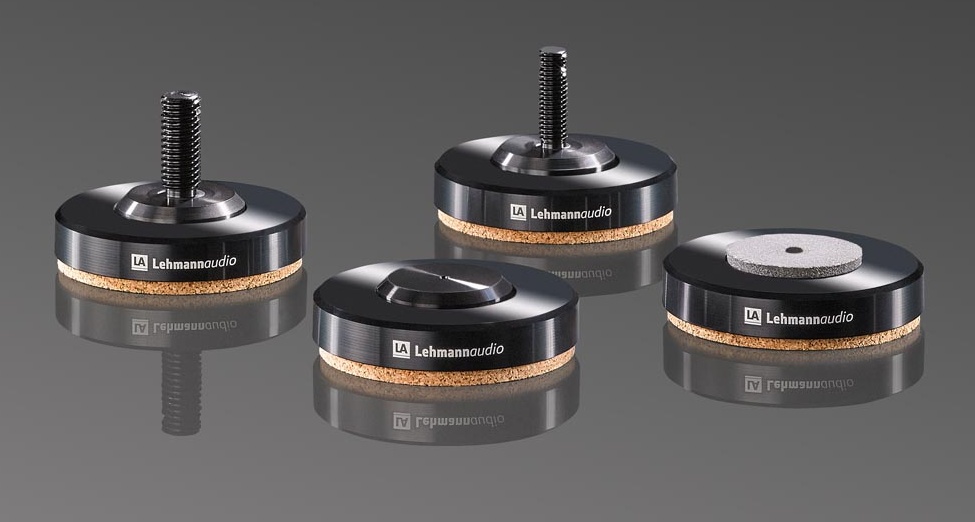
The new equipment platform range named 3S Basis (or Base, in English) stemmed from the company’s research when designing equipment feet, named, you guessed it, 3S feet. Those ingenious devices use layered inexpensive materials and a String Suspension System (3S, yes). Created with some help from renowned German engineer Manfred Diestertich of Audio Physic, 3S feet use layers of felt, which Manfred designed for such applications, and a tuned string anti-resonator in the center.
What was missing from 3S feet is, of course, electromagnetic shielding. Considering that the Lehmannaudio platform was supposed to be made thin to fit in most racks, cost-effective as per company’s policy, and devoid of ‘steel drum’ resonances making of 3S Base was no easy feat.
But it did come out well, finally. To achieve the design goals Lehmannaudio uses multi-layered structure. Three layers are easily visible when you look at the platform and one is completely hidden from sight. Highly compressed fibreboard (CDF) is used in top and bottom layers, acoustically dampening sheet takes only 3 mm in-between. The fourth, invisible layer, is only 0.4 mm thick but acts as a full-fledged Faraday cage shielding. 20 layers of metal mesh are used for this purpose, the tech borrowed from aircraft and security applications.
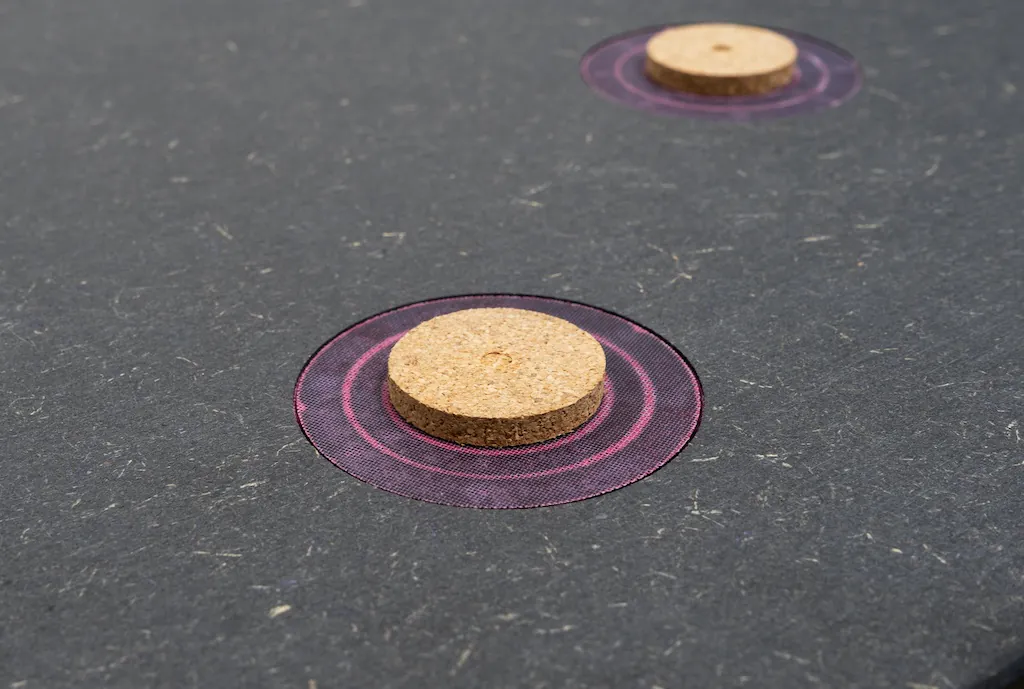
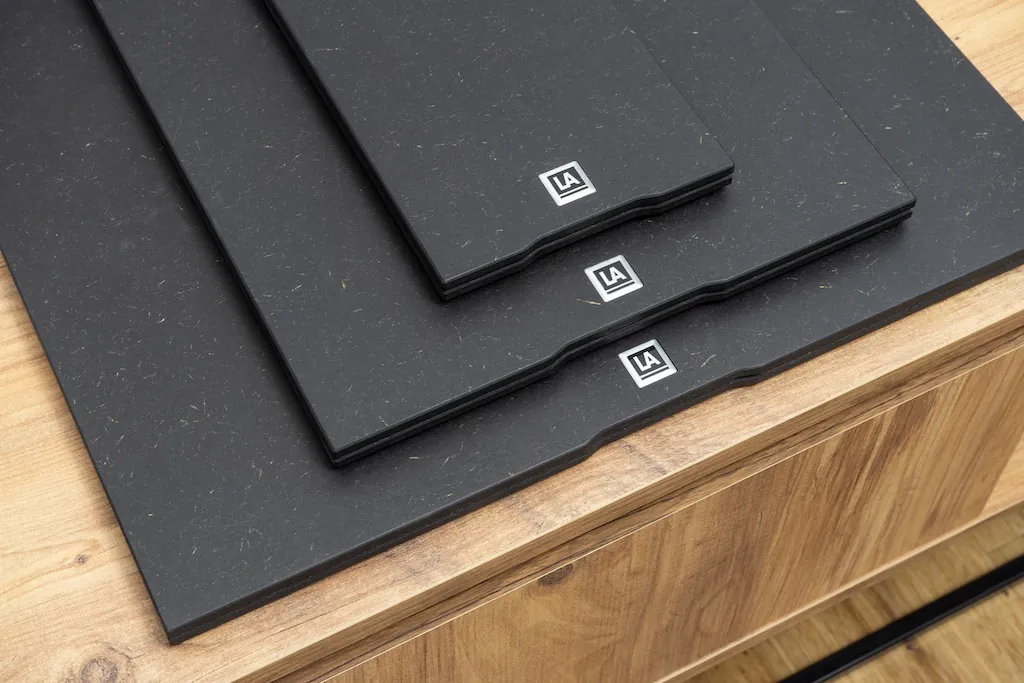
Made 20 mm thin to fit the shelf of most equipment racks or furniture 3S base currently comes in three sizes, full, mid and small: 3S Base 150 (H20 x W150 x D380 mm, load below 25 kilo), 3S Base 300 (H20 x W300 x D380 mm, load below 50 kilo) and 3S Base 480 (H20 x W480 x D380 mm, load not to exceed 75 кг). A number of 3S vibration damping discs are mounted into the bottom plinth, from 4 to 12, depending on the platform size.
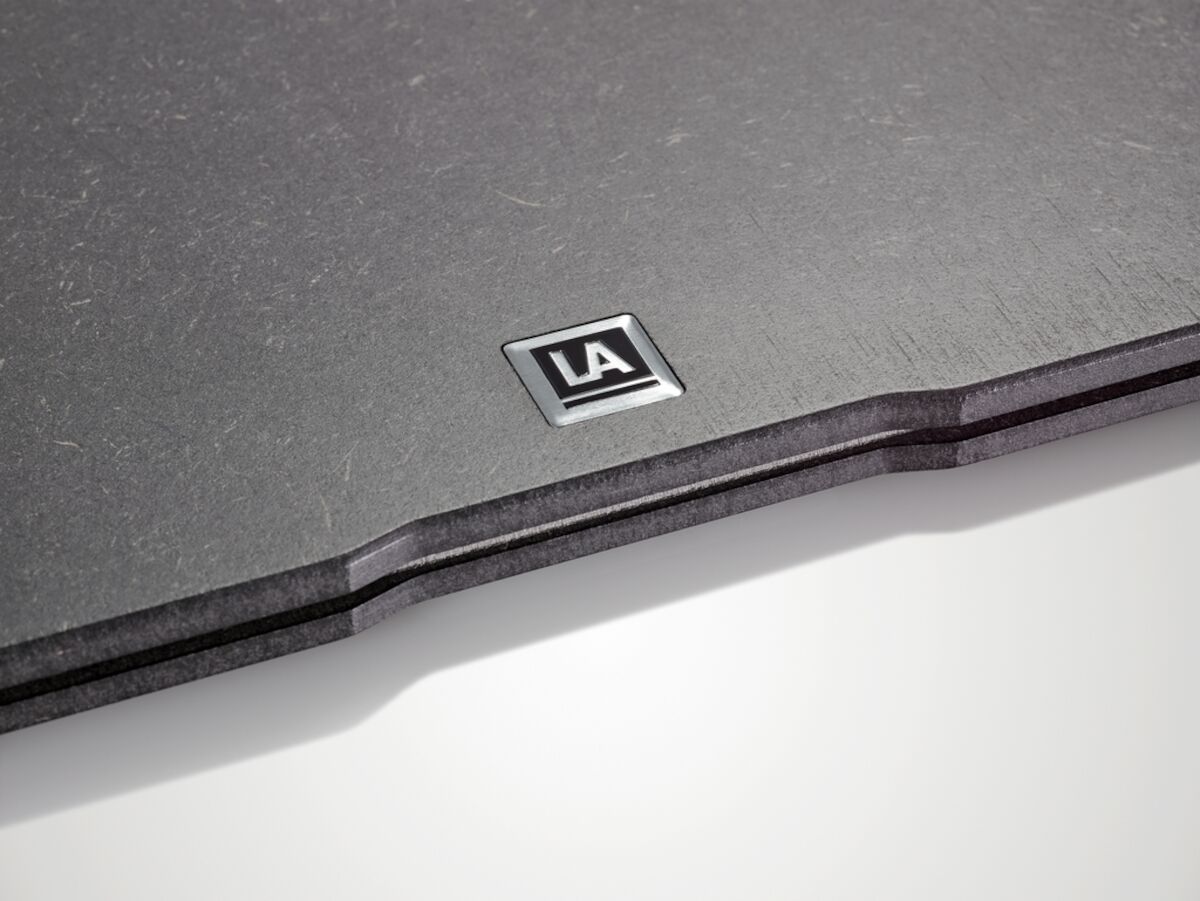
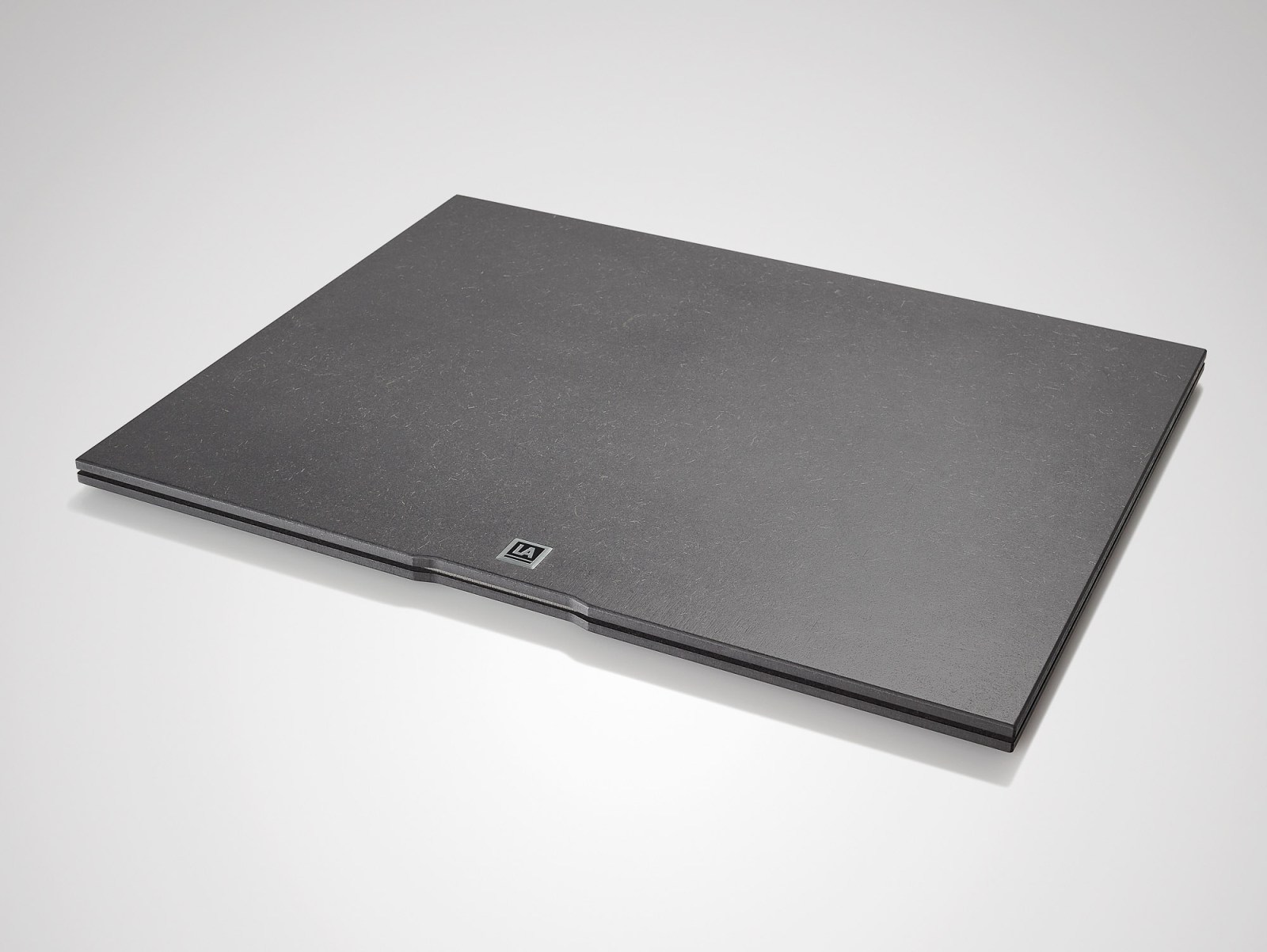
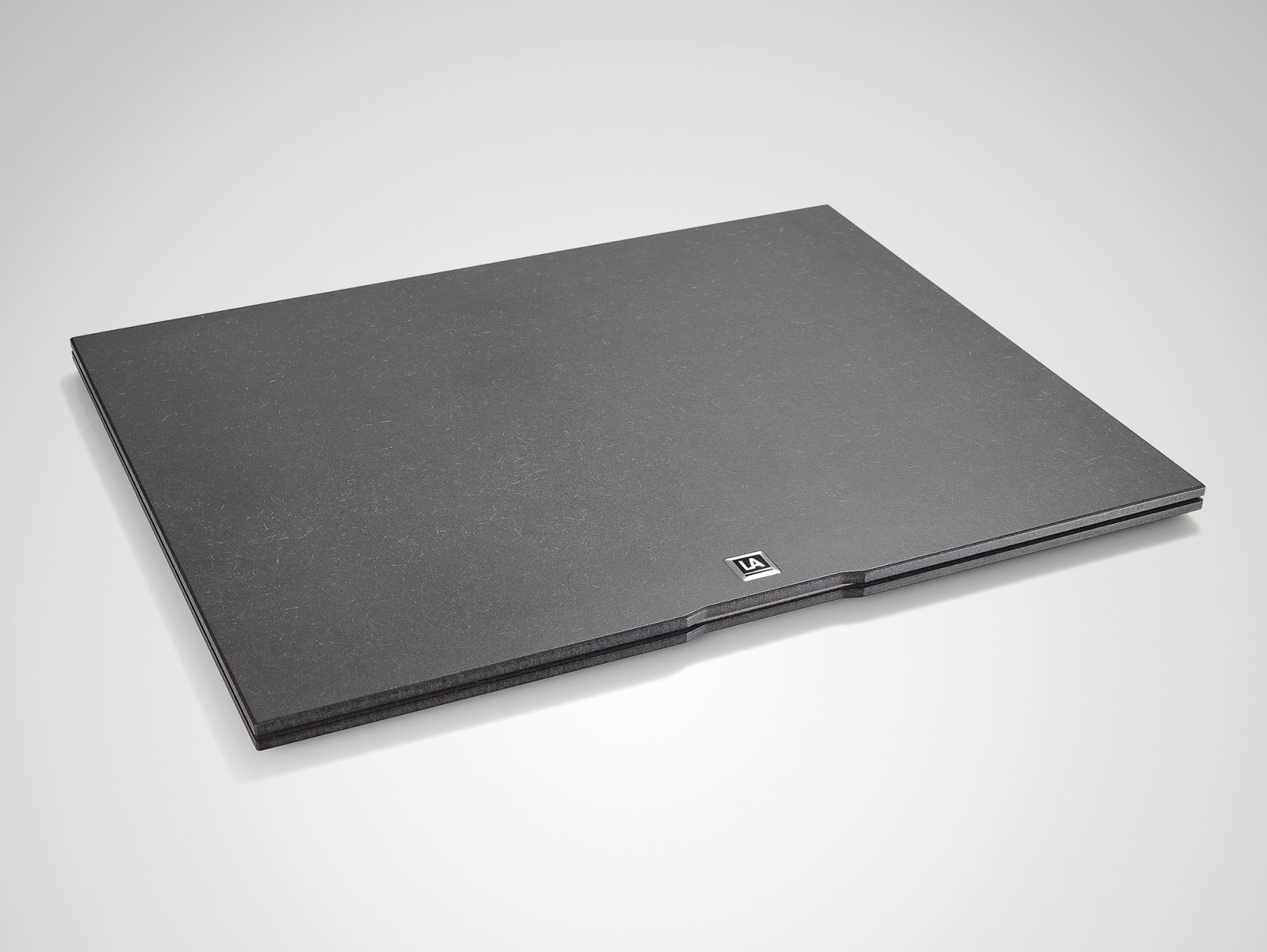
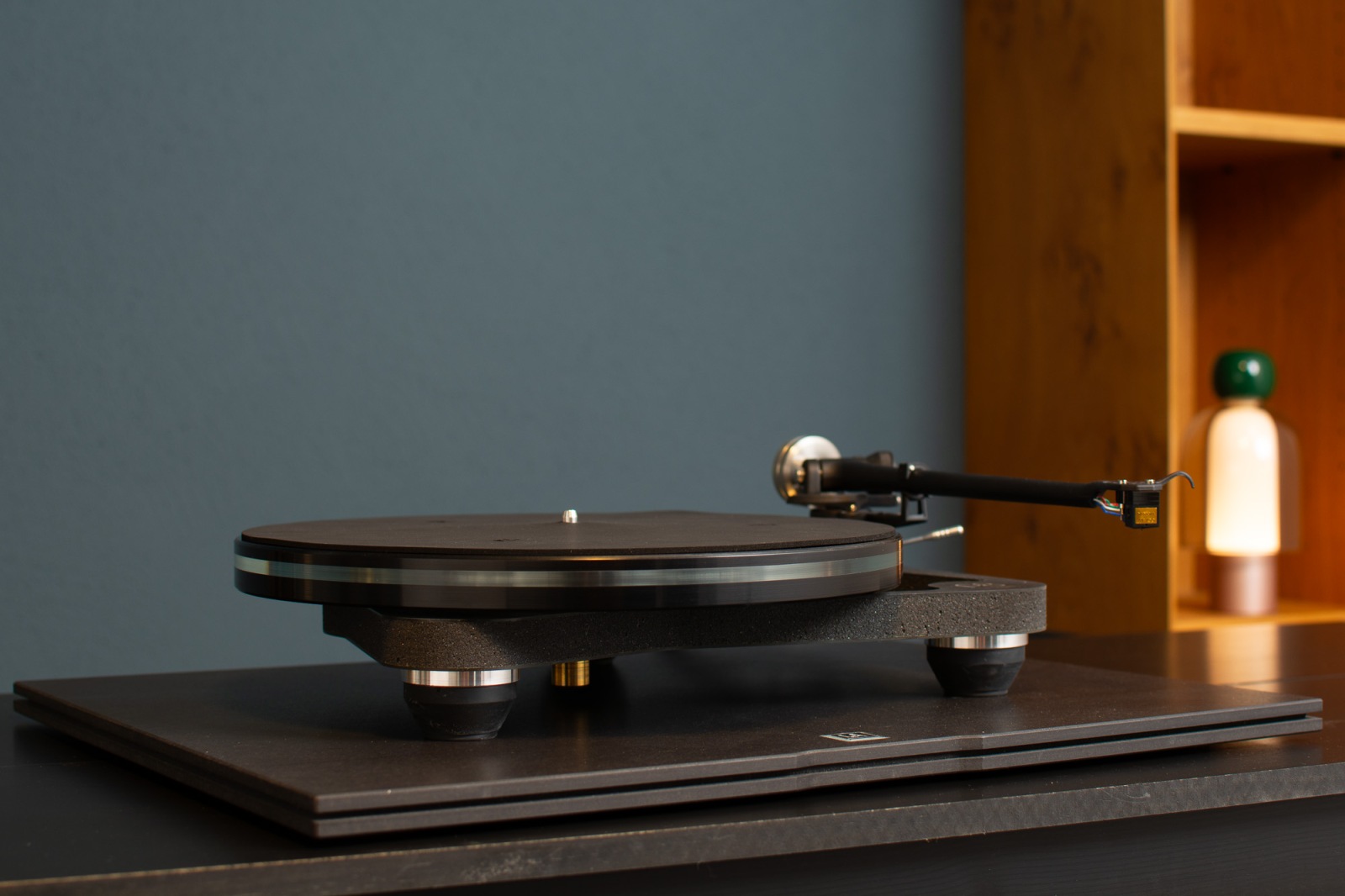
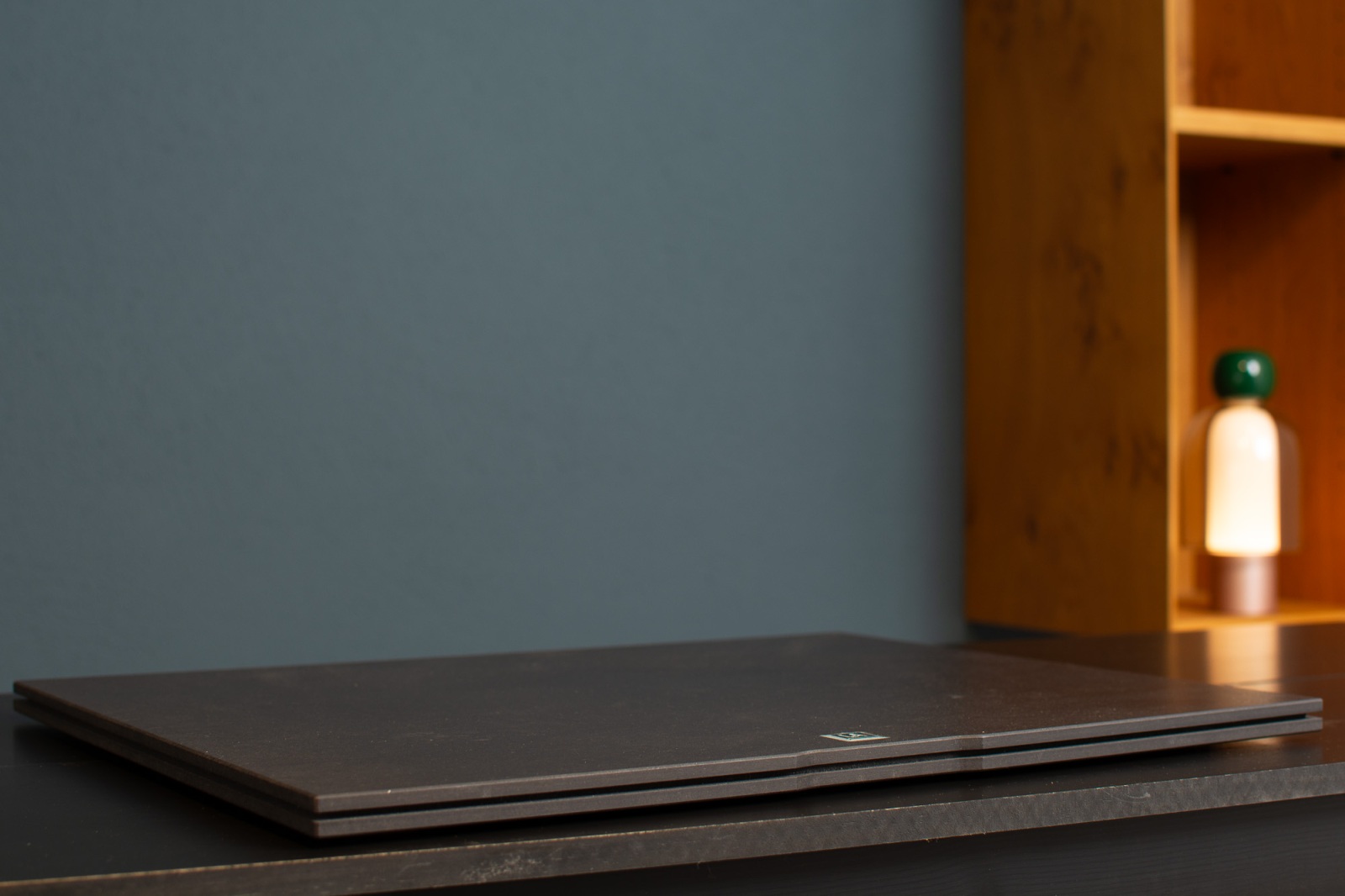
The Lehmannaudio Bases have textured anthracite-coloured plinths with beveled edges and a discreetly embedded logo. Combining elegance with performance, these equipment supports are a pleasure to view and do the sound-enhancing job very effectively.
While most customers will probably use Lehmannaudio Base under a record player, it will improve transparency and detail in the sound of your audio system when stationed under a preamp, DAC or digital player too.
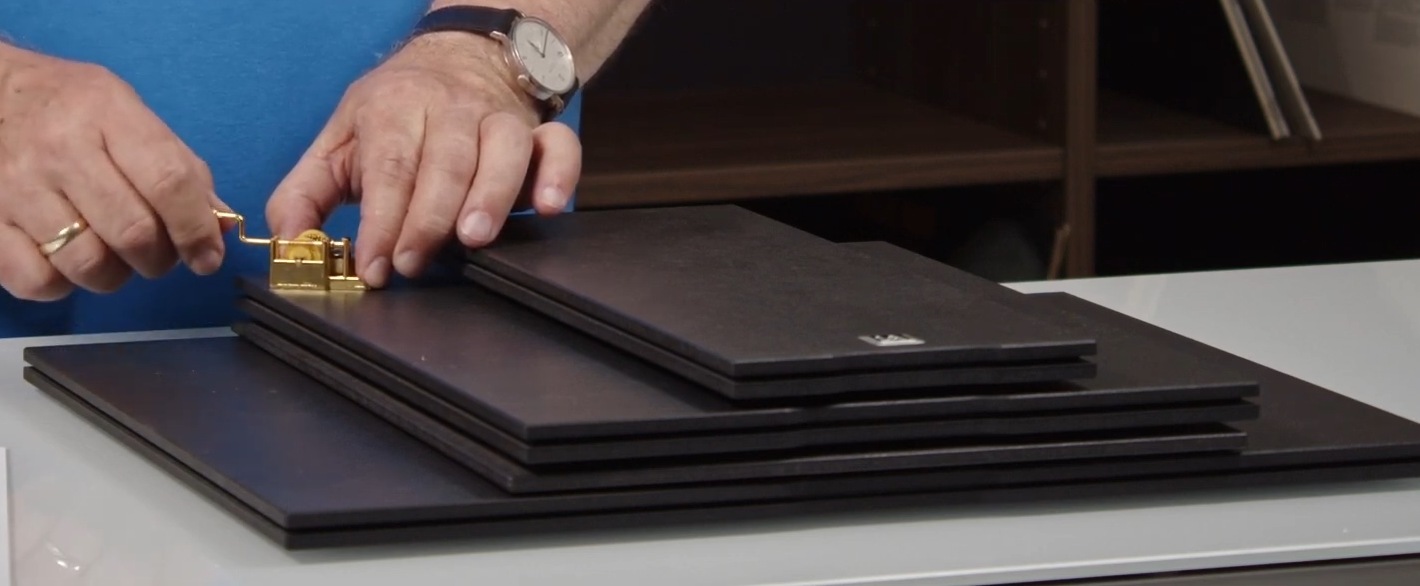
The company refers to vibration measurements made at University of Applied Science in Dusseldorf to prove the platform’s effectiveness, but also provides a hand cranked music box inside the packaging. Sceptics can place the mechanism on the table and then on the 3S base, and compare loudness. Have fun!
An additional base plate is available separately for extra effectiveness, bringing total height from 20 to 30 mm.
Lehmannaudio 3S Base 150, 3S Base 300 and 3S Base 480 are available now in Estonia, Latvia and Lithuania via MGY Oü.
Written by Sergei Taranov