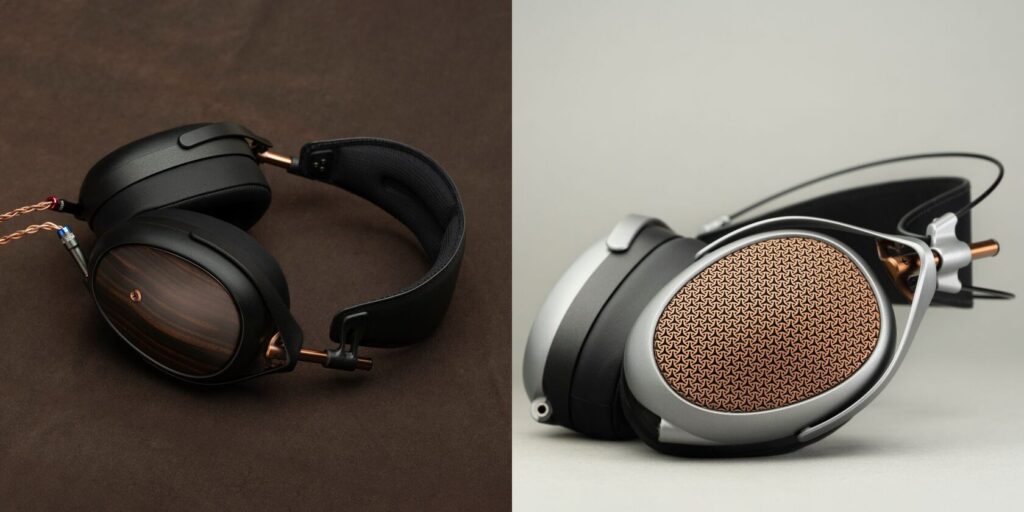
Ask any seasoned headphone listener — or a mastering engineer with a drawer full of cables — and they’ll tell you: the choice between open-back and closed-back headphones is less about features, more about mindset. It’s a decision that reveals how you prefer to experience sound: immersed in it, or isolated with it.
Let’s break it down — not with spec sheets, but with real-world stories, engineering insights, and what it actually means to listen.
A Bit of History: From Koss to Clarity
In the 1960s, when Koss introduced the Pro4AA, headphones were still finding their voice. Early audiophile favorites — like the Sennheiser HD414 — were open by design, and by necessity. Closed-back models often struggled with resonance and boxiness, lacking the natural air of their open siblings.
But times changed. Materials improved. Acoustic engineers got clever. Today, we’re in a golden age — where both open and closed headphones can sound sublime. But they still serve very different masters.
Open-Back Headphones: When Sound Breathes
The Concept
Open-back headphones feature a perforated or mesh rear cup, allowing air and sound to flow freely in and out. There’s minimal pressure build-up behind the driver — and that changes everything.
What You Hear
• Expansive, natural soundstage — like speakers in a room
• Effortless treble extension, unforced midrange clarity
• Music feels less like it’s inside your head, more like it’s in front of you
Best Used For
• Critical listening, mixing, mastering
• Quiet environments — your living room, a home studio
• Genres like classical, jazz, acoustic, ambient
The Catch?
• They bleed sound — people around you will hear your music
• They let noise in — not ideal on a train, plane or café
• Often less bass “punch” compared to closed designs
Real-World Take
A friend of mine — a Berlin-based composer — once told me he does all his orchestral mockups on open-backs. “They let me hear space. Reverb tails. Violin rosin. They let me believe the room exists.”
Closed-Back Headphones: Focused and Isolated
The Concept
Closed-back headphones seal the rear of the driver chamber. The design traps sound inside the cup, isolating your ears from the outside world — and vice versa.
What You Hear
• Tighter, more intimate sound
• Often more bass pressure and slam
• Focused imaging, with a front-row-center presentation
Best Used For
• Commuting, office, travel
• Studio tracking and recording (no sound leakage into microphones)
• Bass-heavy genres — EDM, hip-hop, pop
Trade-Offs
• Can feel claustrophobic or “cupped” if poorly tuned
• Soundstage is typically narrower
• Heat and pressure build-up over longer sessions
Field Note
I once interviewed a touring DJ who swore by his trusty M50x: “They’re not the most beautiful sounding. But on a loud stage, I hear what I need. Kick, snare, cue. That’s survival.”
Engineering Deep Dive: Not Just the Cups
• Driver Tuning: Open-backs often allow for more delicate diaphragm damping; closed-backs require stronger control to manage internal reflections.
• Earpads Matter: Closed designs rely on seal — leather pads, memory foam. Open headphones can be more forgiving.
• Venting & Ports: High-end closed-backs sometimes feature tuned vents to simulate open-air behavior.
This isn’t just design — it’s acoustical architecture in miniature.
So… Which Should You Choose?
It depends. Not on your gear, not even your budget — but on how and where you listen.
• If your sanctuary is a quiet room and your playlist starts with Mahler or Miles — go open.
• If you live in motion and need your music to stay yours — go closed.
• If you want it all — get both. Just like a photographer carries both a telephoto and a wide lens.
Bottom Line
Open-back headphones let the music breathe. Closed-back headphones let you breathe — by keeping the world out. Both are valid. Both can be stunning. It’s not a competition.
It’s a question of intent.