A tonearm has one job: hold a stylus in a groove and let it move freely in only the directions that matter. Everything else – resonance, friction, mistracking — works against it.
That single sentence hides a genuine engineering puzzle. As the arm sweeps across the record from outer edge to label, it must maintain a nearly constant angle to the groove – tracking geometry worked out mathematically back in the 1940s and 50s, and still known by the names of the engineers who solved it, Löfgren and Baerwald. Its bearings must move with almost no friction in both the horizontal and vertical planes, without introducing play. And its tube must resist resonating at audible frequencies, since any vibration fed back into the cartridge gets amplified along with the music.
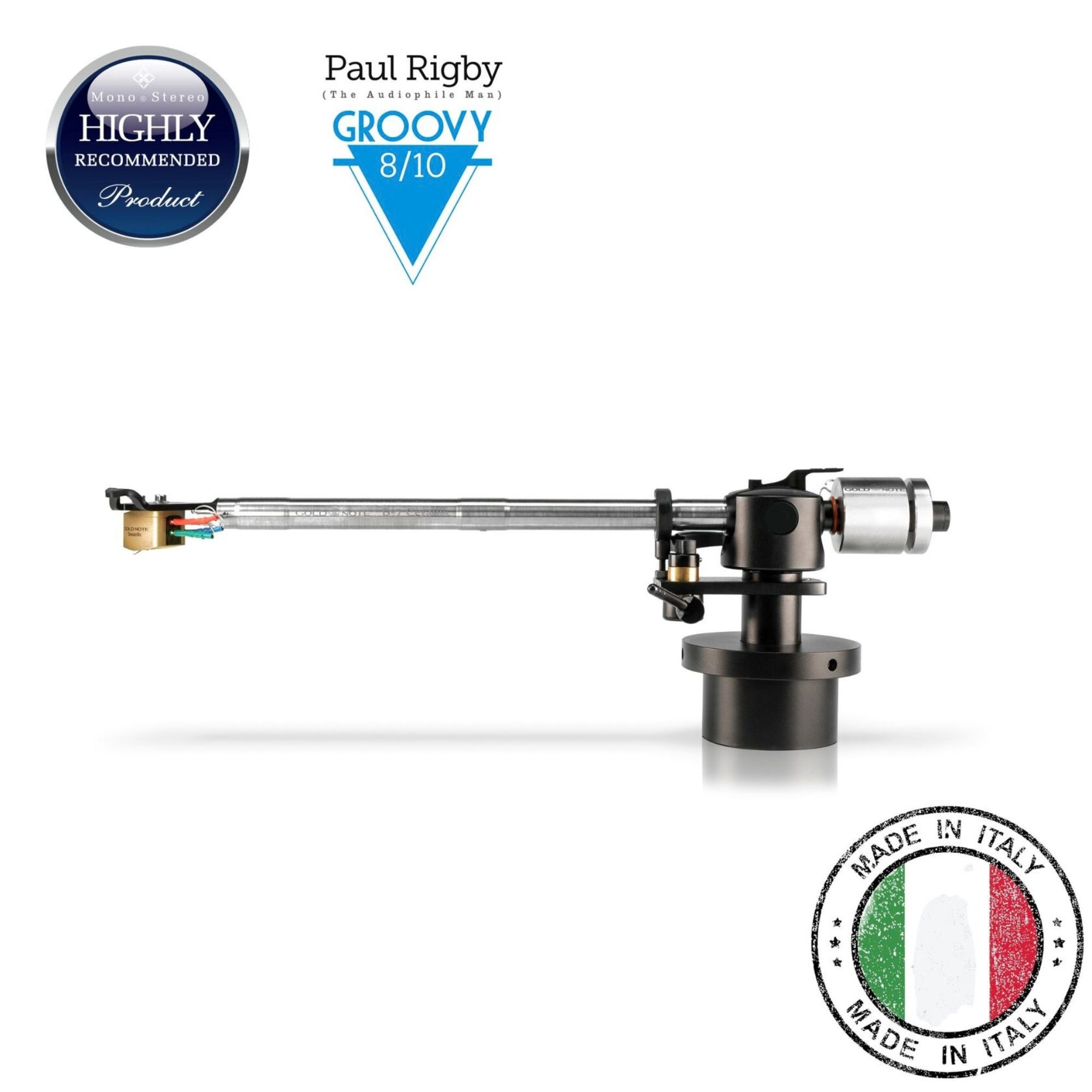
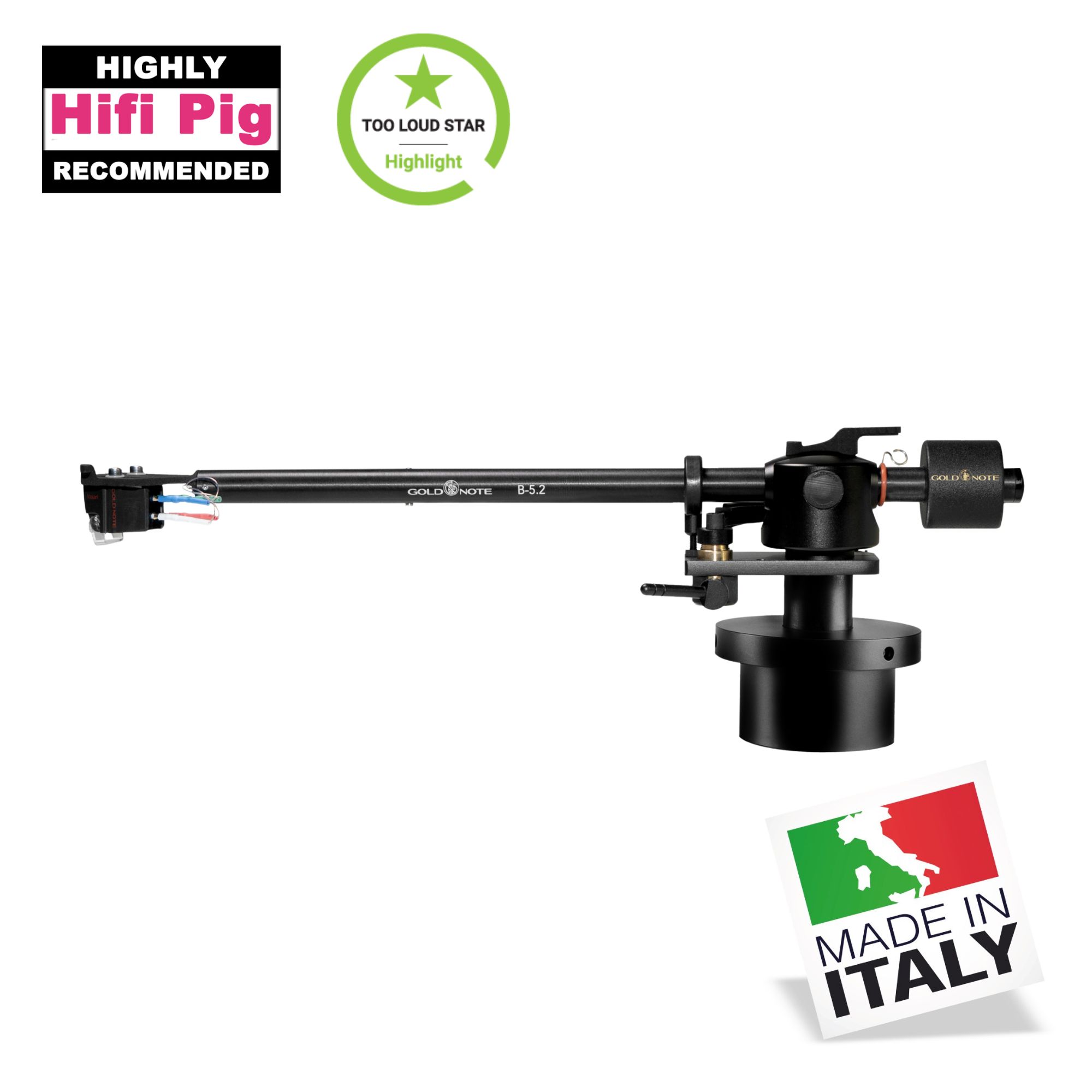
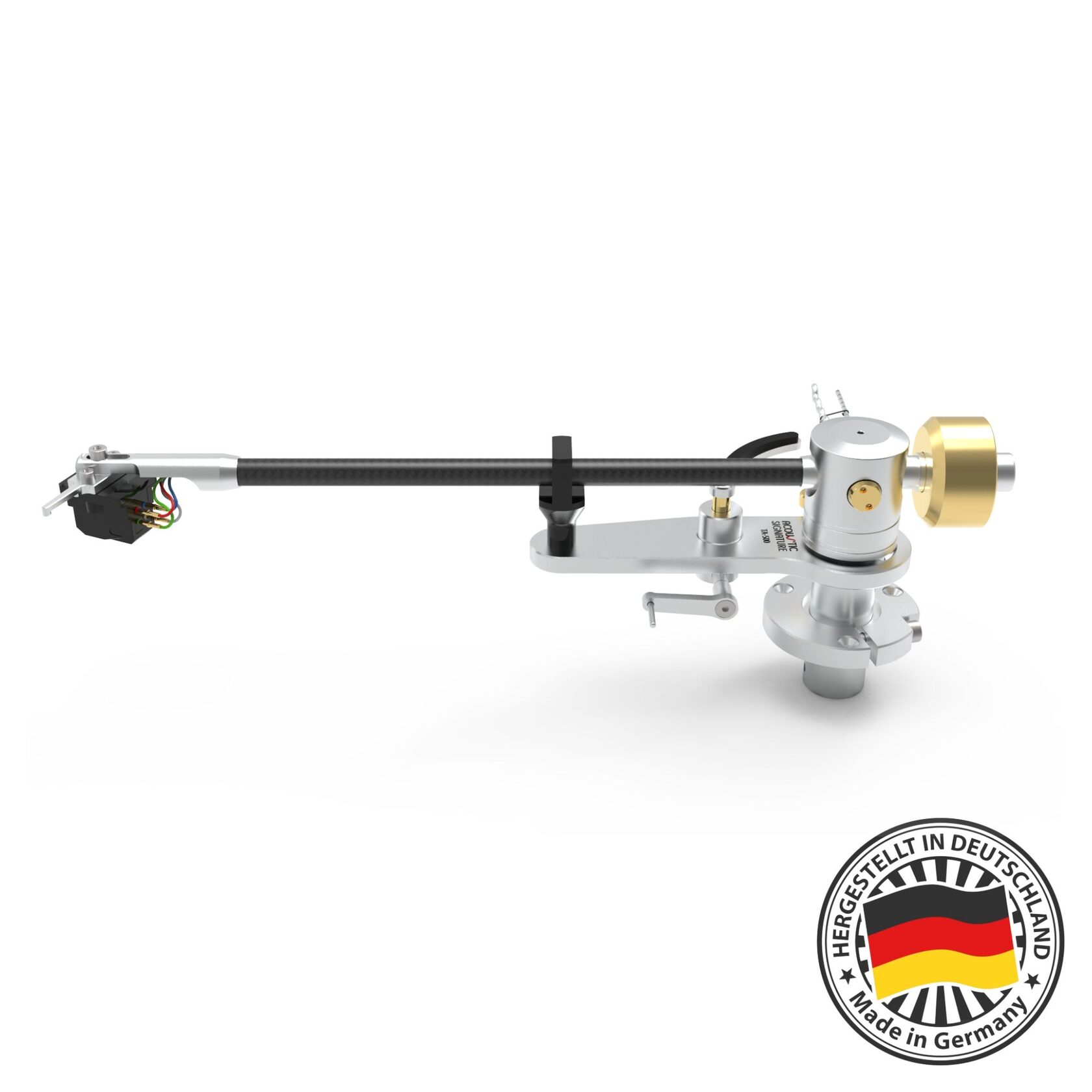
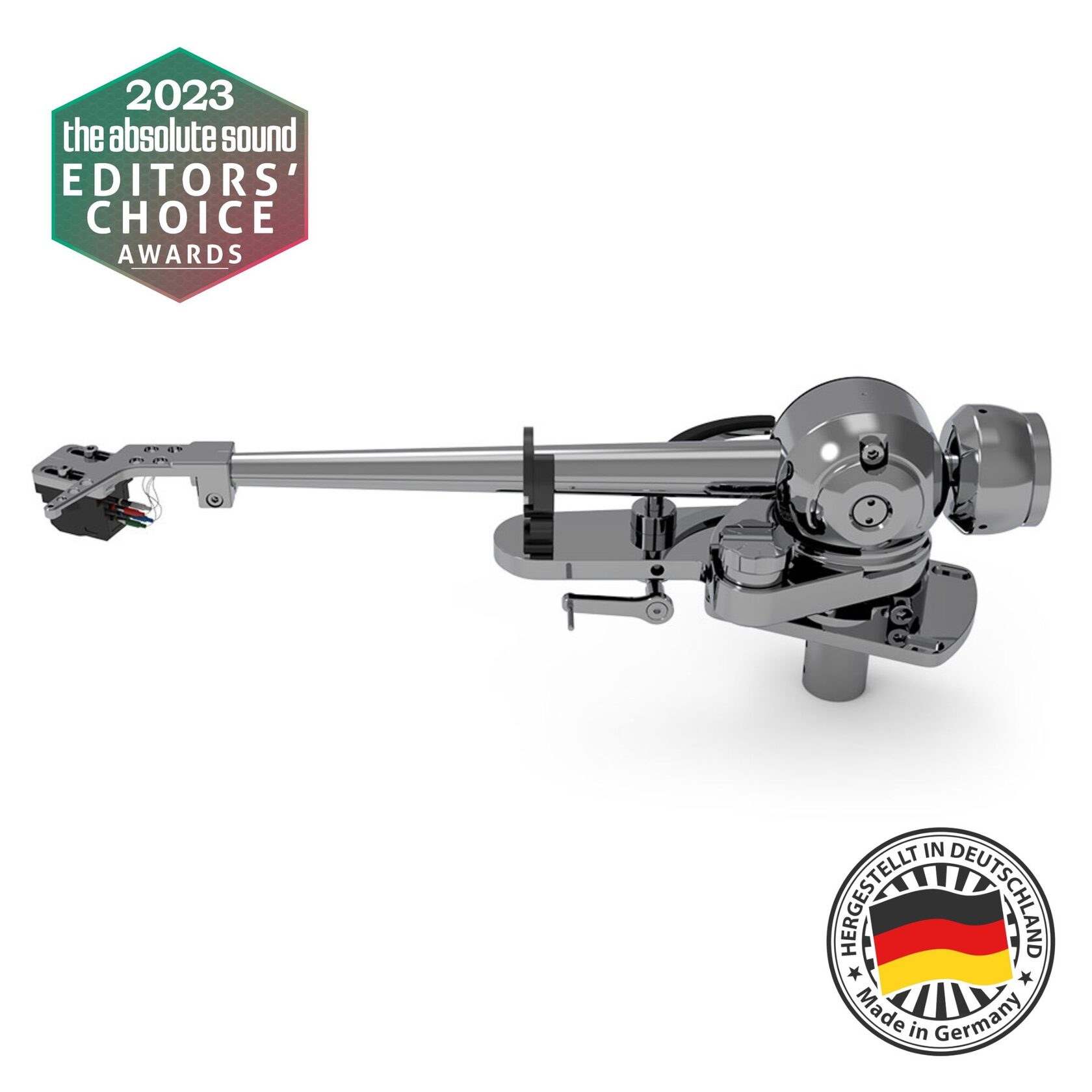
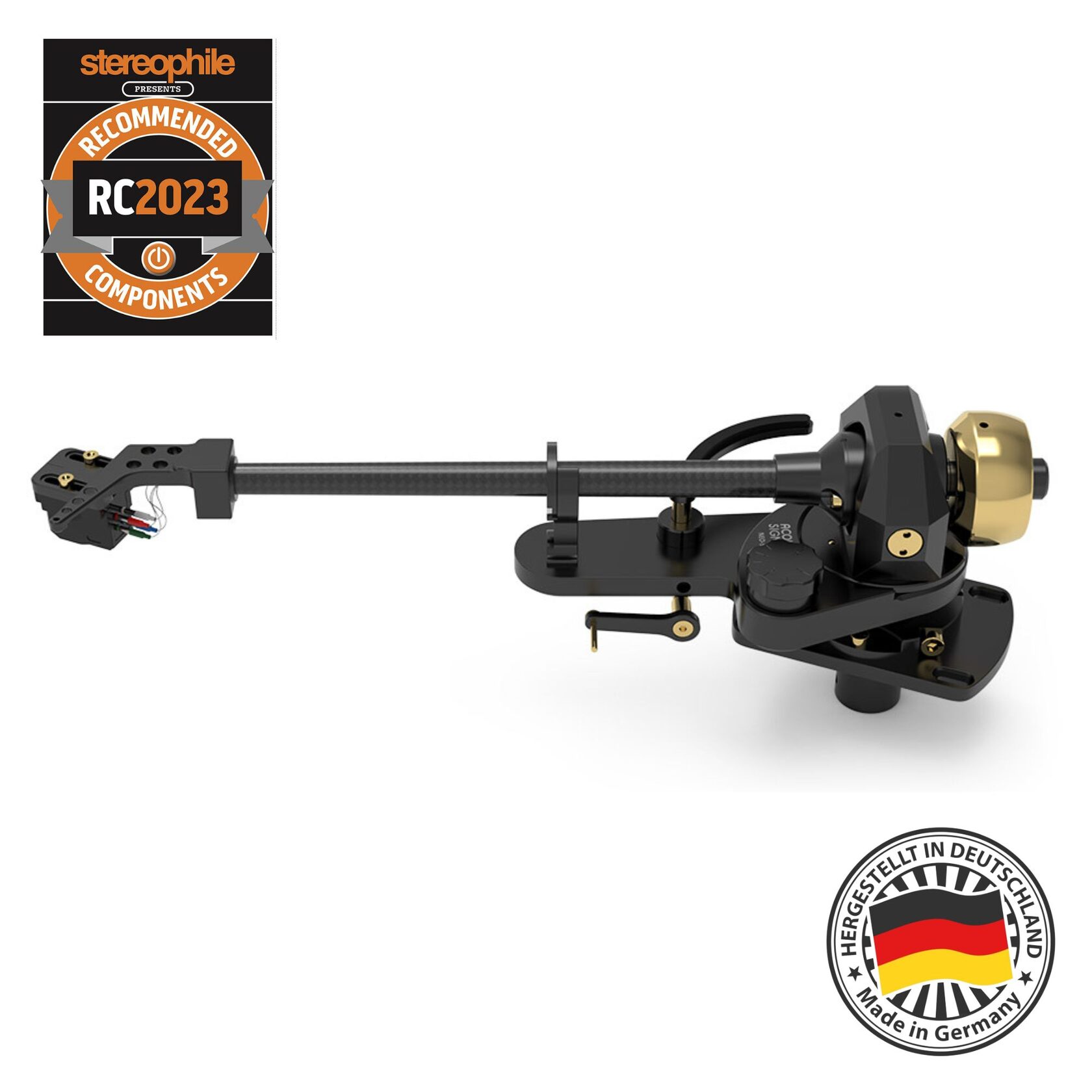
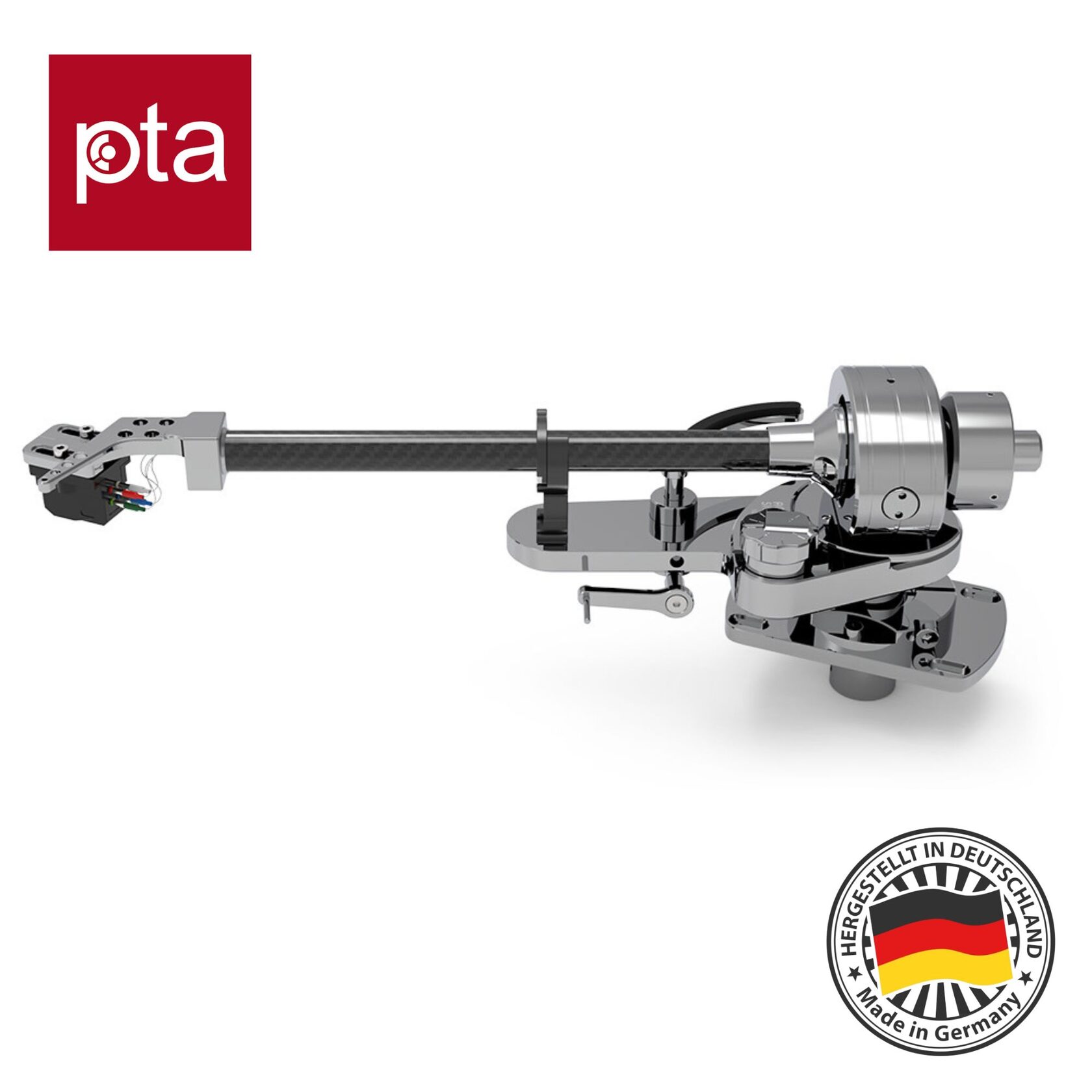
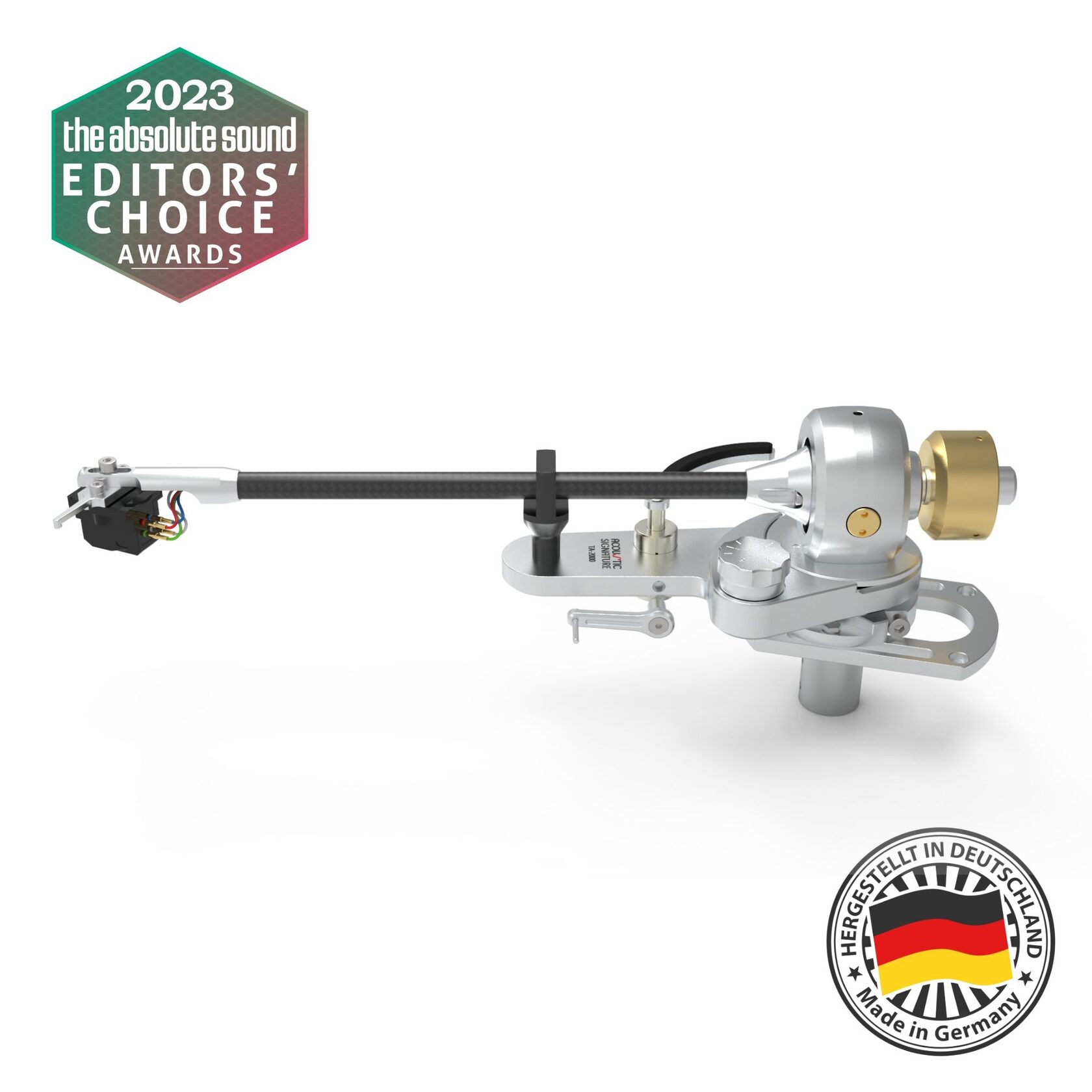
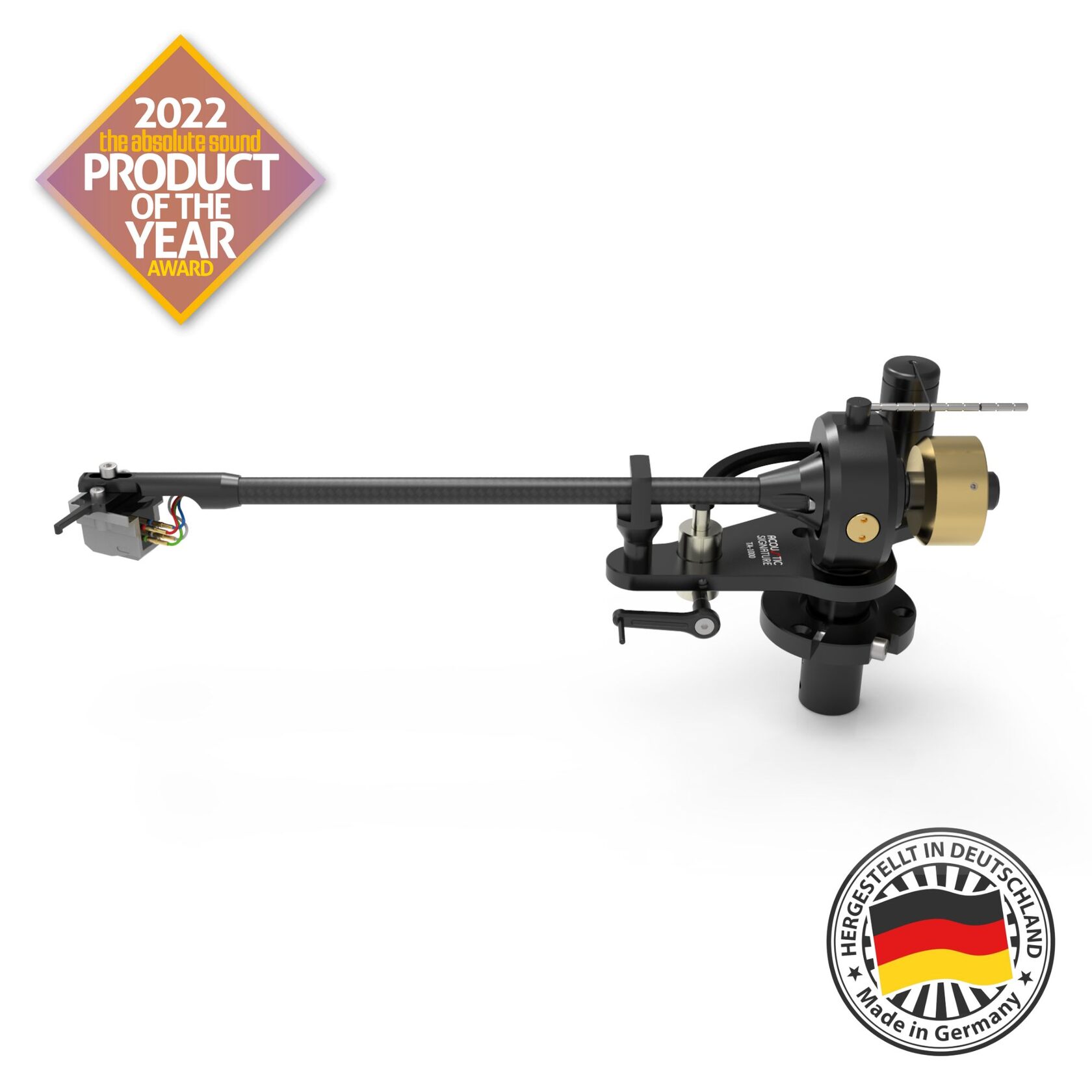
Different arm lengths change that geometry: a 12-inch arm reduces tracking-angle error compared to a 9-inch arm, at the cost of more effective mass and a longer reach across the record. Acoustic Signature‘s TA-NEO series – seven models from the TA-500 to the flagship TA-10000 – is built entirely around this trade-off, using dual-layer carbon armtubes and precision miniature ball bearings, with adjustable VTA and azimuth so geometry can be fine-tuned to the cartridge in use, not just the arm. Gold Note takes a more compact approach: its B-5.1, built in Italy around four precision German-made micro-bearings, keeps friction low
with a simpler gimbal design.
Below, you’ll find tonearms spanning both philosophies, sold on their own or matched to a compatible turntable.