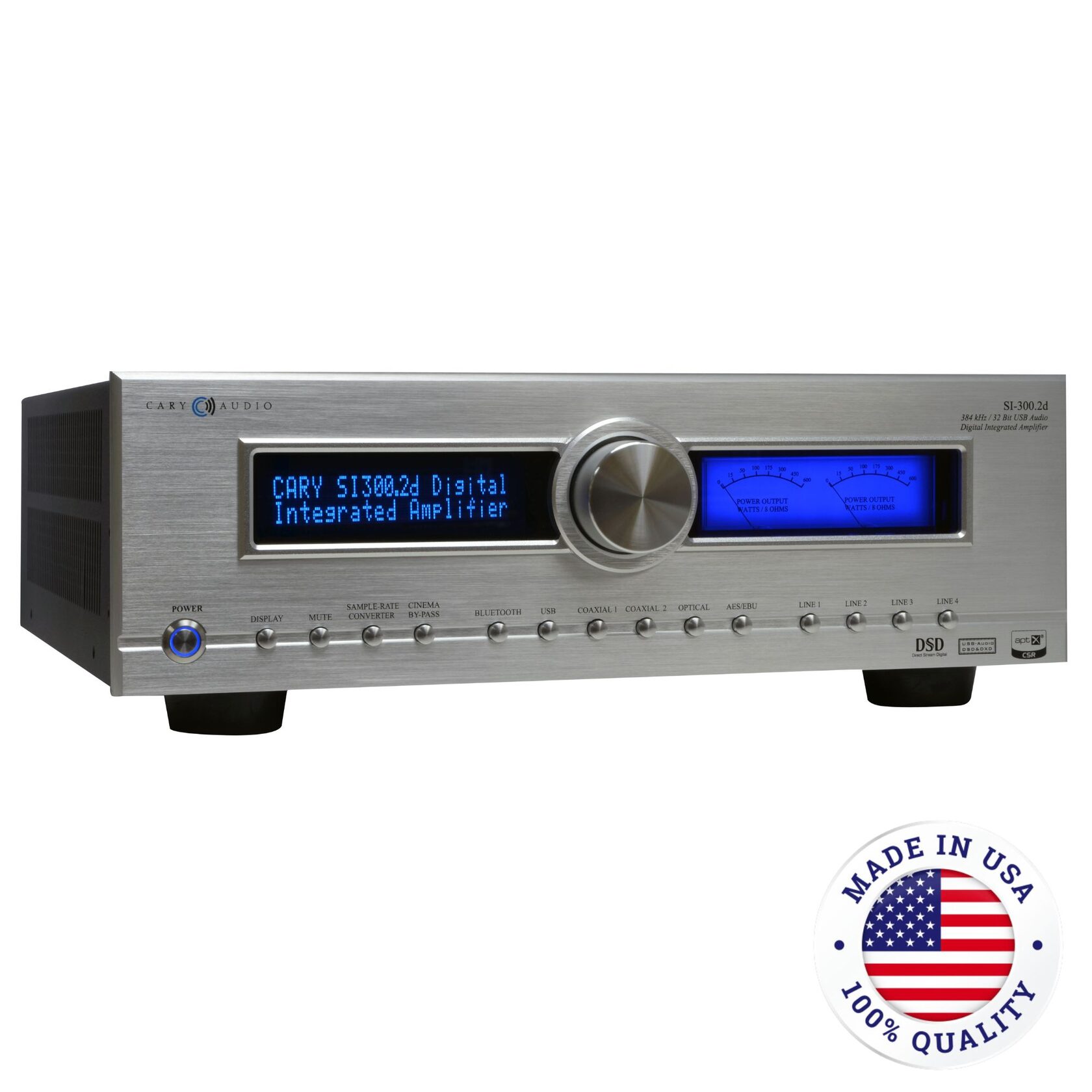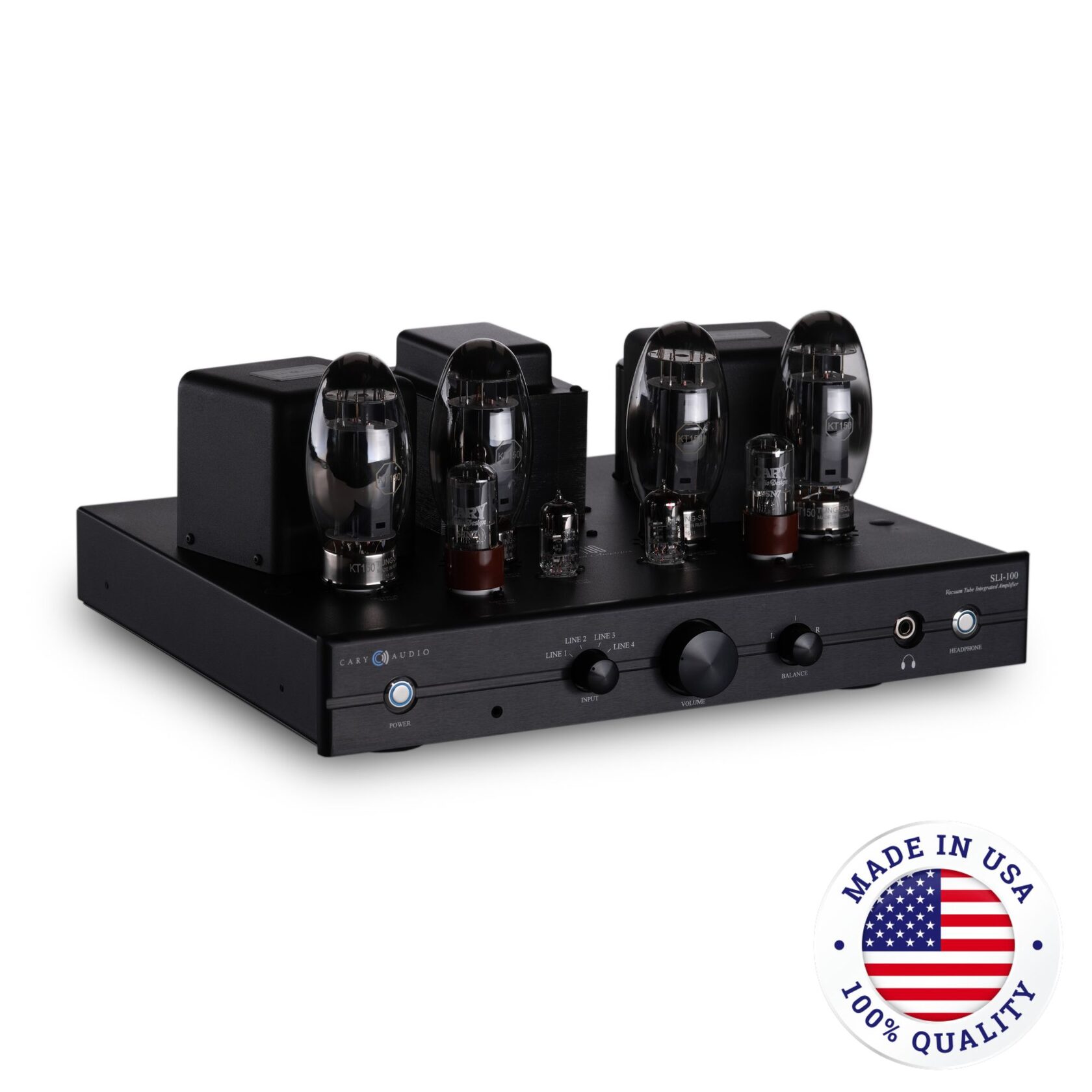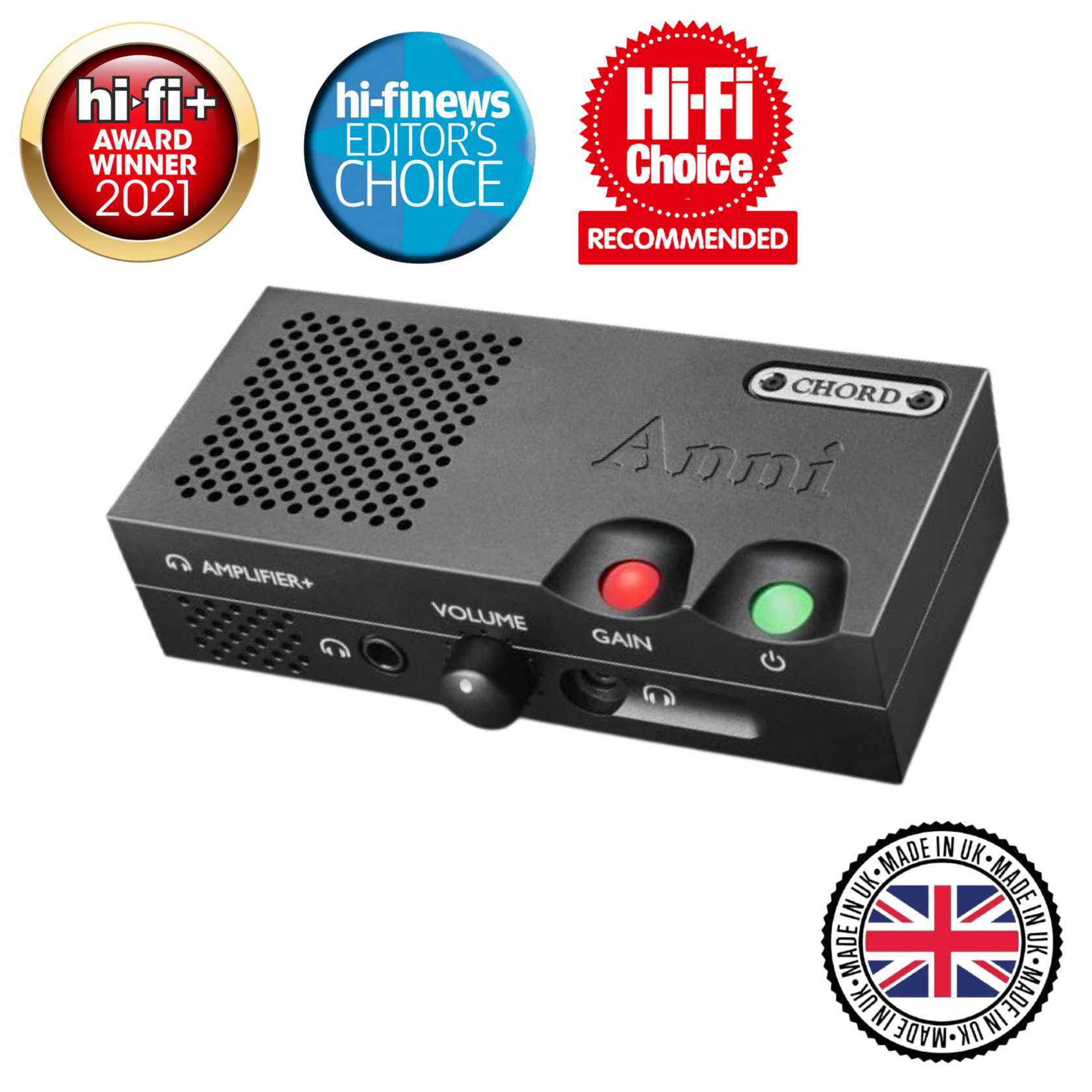


A Cary Audio SLI-80HS and a Gold Note IS-1000 MkII Deluxe are both integrated amplifiers, and both take up roughly the same space on a shelf. Past that, they argue with each other. The Cary expects a separate phono stage and separate digital source, rewards owners who enjoy swapping output tubes by hand, and adds nothing digital at all. The Gold Note replaces the phono stage, the DAC and the streamer as well, all controlled from a phone app. Chord Electronics’ Ultima Integrated refuses to pick either side: no DAC, no streaming, just its flagship amplifier and preamplifier circuitry folded into a single chassis, engineered as precisely as the company knows how.
An integrated amplifier is, in principle, simple: a preamplifier’s source-switching and volume control and a power amplifier’s output stage, sharing one chassis and one power supply instead of living in separate boxes connected by cables. That simplicity is also the design challenge. A power amplifier’s output stage handles far more current than a preamplifier’s delicate low-level circuitry, and asking both to share a chassis and a power supply raises exactly the interference risk that separate preamplifiers and power amplifiers exist to avoid. How a manufacturer manages that risk — and how much beyond amplification it decides to fold into the same box — is what actually separates one integrated amplifier from another.
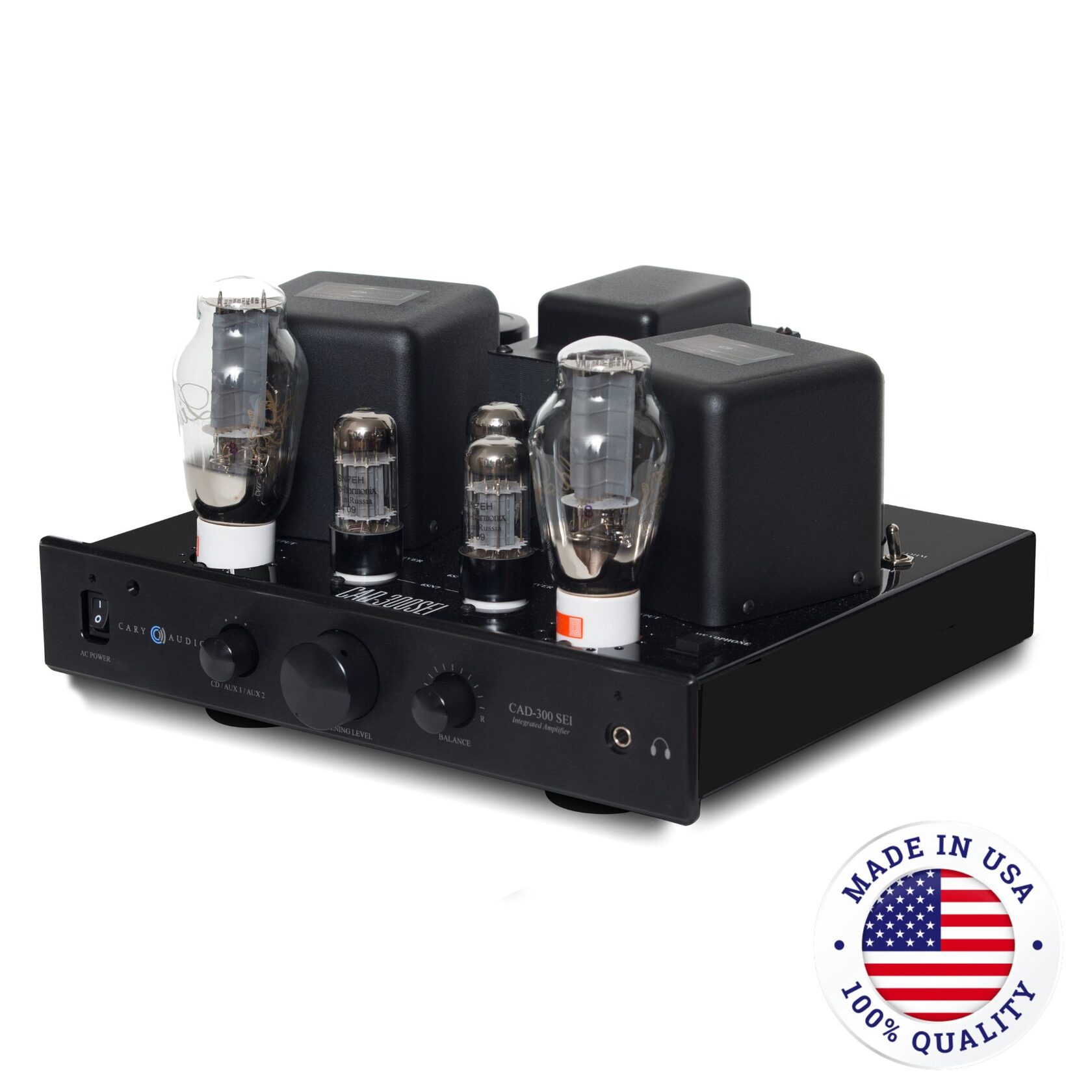
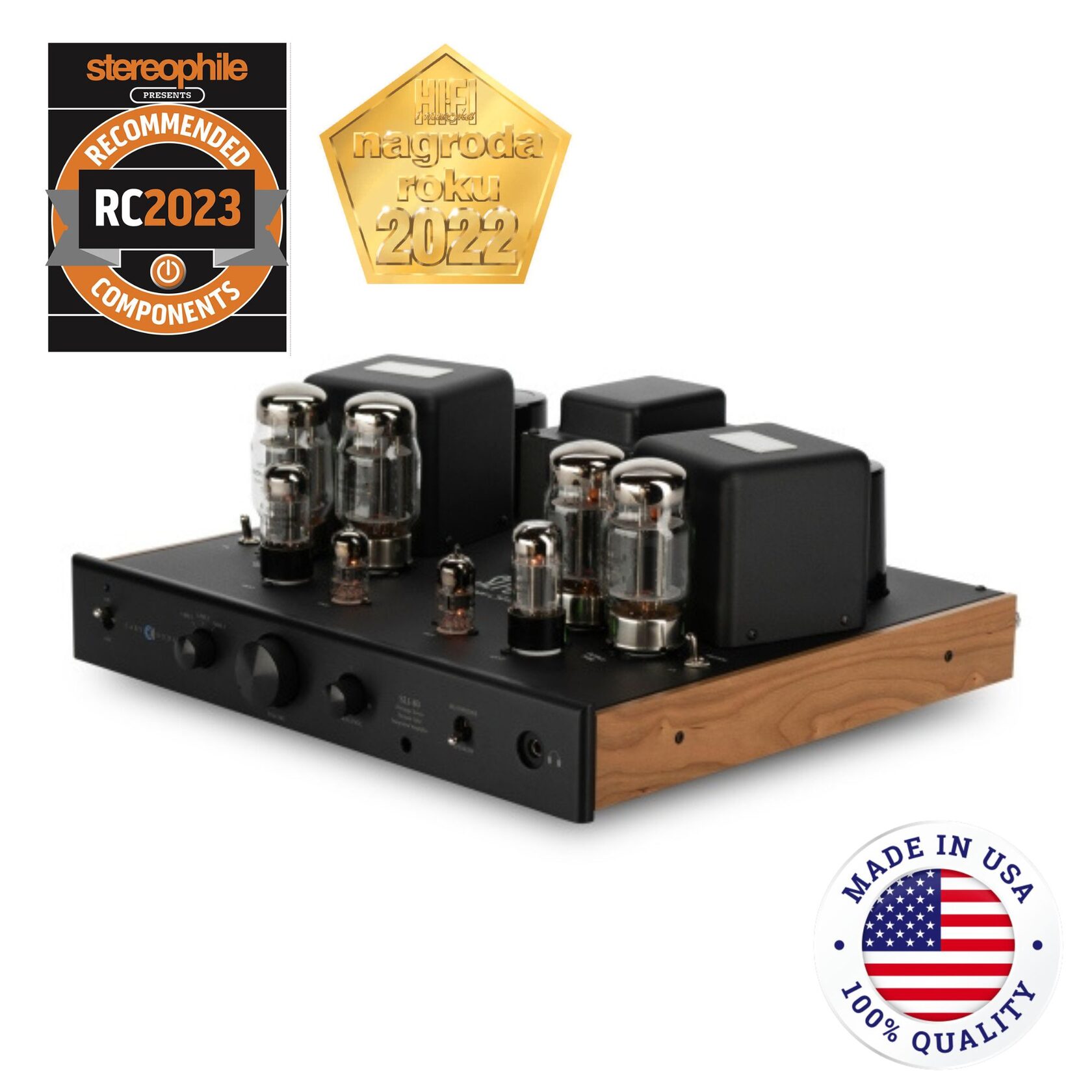
Cary Audio‘s SLI-80HS has held its position as a reference point in the category for more than a decade, and does so entirely as a vacuum tube design. A front panel switch moves it between 40 watts per channel in Triode operation and 80 watts per channel in Ultra-Linear, and its output stage accepts KT88, 6550, EL34, 6CA7, KT77, KT90 or KT120 tubes, so an owner can retune its character without buying a different amplifier. A headphone jack and a subwoofer output round out what is otherwise a deliberately analogue, source-agnostic design — one built to be paired with whatever phono stage or DAC an owner already trusts, rather than to replace them.
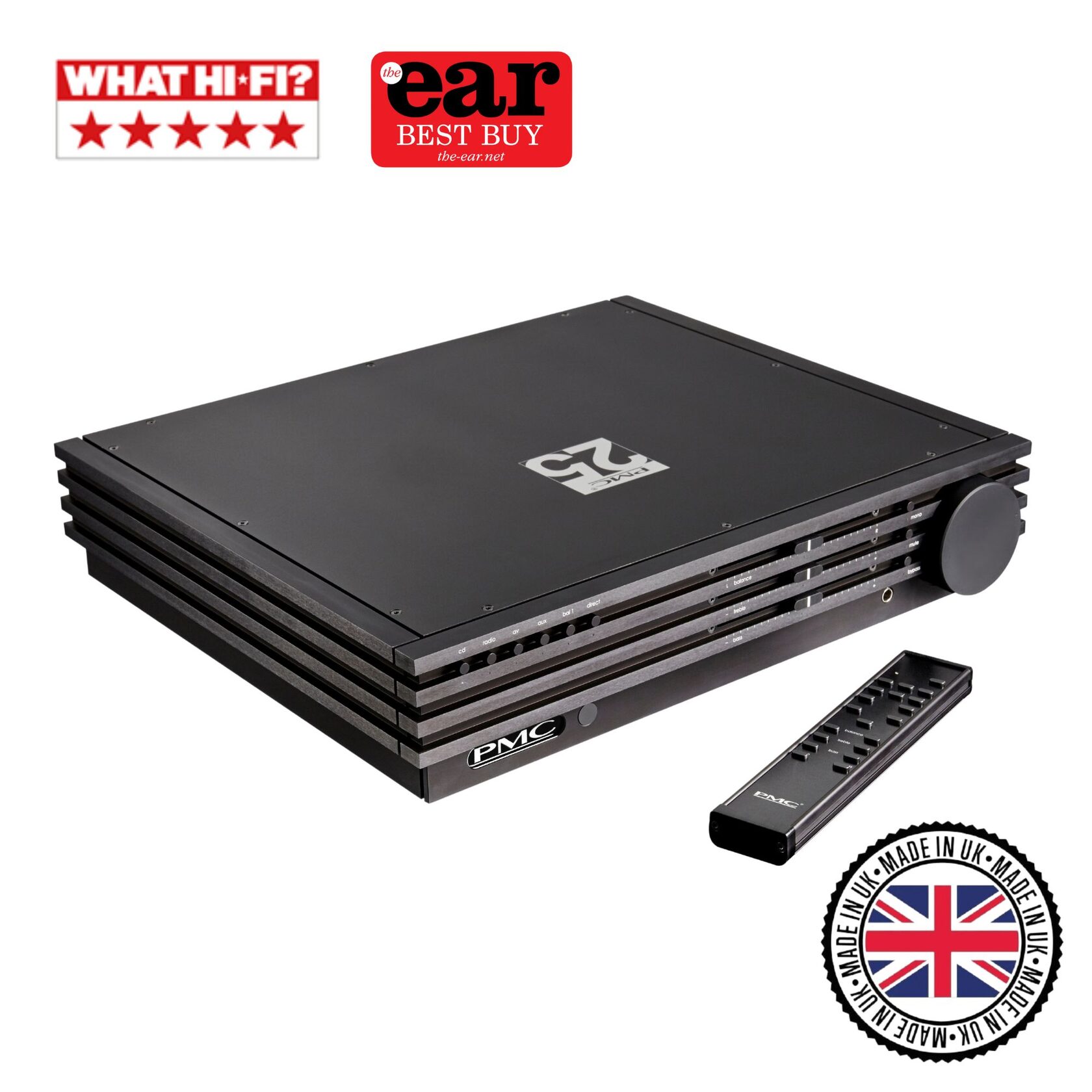
Chord Electronics took the opposite view on what to include, while sharing Cary’s refusal to add digital circuitry. Five years after introducing its dual-feed-forward ULTIMA amplifier topology in separate preamplifiers and power amplifiers, founder John Franks brought the same circuit into a single-box 125-watt integrated — the first new Chord integrated amplifier in seven years. Its four inputs, one balanced XLR and three unbalanced RCA, are each individually buffered and filtered against radio-frequency interference, with source selection handled by microprocessor-controlled sealed relays rather than a simple mechanical switch — precision applied to amplification alone, with nothing else asked of the box.
Gold Note‘s IS-1000 MkII Deluxe goes the furthest in the other direction, treating the integrated amplifier as the one box a system needs. Behind its 125-watt Class AB MOSFET amplifier stage sits a built-in MM/MC phono stage, a Burr Brown PCM1796 and PCM1792A DAC, and high-resolution streaming support for Tidal Connect, Qobuz, Deezer, Spotify, AirPlay 2, Roon Ready and MQA, all reachable from six digital and three analogue inputs and controlled from Gold Note’s own app. Where Cary and Chord assume other boxes will handle sources, the IS-1000 MkII Deluxe assumes there won’t be any other boxes at all.
Decide first how much of a system an integrated amplifier should actually replace — a phono stage and a streamer along with the amplification, or amplification alone, done as precisely or as characterfully as possible — before comparing power output figures between them.

An integrated amplifier combines a preamplifier’s source-selection and volume control with a power amplifier’s output stage in a single chassis and power supply, rather than as separate components connected by cables. Integrated amplifiers vary in scope as much as in circuit design: some add nothing beyond amplification and expect a separate phono stage or digital source, while others build in a phono stage, a digital-to-analogue converter and network streaming as well, functioning as the only electronics box a system needs.
An integrated amplifier combines both stages in one chassis and power supply; separates keep them in individual boxes connected by cables, which can simplify power-supply isolation between the two stages at the cost of extra space, cost and cabling.
Not inherently. It raises a real engineering challenge, since a power amplifier’s output stage shares a chassis and power supply with a preamplifier’s more delicate circuitry, but manufacturers address this through careful shielding, buffering and power-supply design rather than accepting a compromise.
Some can. All-in-one designs such as Gold Note’s IS-1000 MkII Deluxe build in a phono stage, a DAC and network streaming support alongside the amplifier. Others, such as Cary Audio’s SLI-80HS and Chord Electronics’ Ultima Integrated, focus on amplification only and expect those sources to be separate components.
Many do, though not all. Cary Audio’s SLI-80HS includes a front-panel headphone jack; check the specific model’s connections if headphone listening matters, since it isn’t a universal feature of the category.
© 2026 MGY Europe. All rights reserved.