




Fyne Audio F501E Wins Product of The Year 2025 Award

A debut to wish for awaited the new Fyne Audio F500E speakers at the Product of the Year Award ceremony in London. Organised by What Hi-Fi? magazine and sponsored by Richer Sounds the gala event brought the coveted Product of the Year in a toughly contested ‘Best Floorstanding Speaker’ category to Fyne Audio’s new F501E […]
Chord Electronics Mojo 2 Crowned Product of The Year 2025

Trendsetting Chord Electronics DAC and headphone amplifier wins What Hi-Fi? Product of the Year Award. Chord Mojo 2 takes the coveted prize in the ‘Best DAC’ category for a fourth consecutive year which is an impressive achievement in itself. Coming from the lineage of groundbreaking FPGA-based portable DACs Mojo 2 rides on the success of […]
English Electric EE1 Plus is Big in Japan
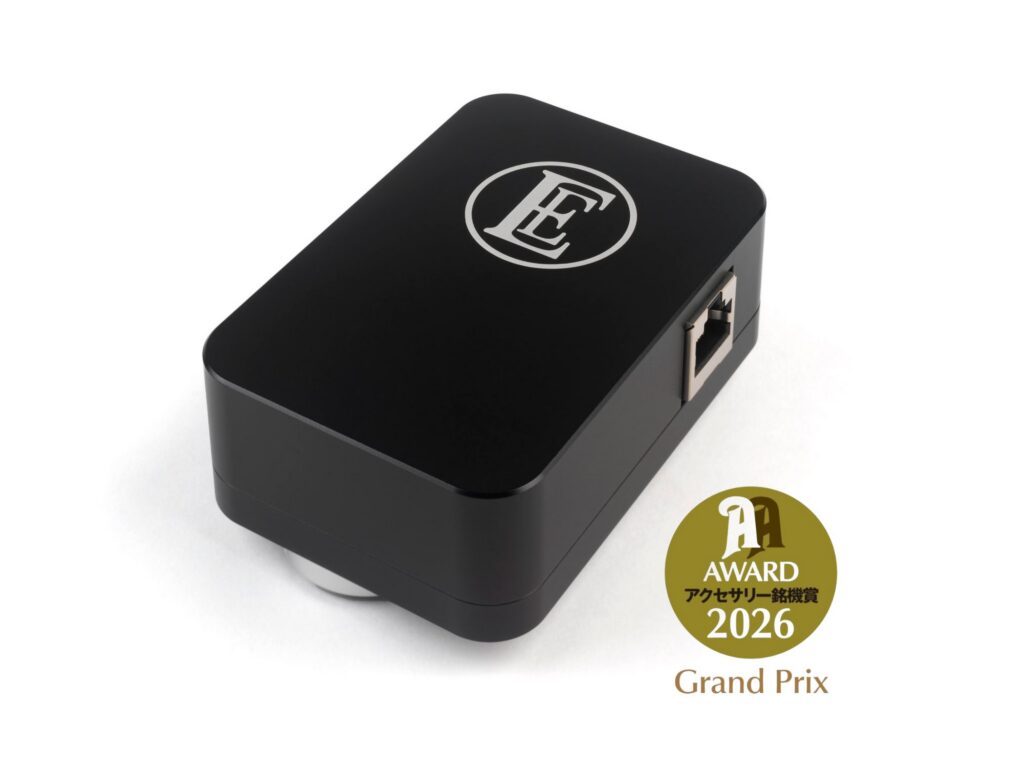
Small but mighty the English Electric EE1 Plus internet noise suppressor wins Grand Prix in Audio Accessory category in Japan.New EE1 Plus fills the shoes of the Audio Accessory Award Winner 2024 EE1, adding high end sophistication and more efficient line noise protection. Reviewer for AA magazine concludes that ‘it’s so rare to find an […]
Winners take it all at What Hi-Fi Awards 2025!

Very, very positive feedback from British What Hi-Fi? mag editors sweeps quite a few of MGY products.The Chord Company scoops all honours in the Bets Cable category, awarded the absolute best analogue interconnect over £100, ClearwayX ARAY Analogue RCA, and best analogue interconnect under £100, C-line, and best speaker cable, RumourX: As usual Chord Electronics […]
Meze Audio appreciates EISA 2025/2026 award

The Romanian company was happy to comment in the social media: “The POET won this year’s EISA award for Best Premium Headphones!The Expert Imaging and Sound Association (EISA) is a community comprising 54 technology magazines, websites, and social media commentators from 27 countries, specializing in Hi-Fi, home theater, photography and video, in-car, and mobile electronics. […]
Fyne Audio F500 SP Series: Exclusive for Audiophiles

Scottish manufacturer Fyne Audio is a leading innovator in the High-End audio market. While their classic 500 series became a massive hit, the engineers decided to push the boundaries even further. Consequently, the unique Fyne Audio F500 SP series (Special Production) was born. This collection masterfully combines the accessible cabinet designs of the core series […]
One-box amplifier solution to please What Hi-Fi? magazine

New Chord Electronics ULTIMA Integrated amplifier receives high praise in a recent What Hi-Fi? review. Designed and manufactured by John Franks’ team in Kent, this amp follows purist approach where most effort goes into achieving pristine sound. The What Hi-Fi? review discusses the basic functionality one expects of an integrated amp and concurs with the Chord […]
Reviews of Chord Electronics Ultima Integrated start to pour in

First reviews of an inaugural integrated amp in Chord Electronics’ ULTIMA line are starting to appear. Stereonet UK (Scott Frankland) and Hi-Fi Statement Germany (Wolfgang Kemper) where the first, to our knowledge, to publish an in-depth review of the Ultima Integrated. This amp hosts so many original technologies, developed in-house, so just its technical description […]
Chord Electronics BerTTi awarded best power amp by Stereonet UK

“The new Chord BerTTi is an excellent new power amplifier. One that offers attractive yet compact and ergonomic styling allied to serious punching power and a highly musical disposition”,— that’s the verdict David Price had in his review for StereoNet UK. Obviously the little Chord BerTTi has impressed other people at Stereonet UK in such […]