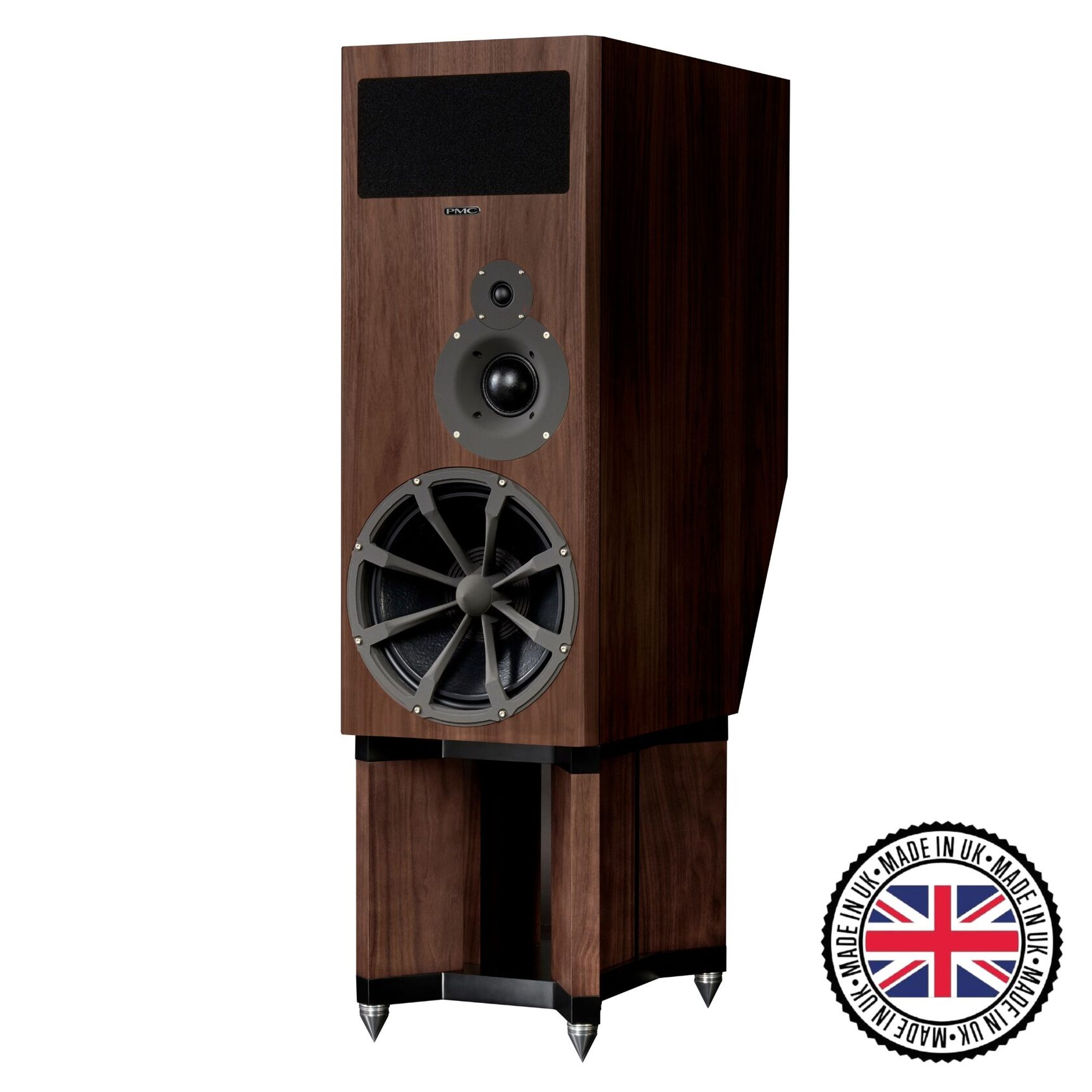
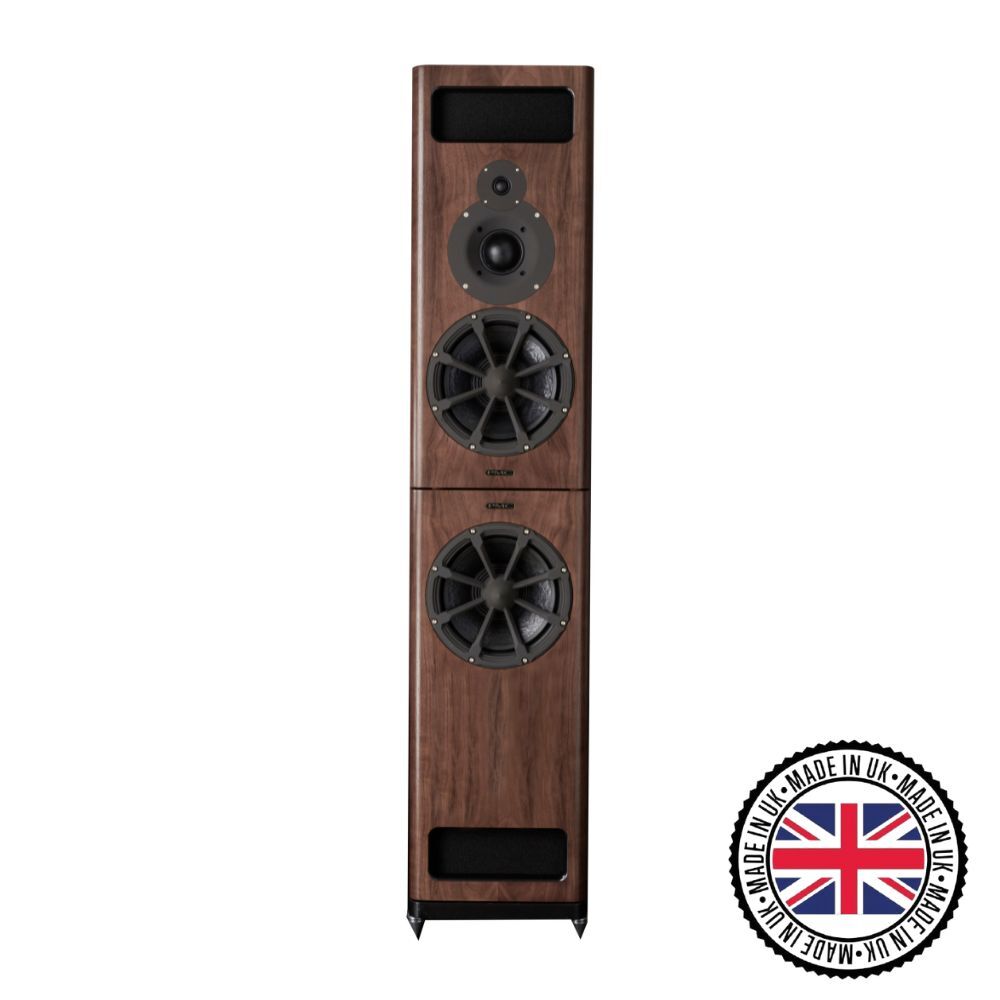
A PMC fact.12 Signature routes its bass through a folded transmission line more than two metres long, hidden inside a cabinet barely a metre tall. A Fyne Audio F1-8S puts almost the entire job on a single driver, mounting the tweeter inside the woofer rather than beside it. Both are flagship three-way loudspeakers, built to the highest standard each company knows how to reach. Neither uses the other’s core idea, and neither treats it as optional.
Every loudspeaker does the same basic job: take an electrical signal and move air to reproduce it as sound, using a driver — a cone or dome attached to a voice coil sitting in a magnetic field — that moves back and forth as current passes through it. Most music spans a wider frequency range than one driver can reproduce cleanly, so most speakers split the signal across two or more drivers, typically a tweeter for treble and one or more woofers for bass and midrange, using a crossover network. Where PMC and Fyne Audio diverge is in how they solve what follows from that: how to load a bass driver so it doesn’t run out of usable low frequency in a small cabinet, and how to stop drivers spaced apart on a baffle from smearing timing as their sound arrives at a listener’s ears microseconds apart.
PMC‘s answer is Advanced Transmission Line loading (ATL): a folded internal duct behind the bass driver that uses the cabinet itself, tuned to a specific length, to reinforce low frequencies a sealed or ported box would let go to waste. The idea has been central to the company since 1990, when Peter Thomas, then a manager at the BBC’s Maida Vale studios, and engineer Adrian Loader founded PMC because the transmission-line monitors the BBC wanted weren’t available commercially anywhere else. That heritage is why PMC’s own three-way reference monitors — the IB2, MB2, and BB5 — became fixtures in professional studios and scoring stages, and why PMC remains one of a small number of loudspeaker brands to hold an Emmy Award for its contribution to sound recording.
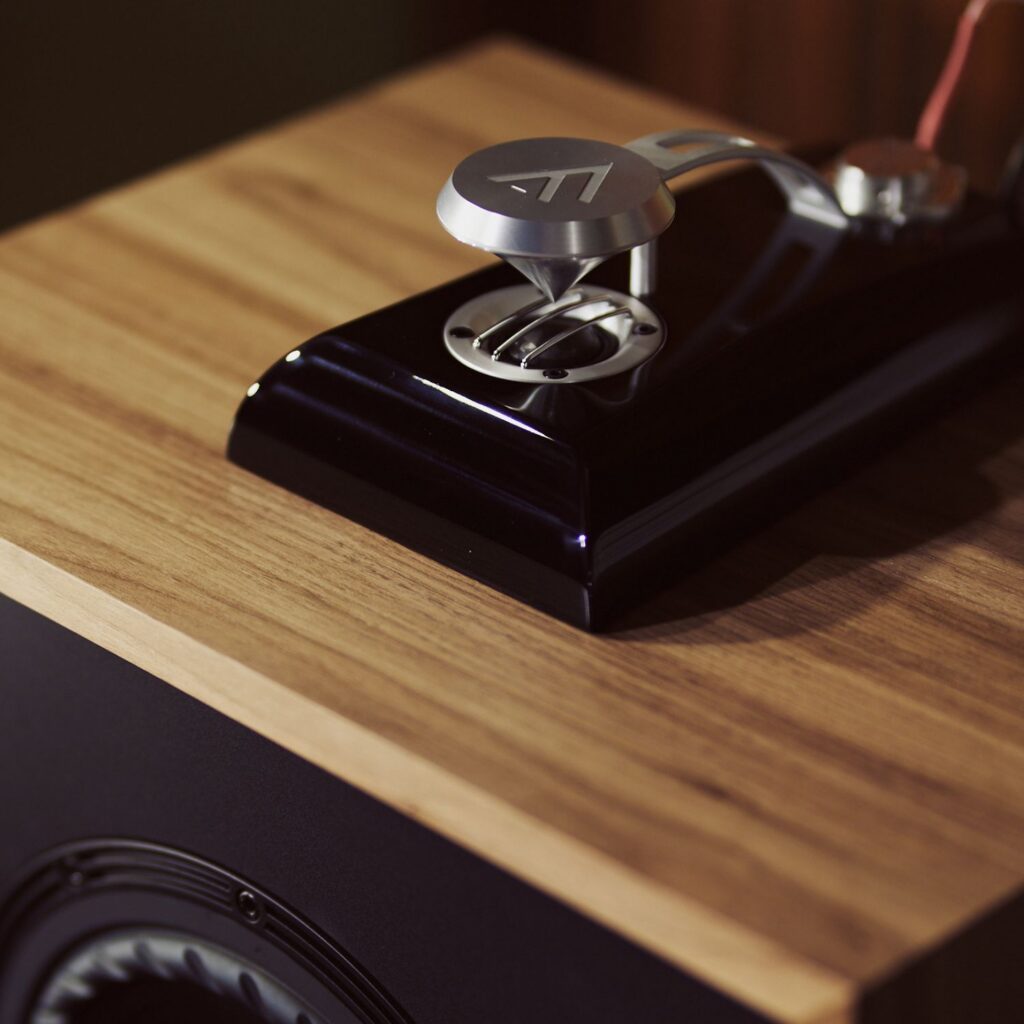
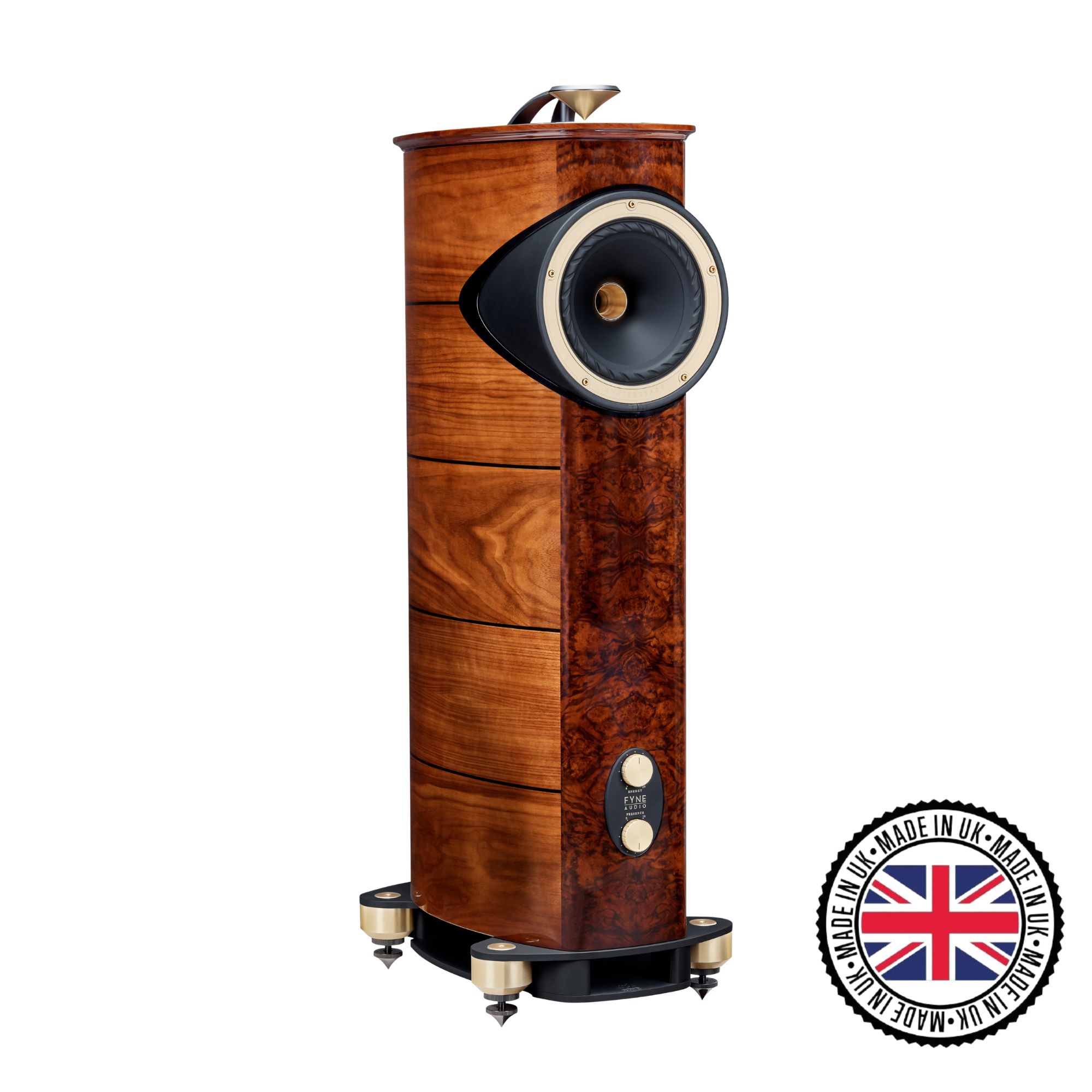
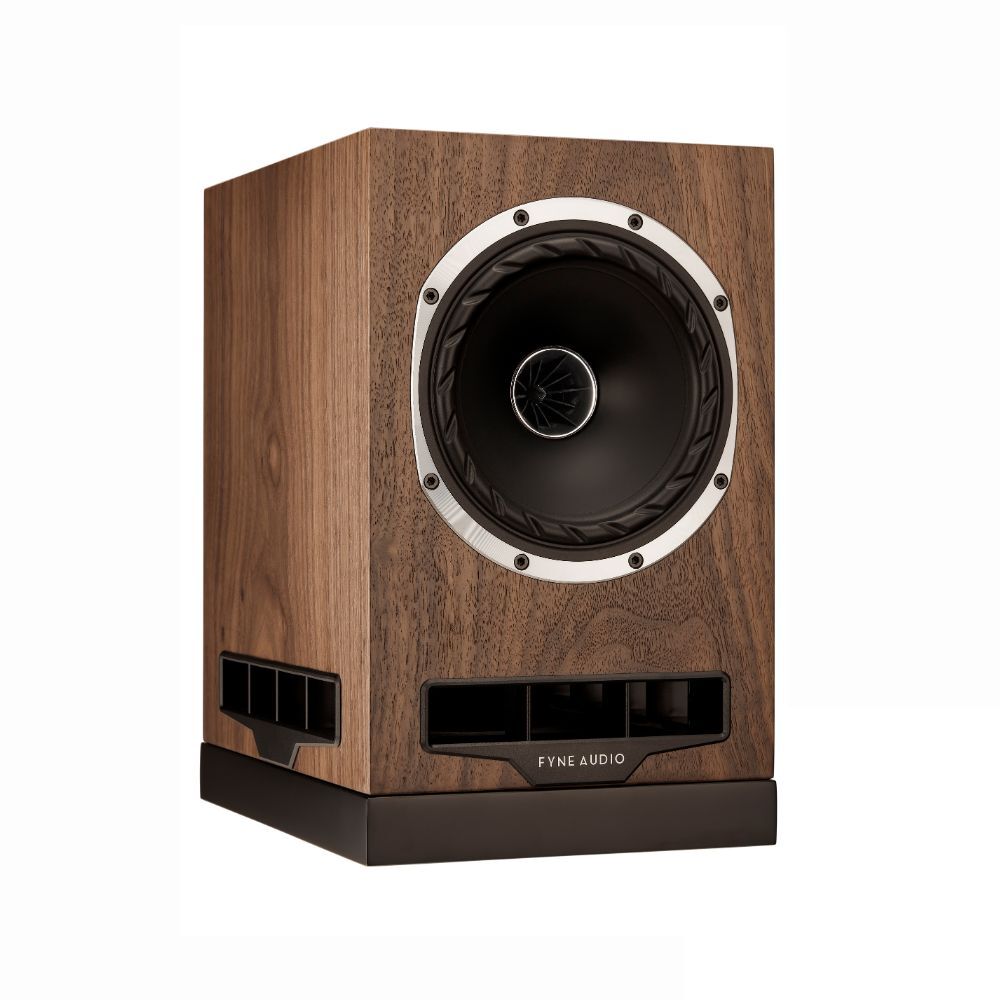
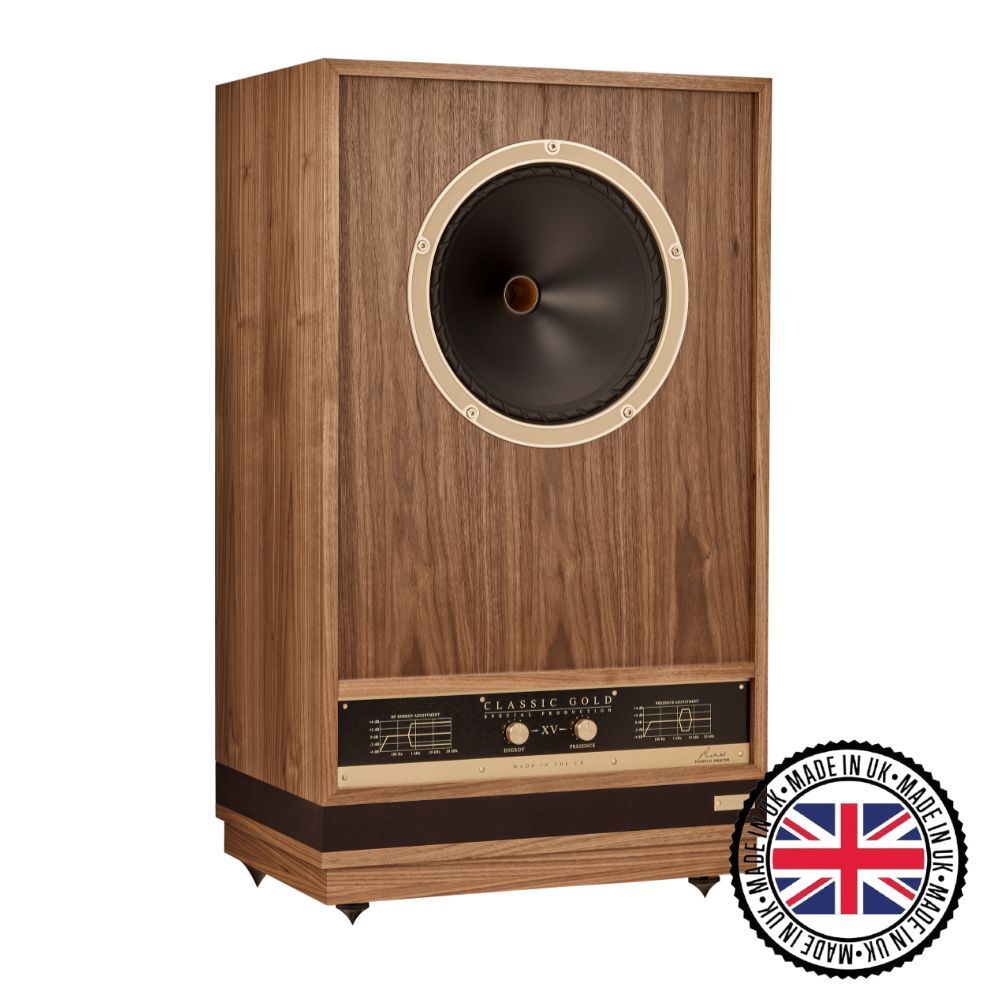
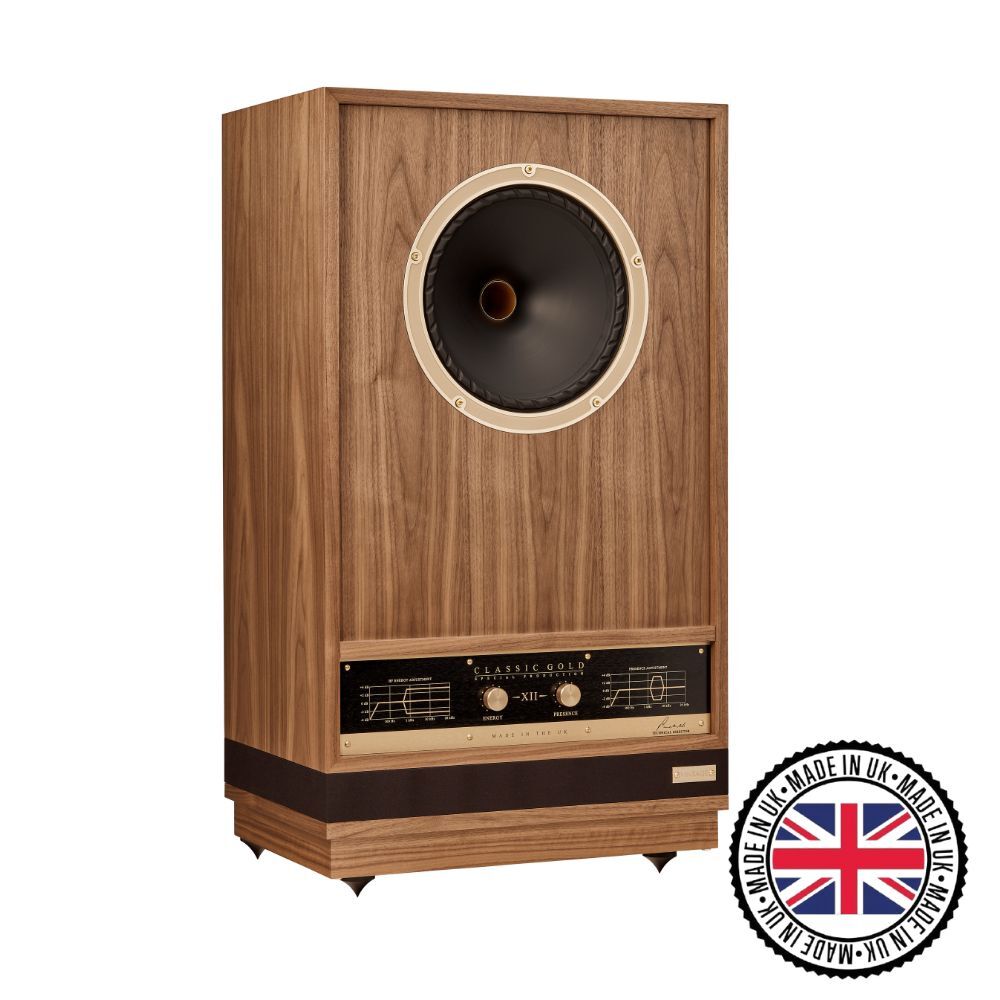
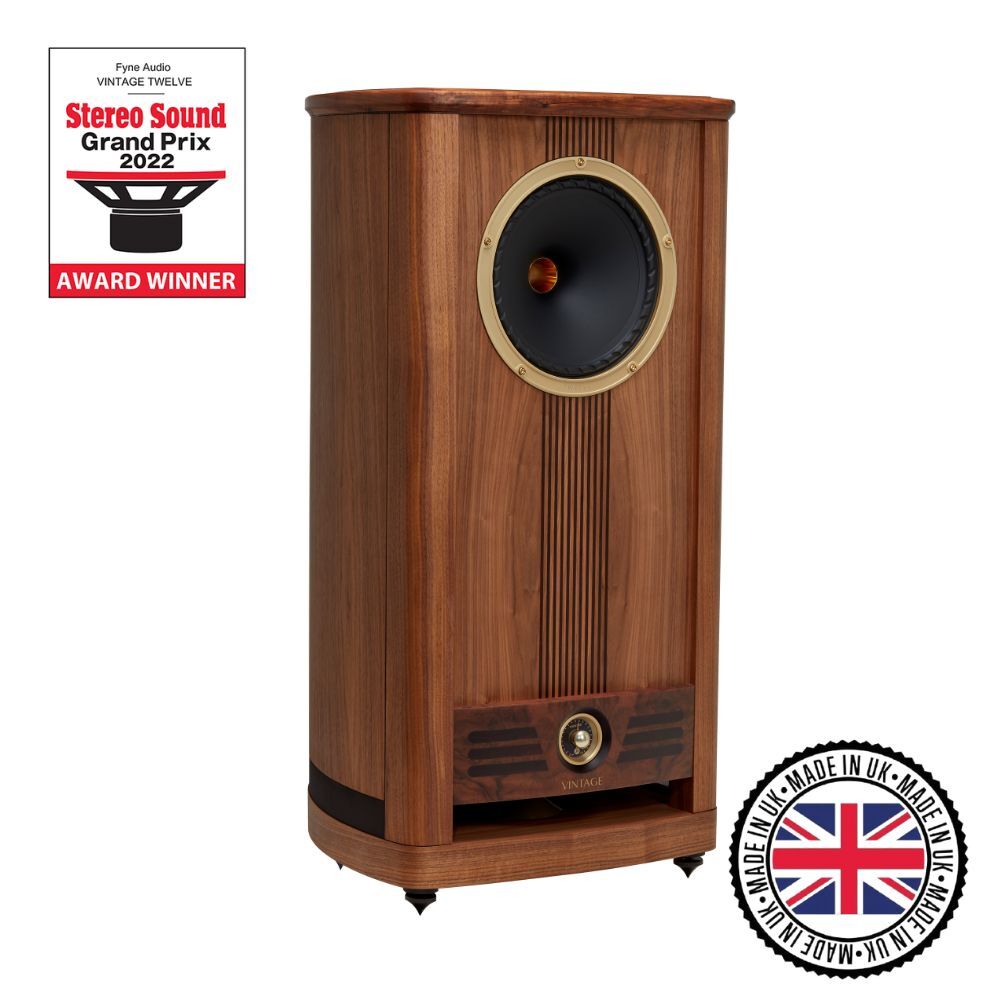
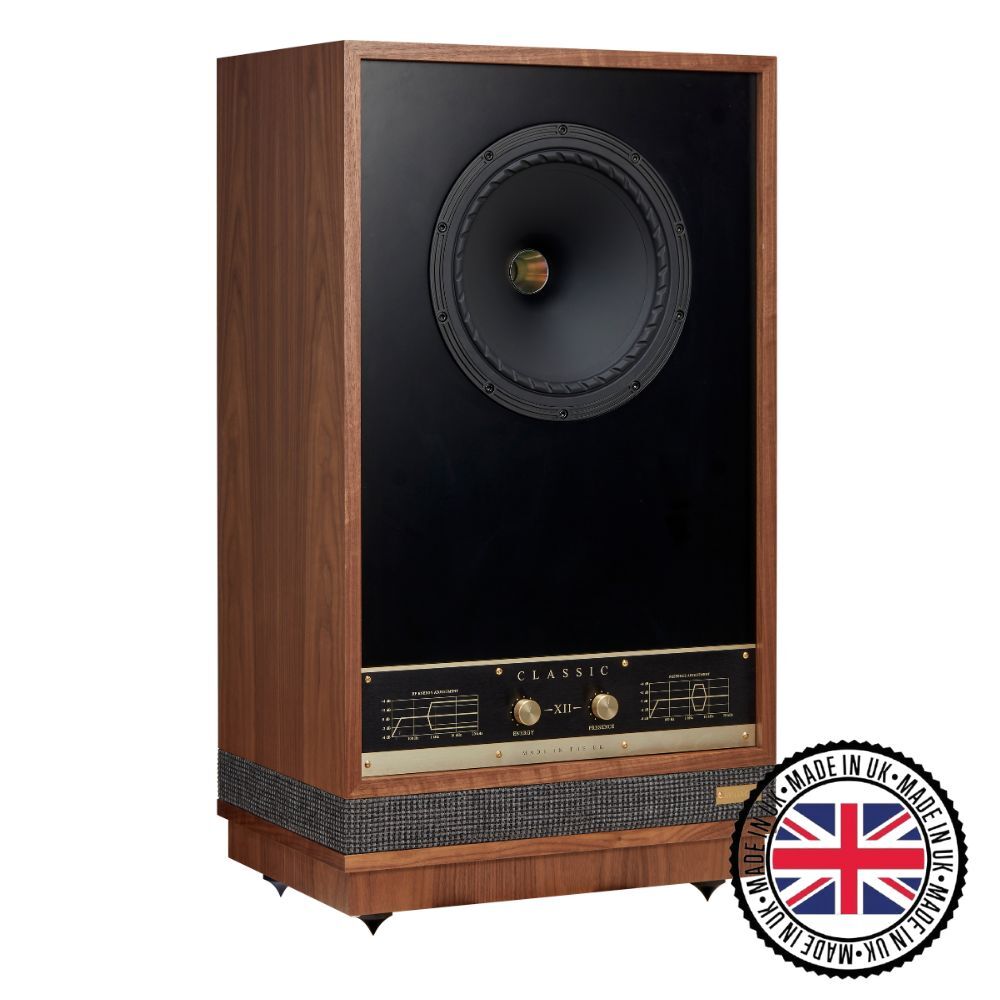
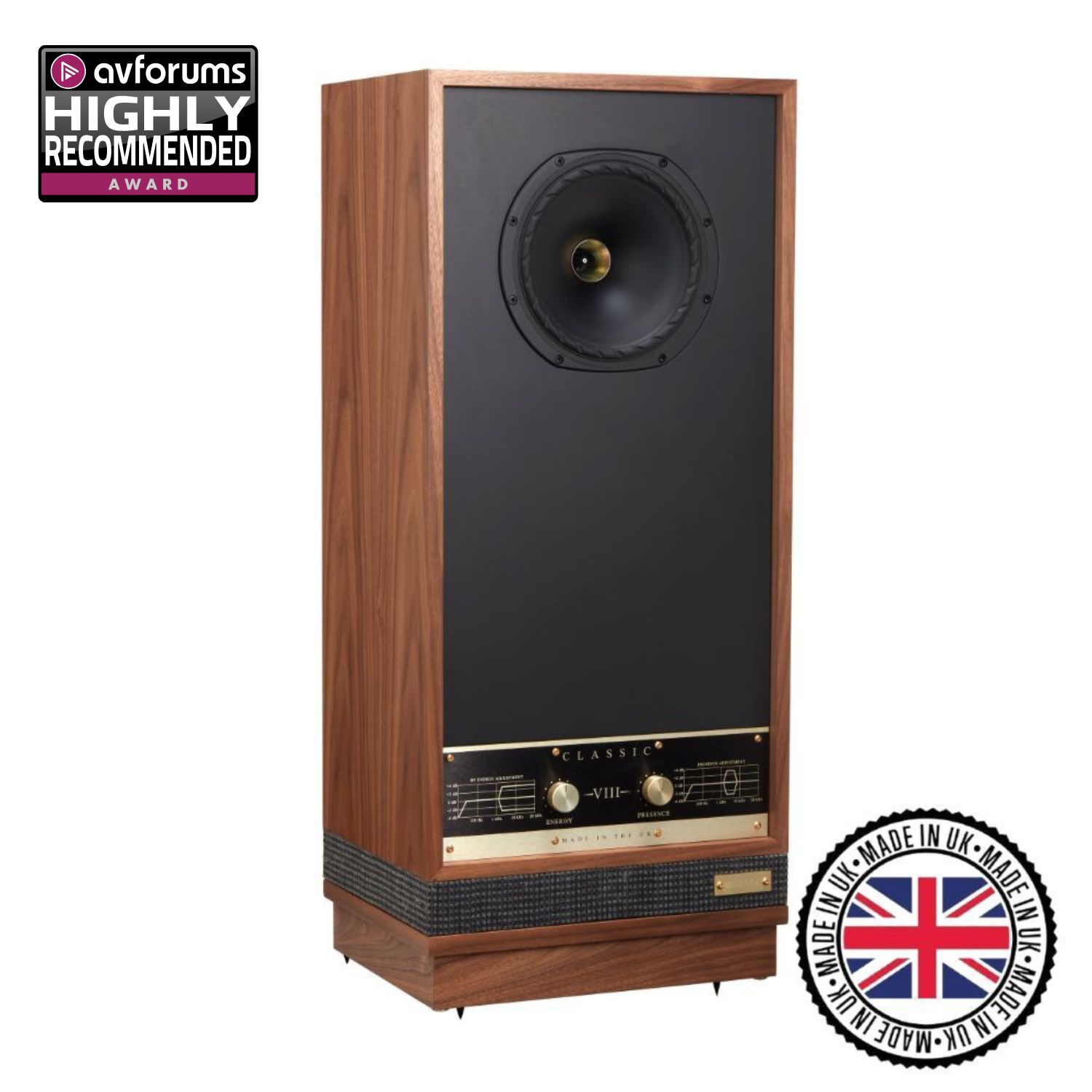
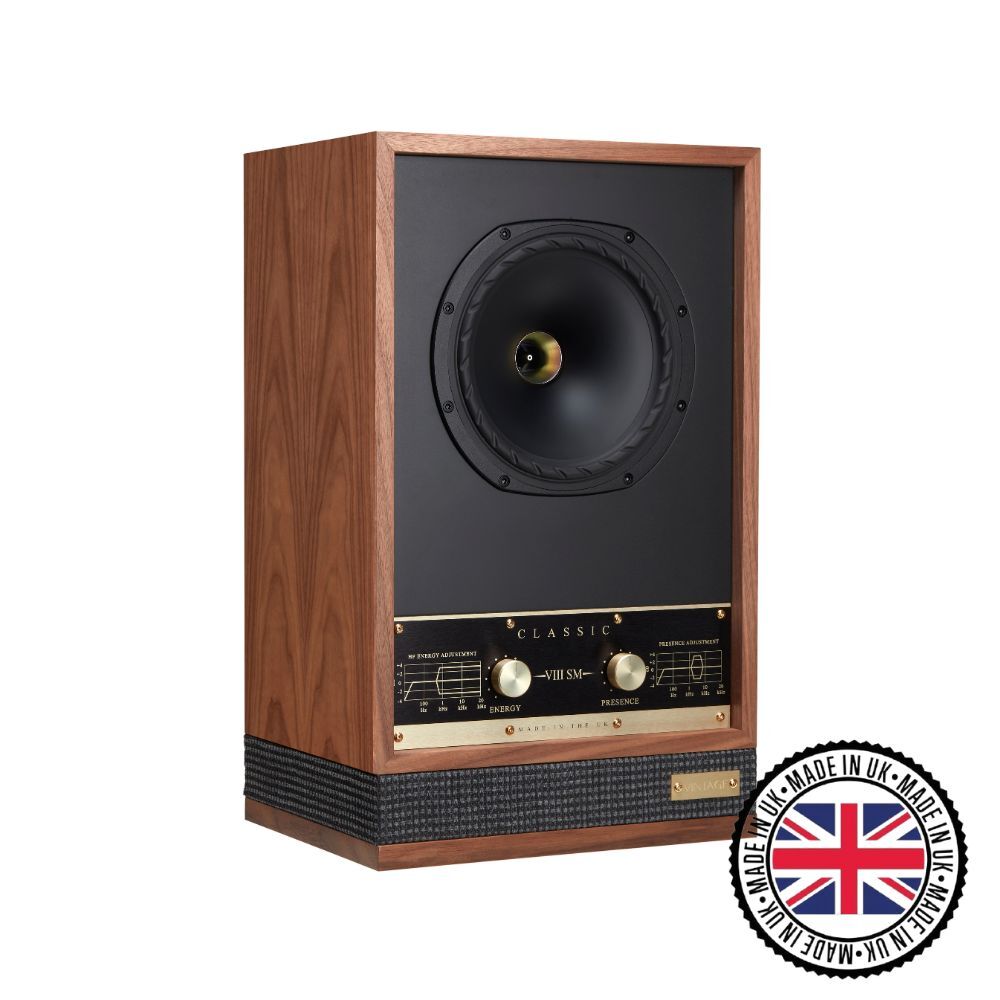
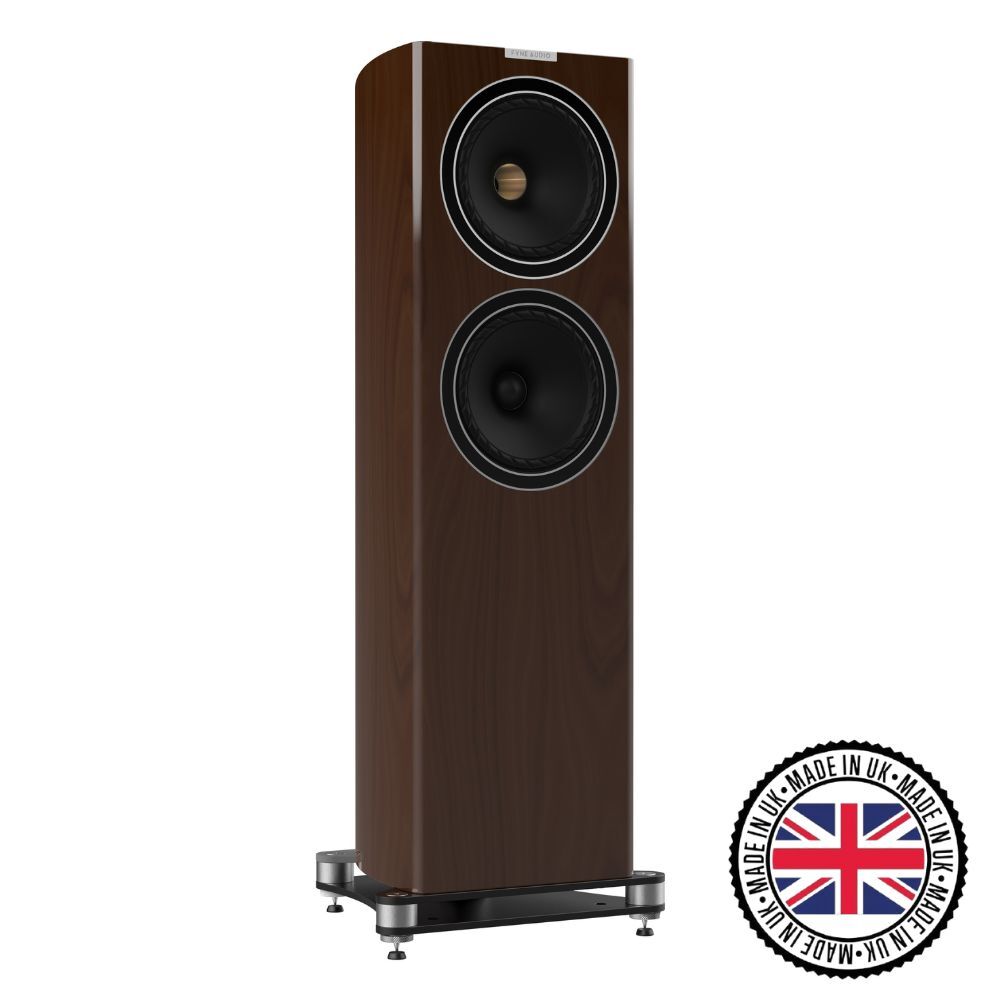
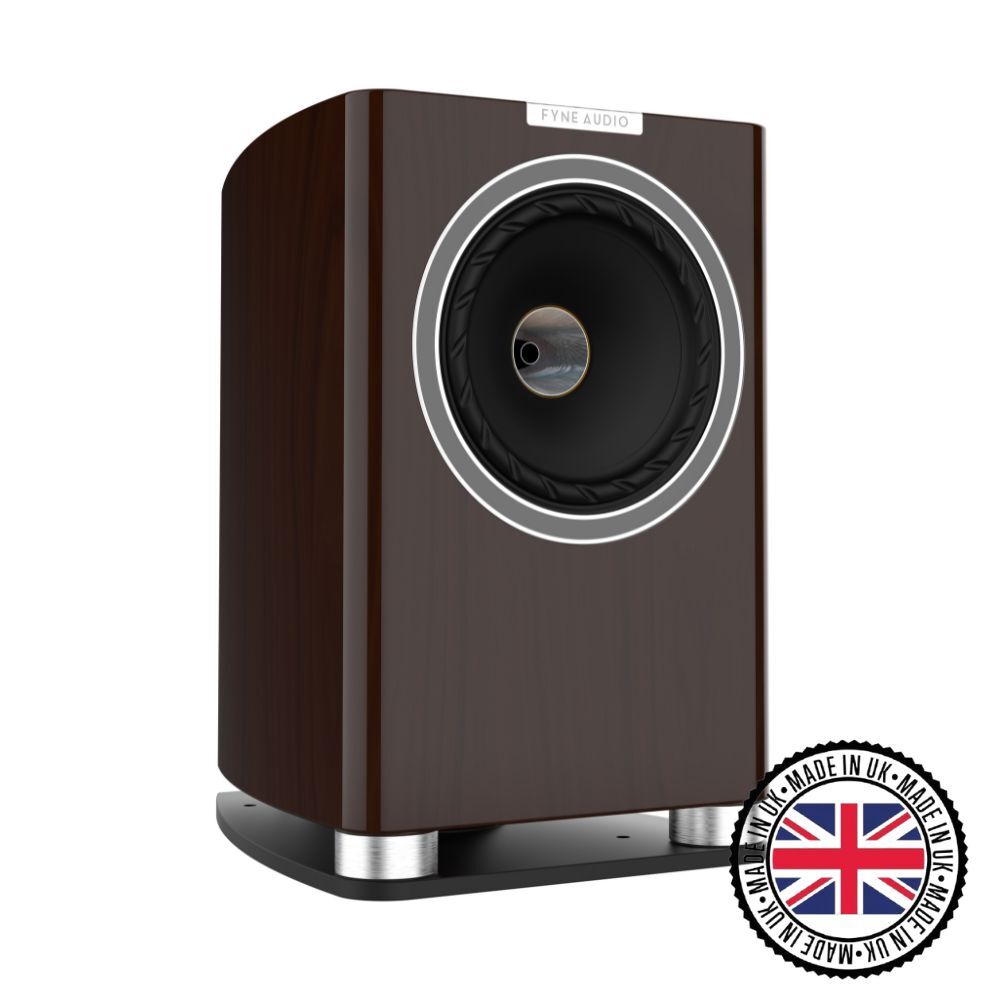
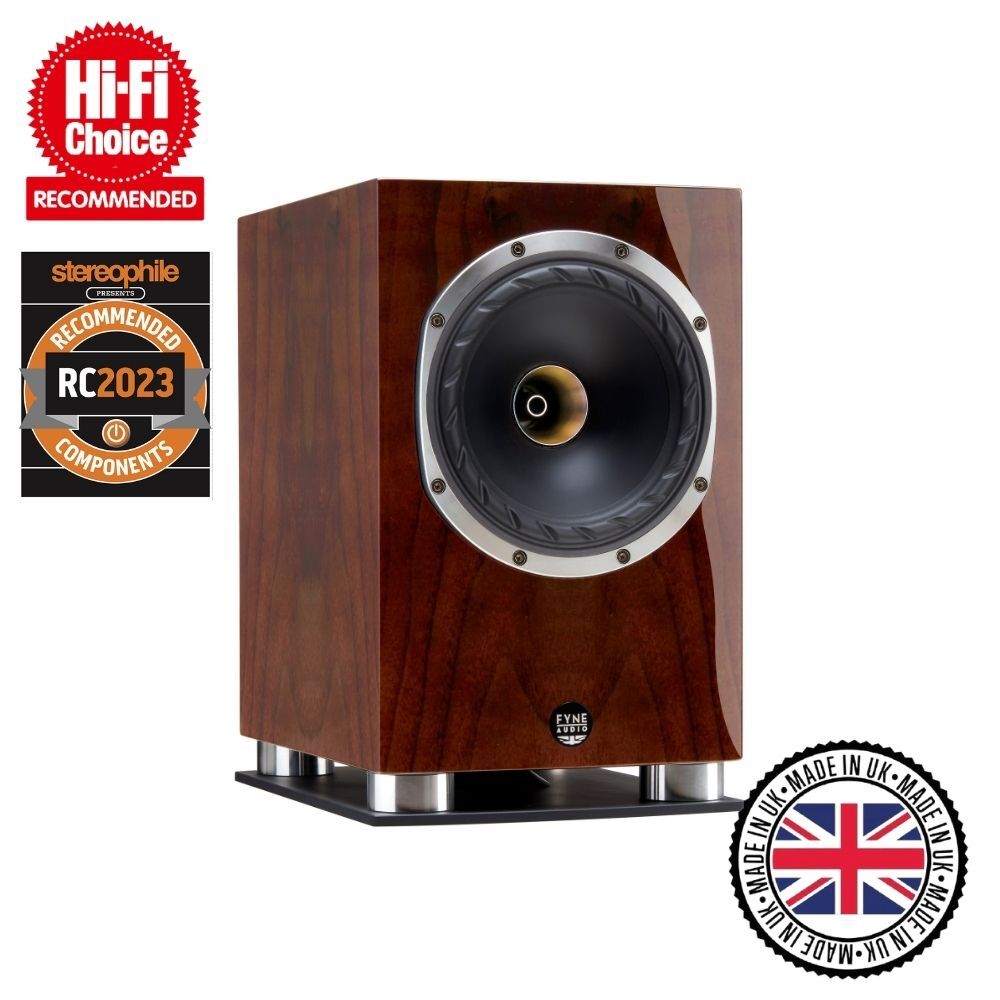
Fyne Audio‘s answer is to remove the spacing problem rather than manage it. Its IsoFlare driver mounts the tweeter at the acoustic centre of the woofer cone, so the two effectively share one point in space and the timing correction a crossover would otherwise need barely applies. That’s not a new idea — it descends from the point-source coaxial driver Tannoy engineer Ronnie Rackham patented in 1947 — but Fyne Audio didn’t inherit it through an acquisition. The company was founded in Glasgow in 2017 by Dr Paul Mills and Andrzej Sosna, both career Tannoy engineers, who built a new team to take the same coaxial approach further with modern materials: a rigid cast-aluminium driver chassis, a titanium HF diaphragm, and the BassTrax tractrix diffuser that vents the cabinet’s rear chamber.
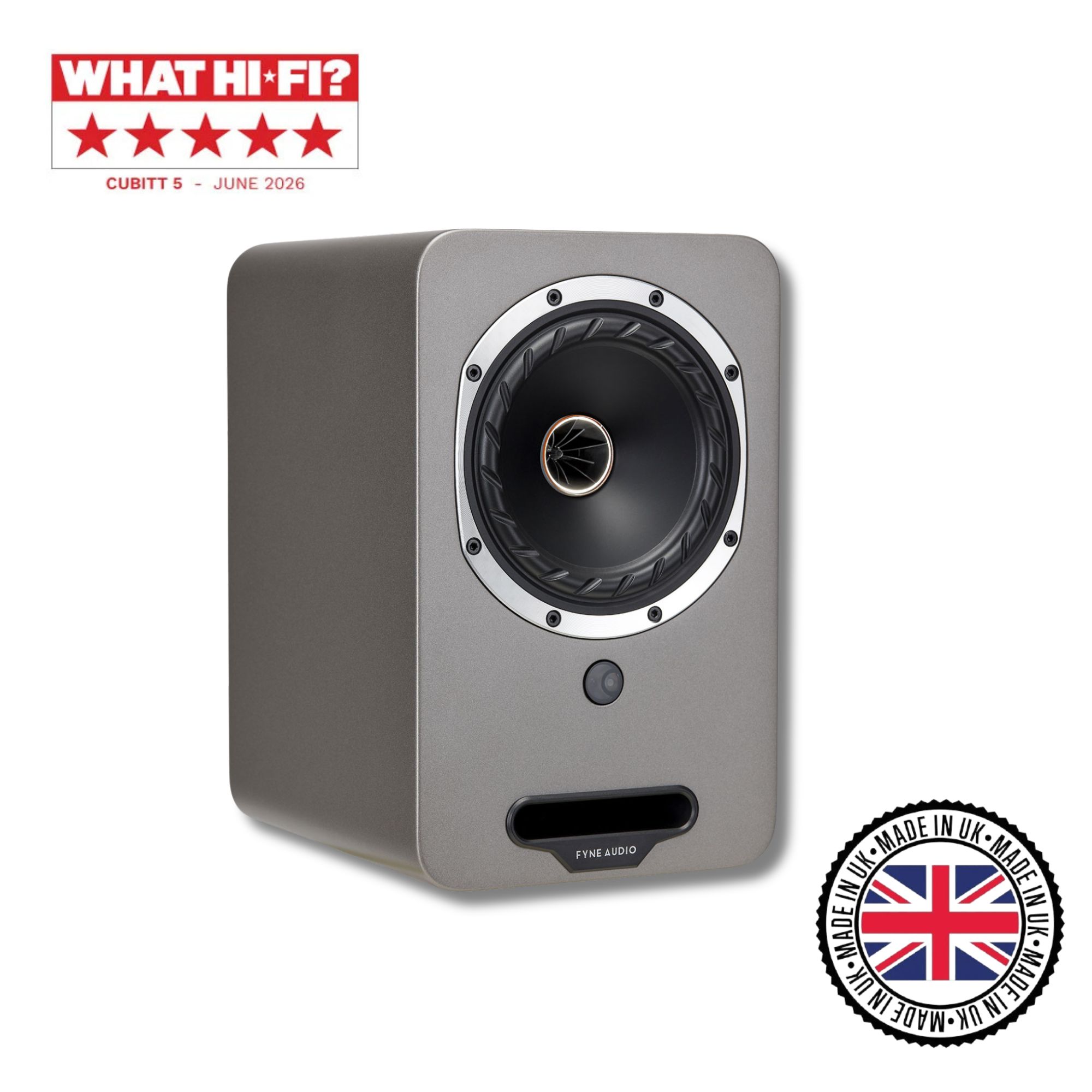
Both brands scale that core idea across very different budgets and uses. PMC runs from the entry-level Prodigy series up through Prophecy, fact, and the professional SE range, plus an active twenty5i line with amplification already built in and a ci series for custom installation. Fyne Audio spans the affordable F500E series up through F700, the flagship F1, and two distinct retro-styled Vintage ranges, alongside the self-contained Cubitt 5 wireless system. Decide first whether you want a multi-driver transmission-line design or a single-point coaxial one — that choice says more about how a speaker will sound in your room than any spec sheet.







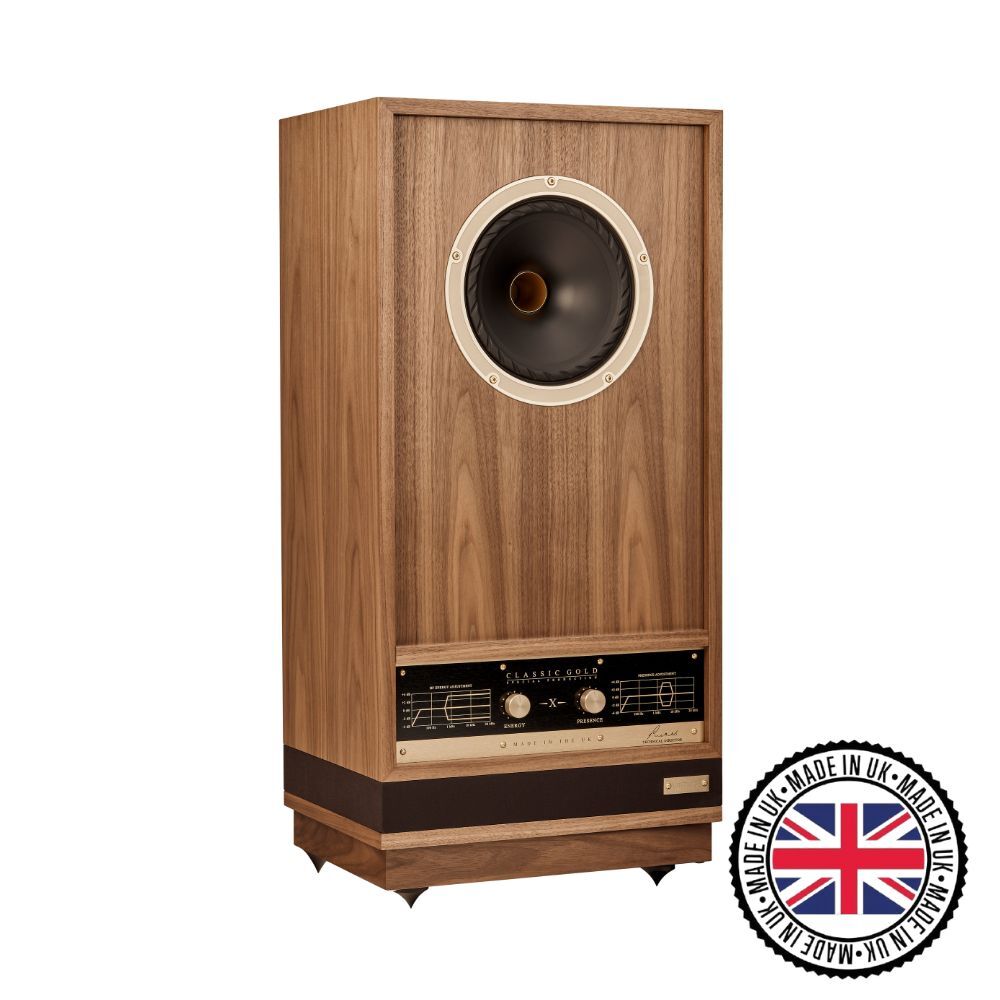
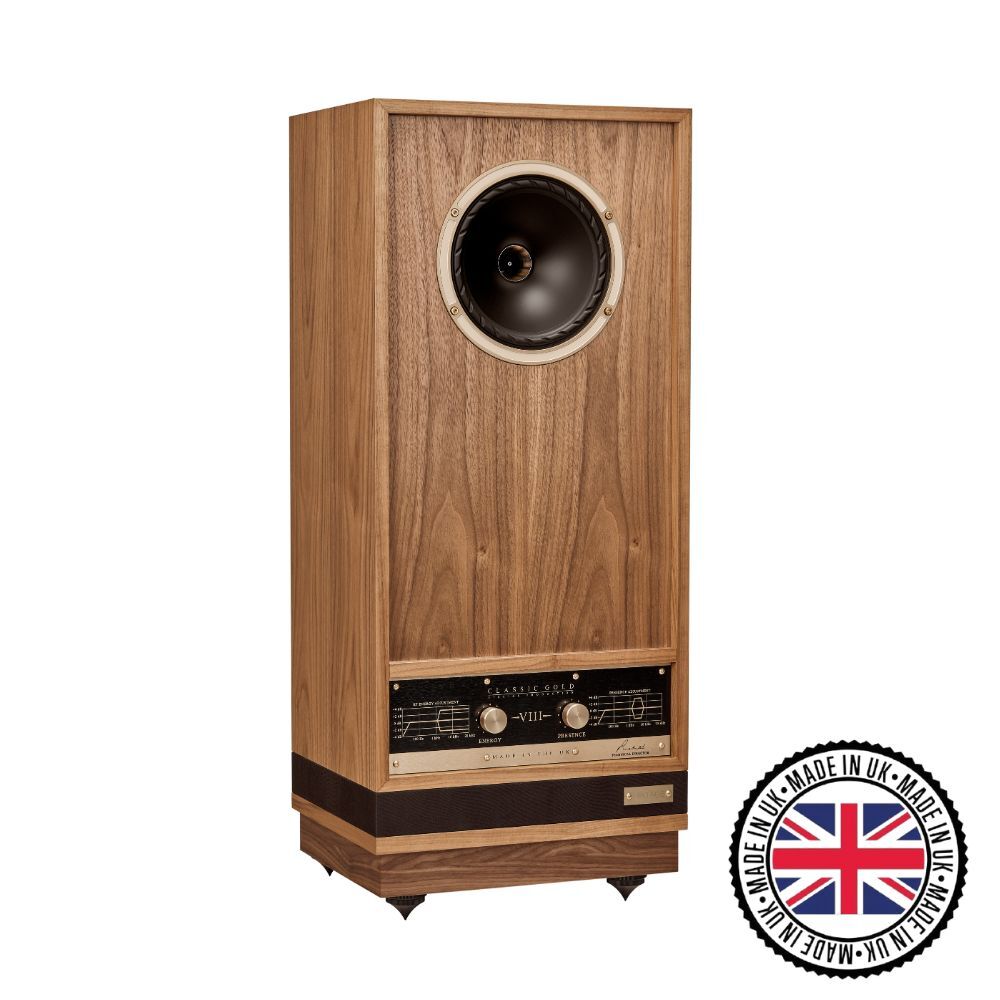
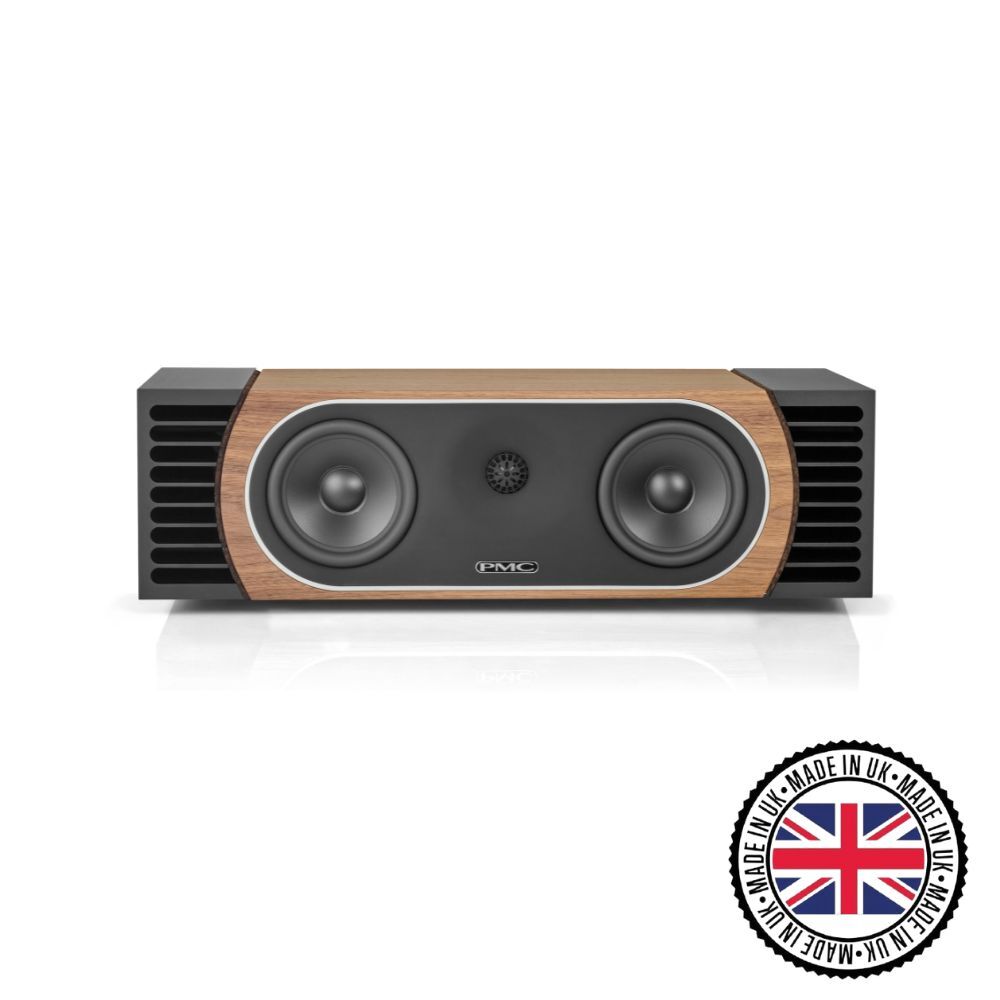
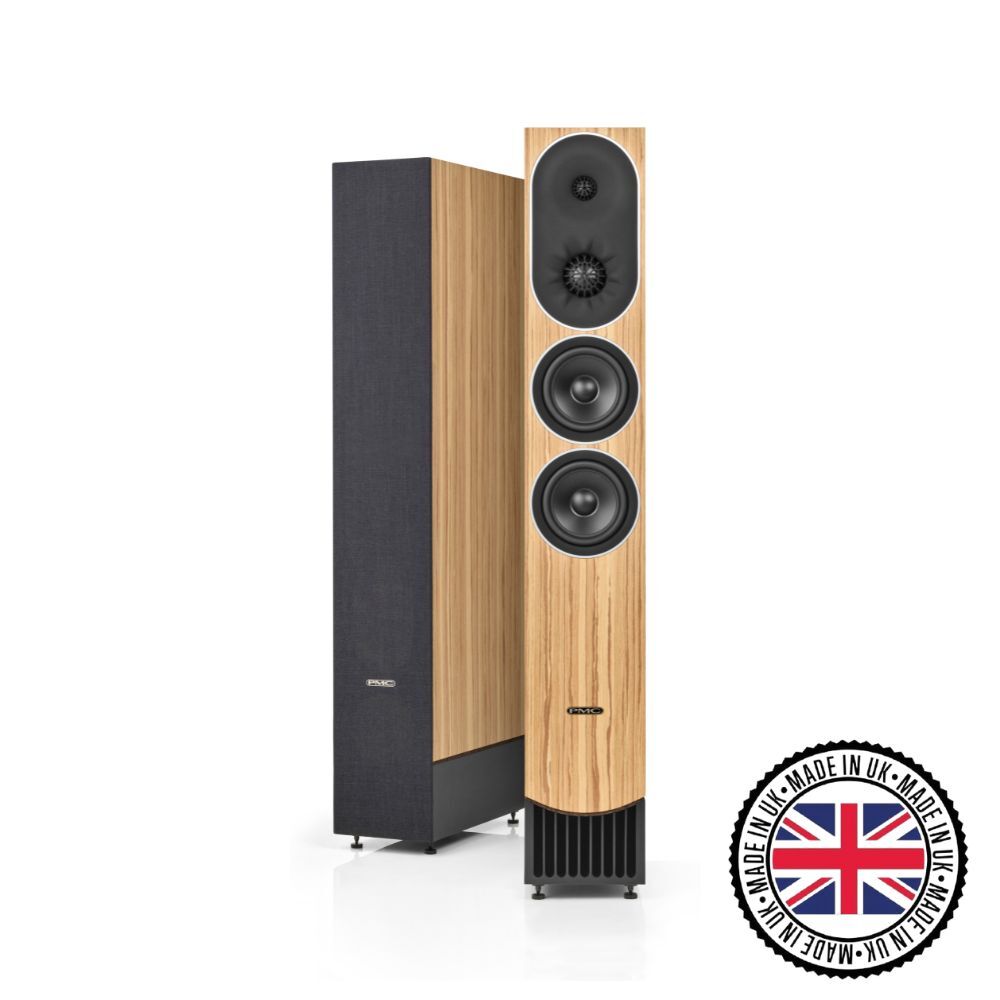


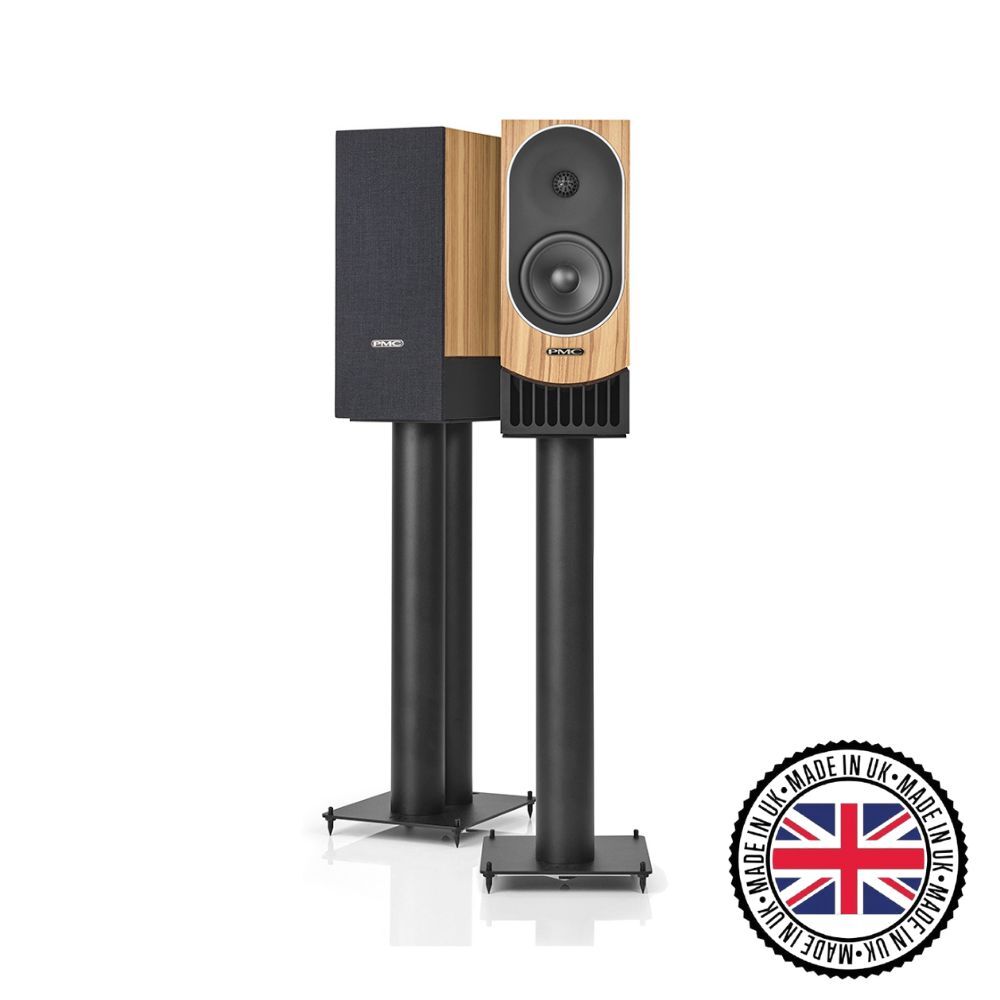
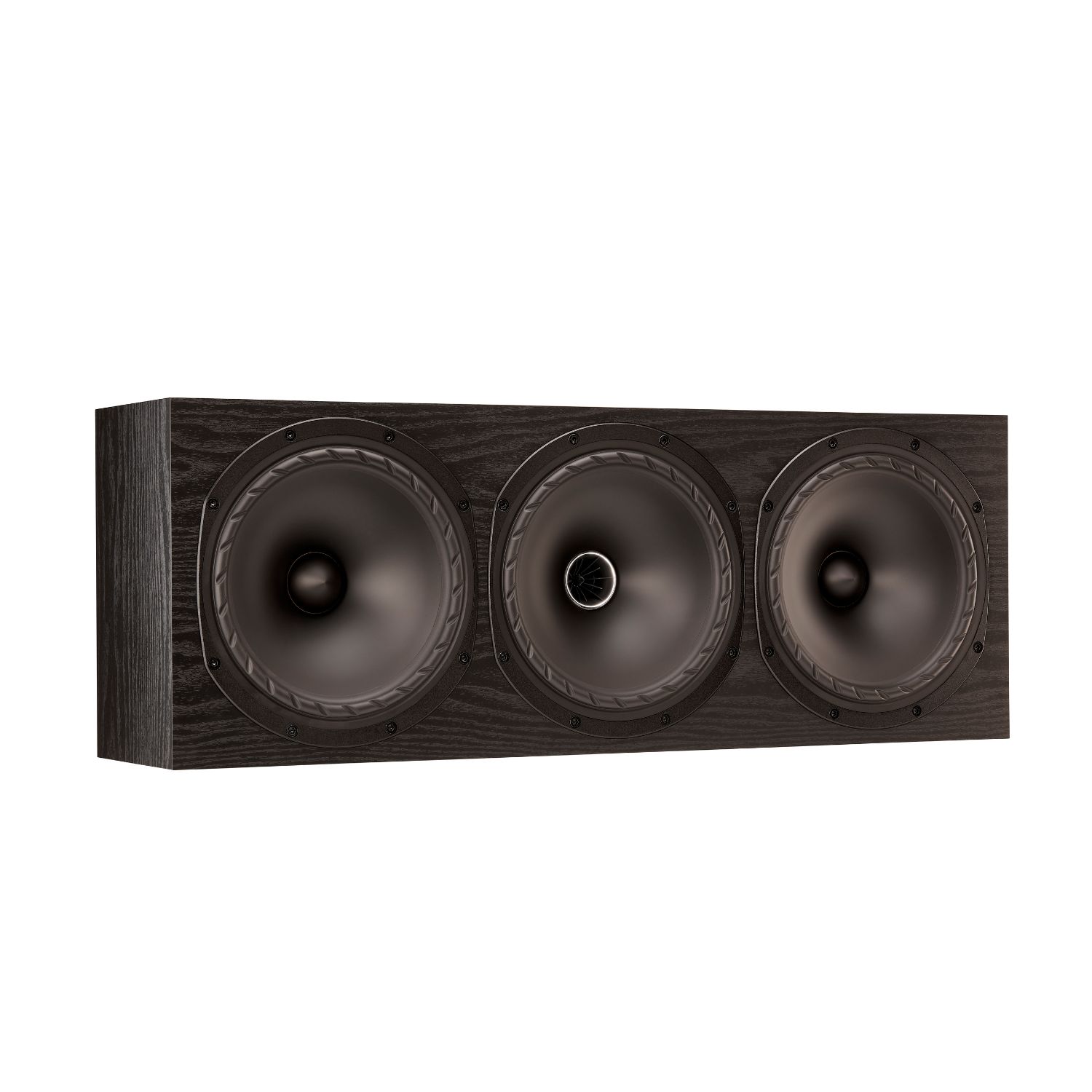
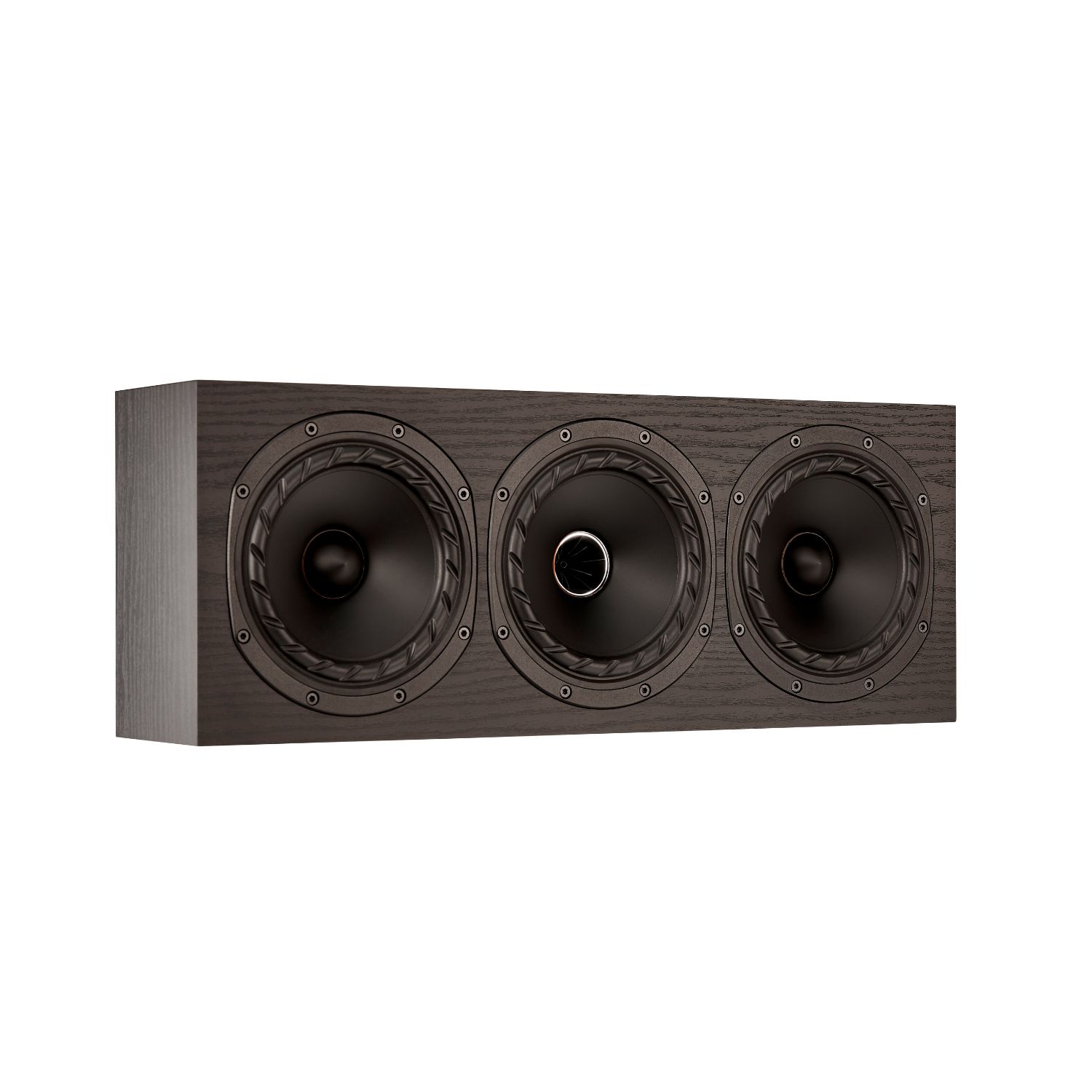
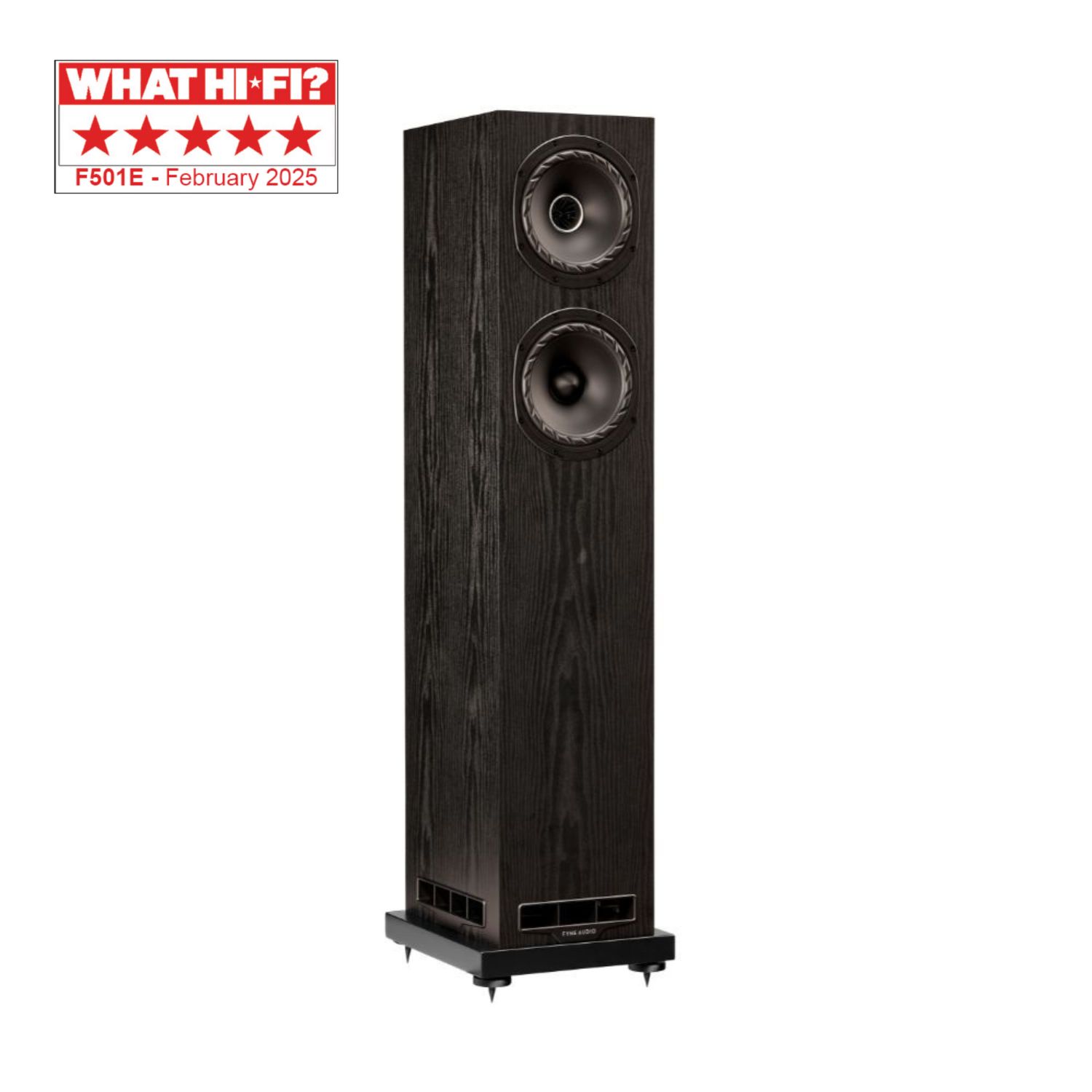








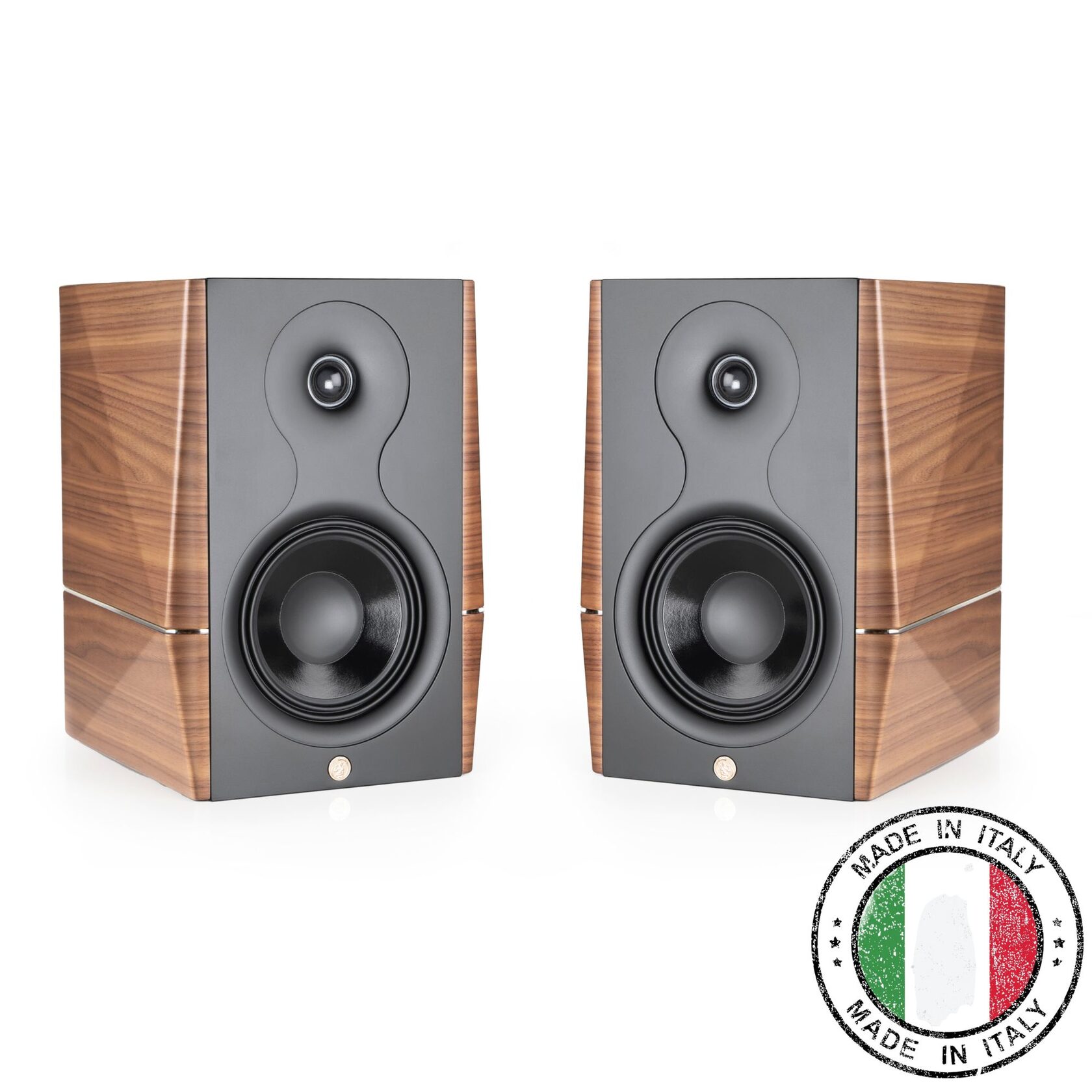
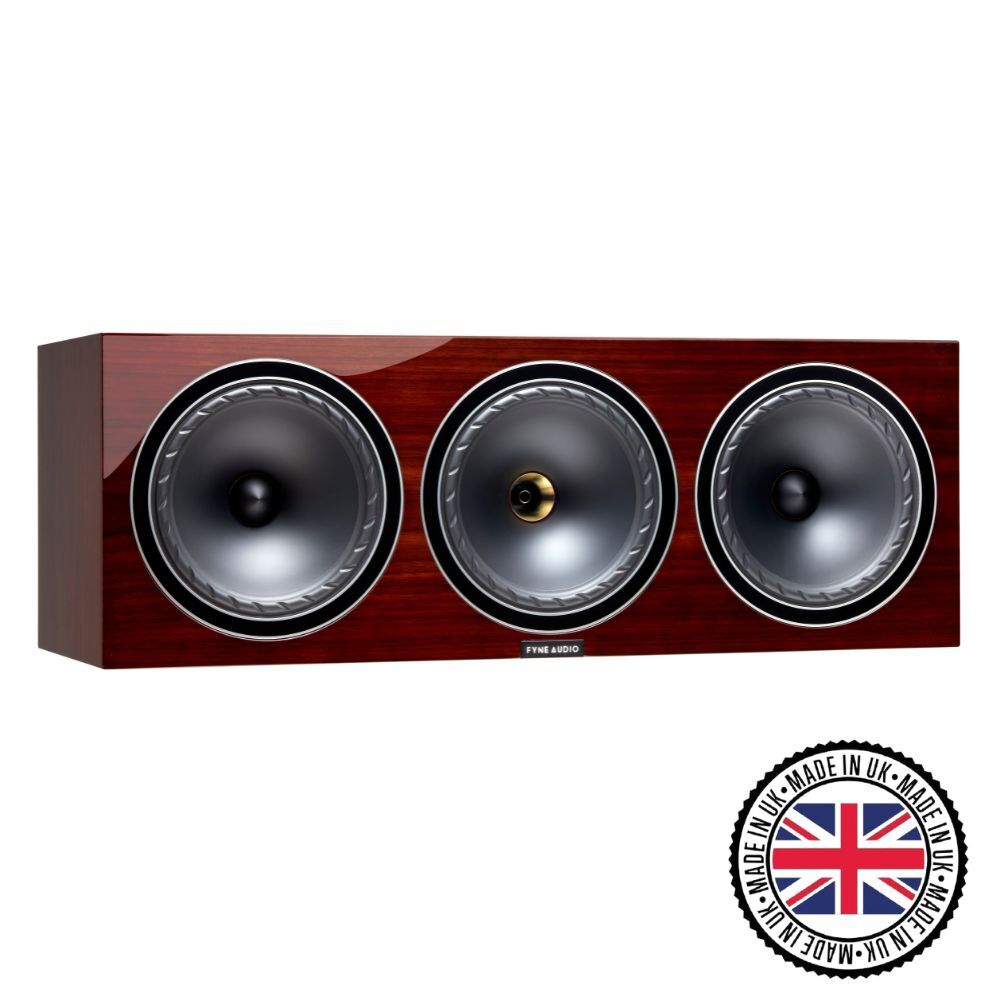

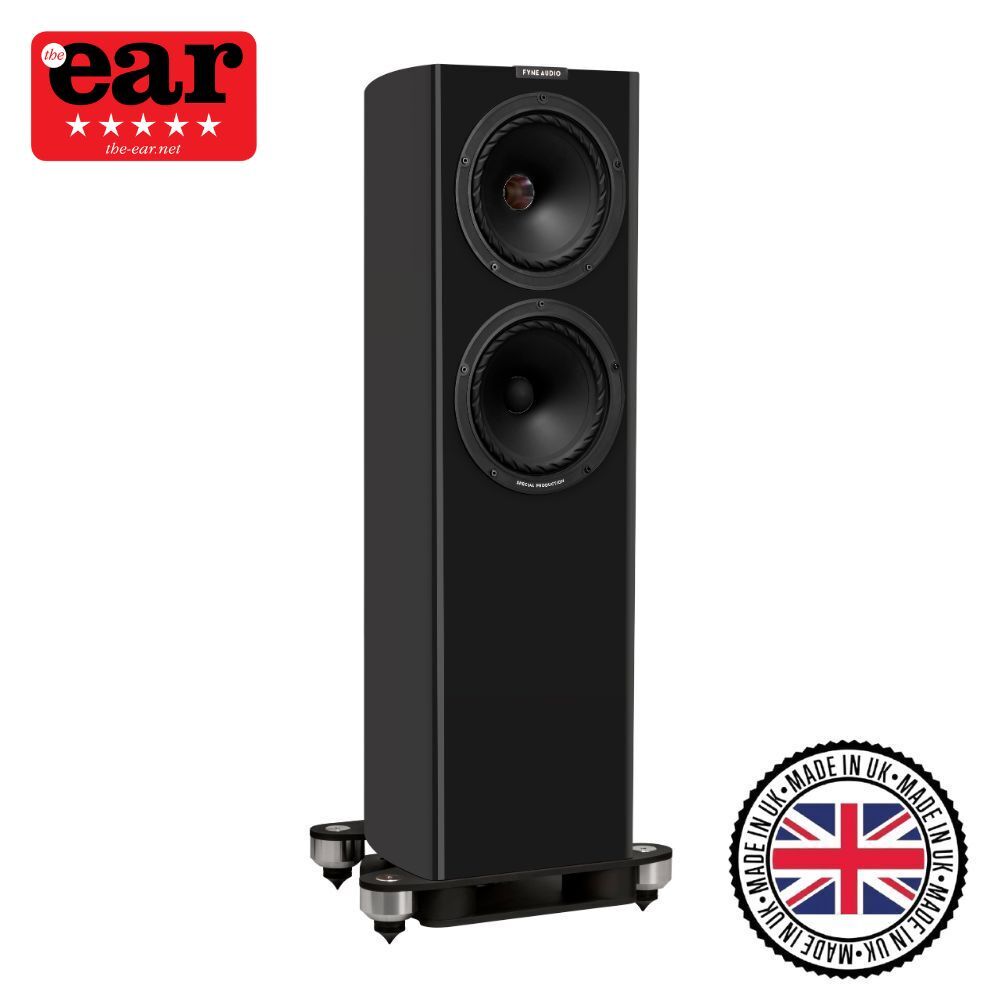
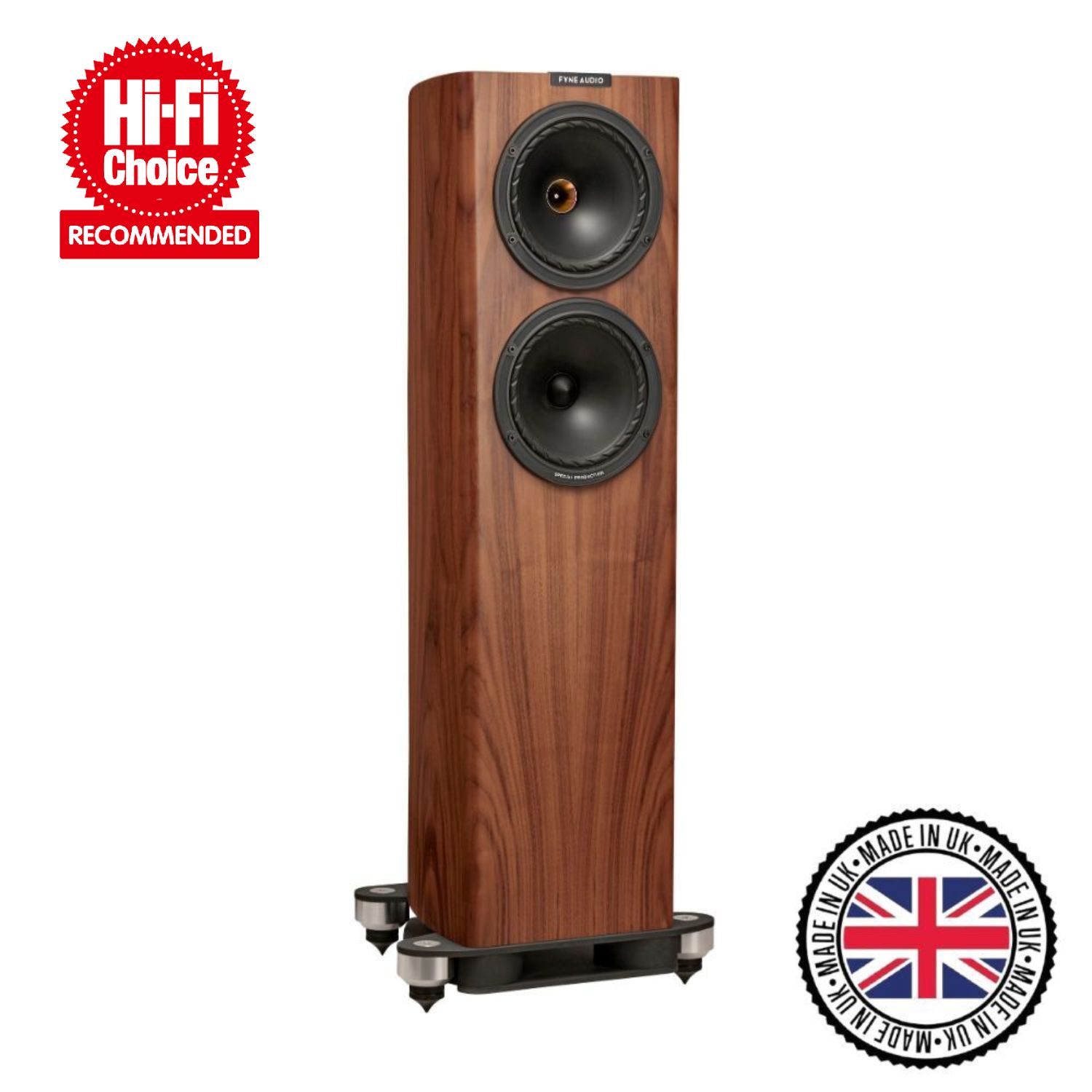





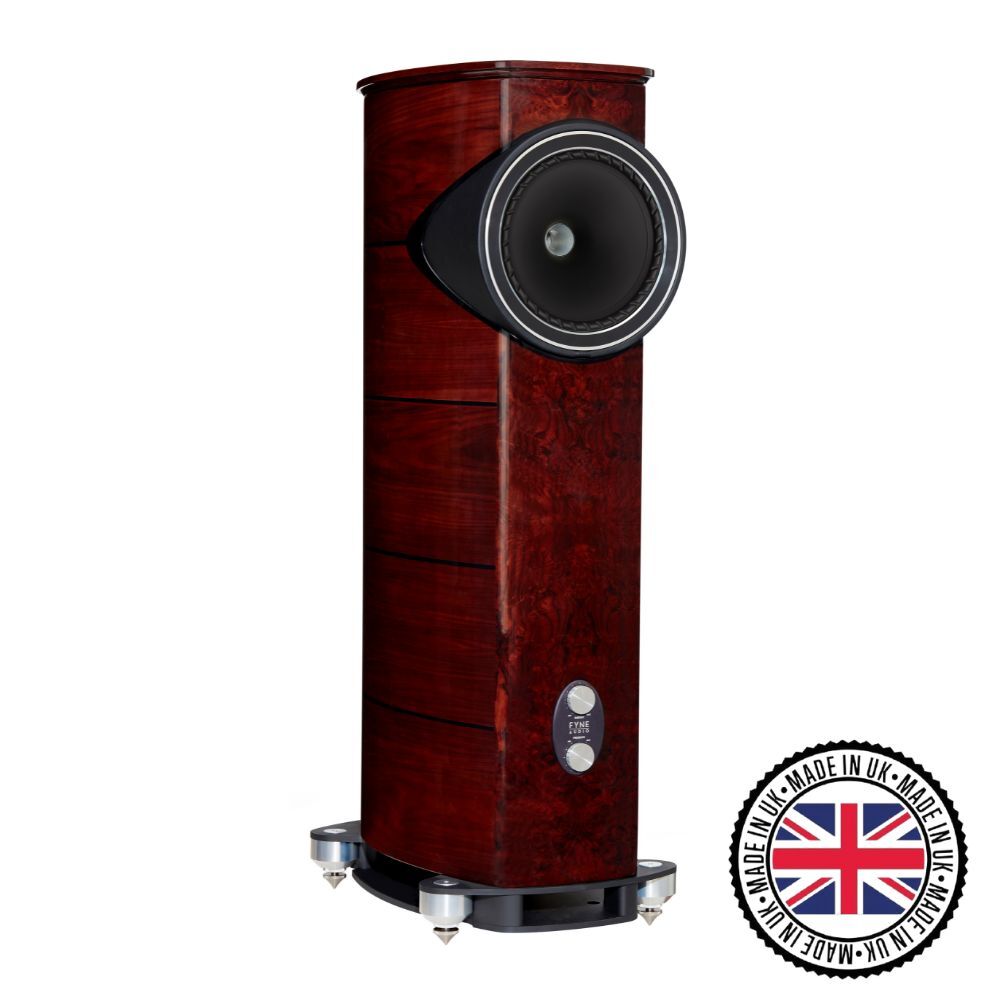
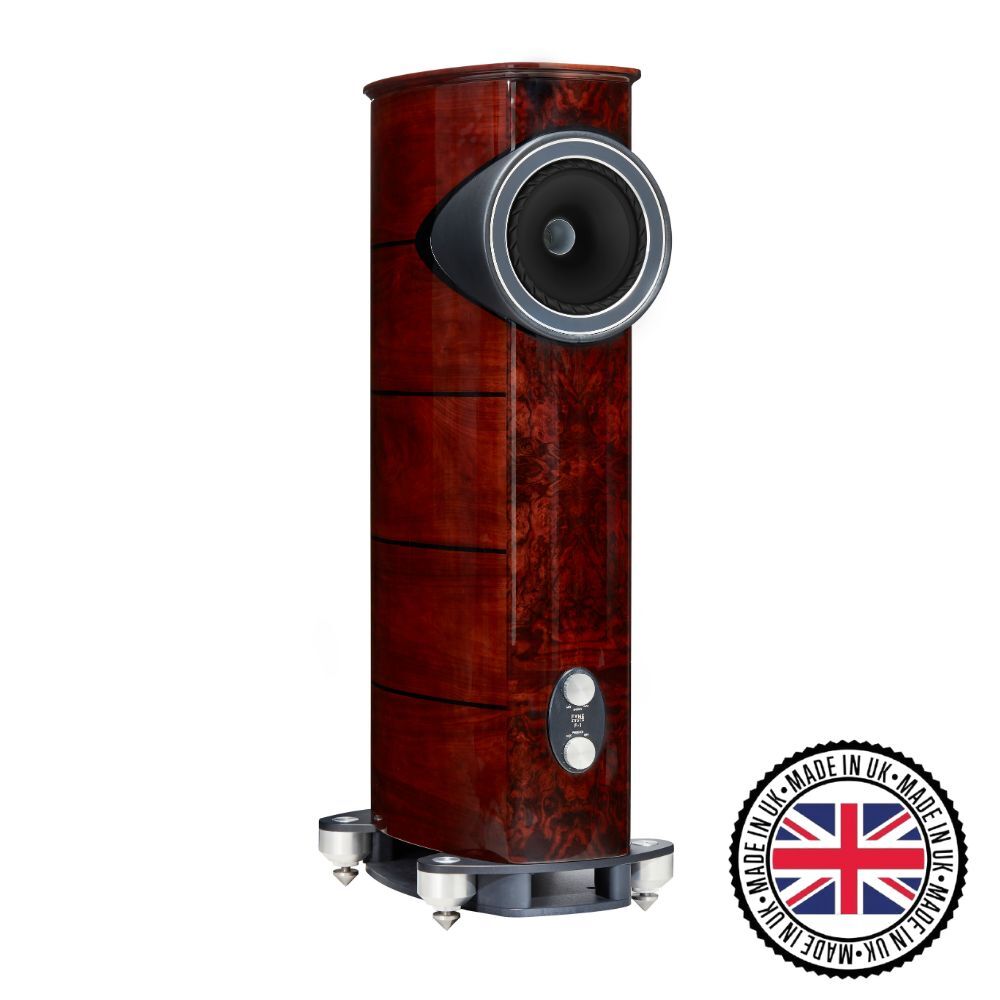
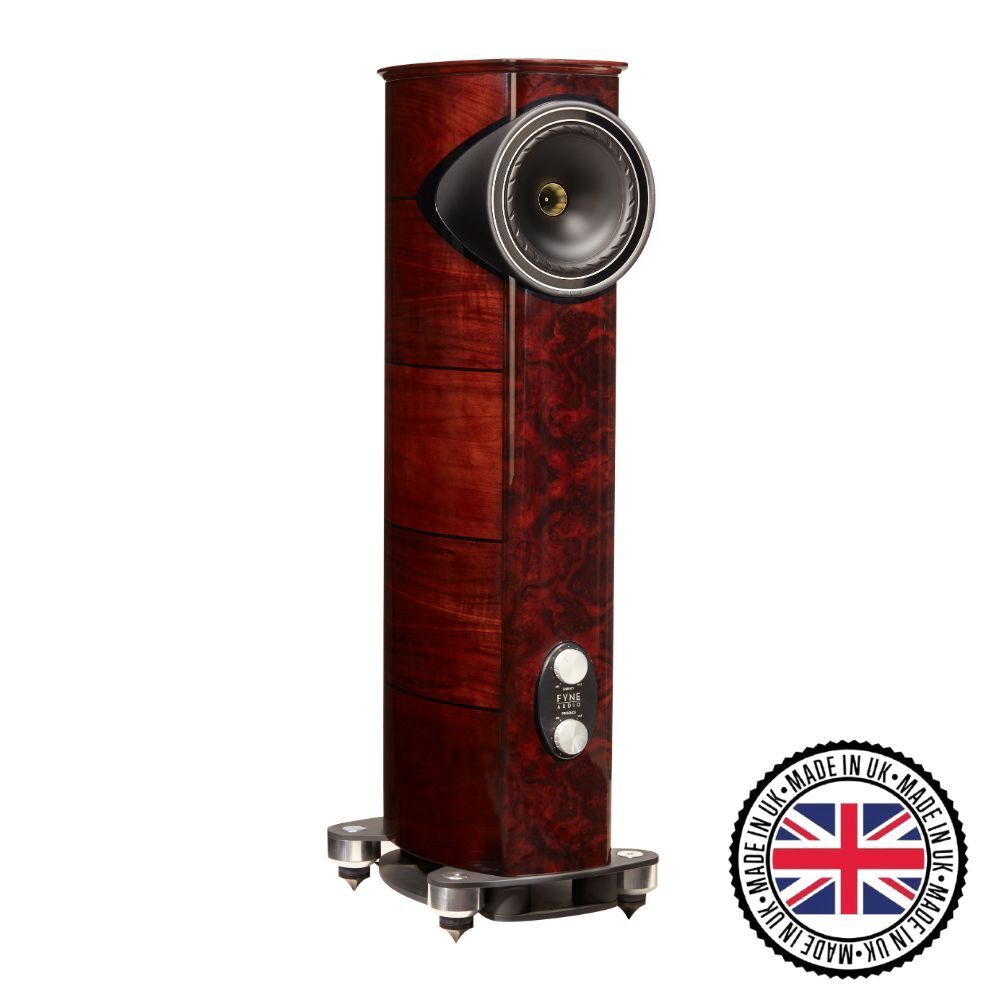

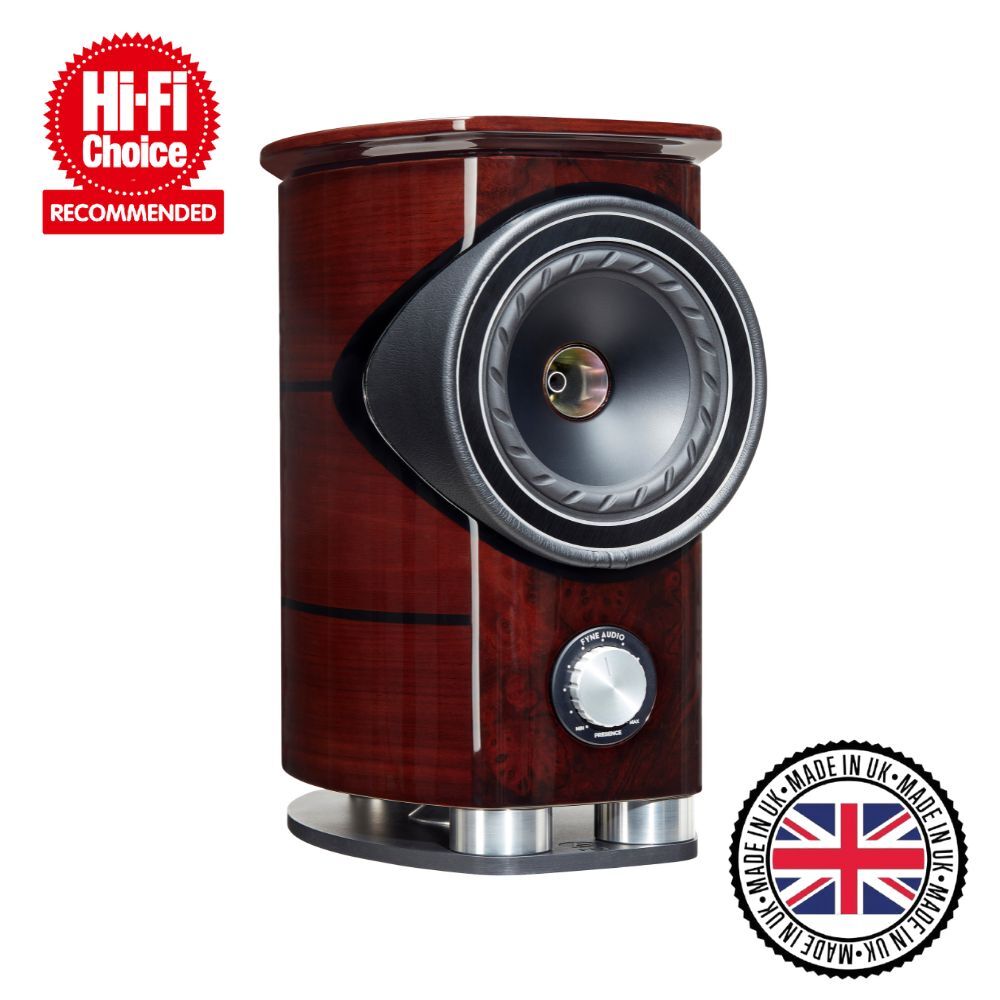




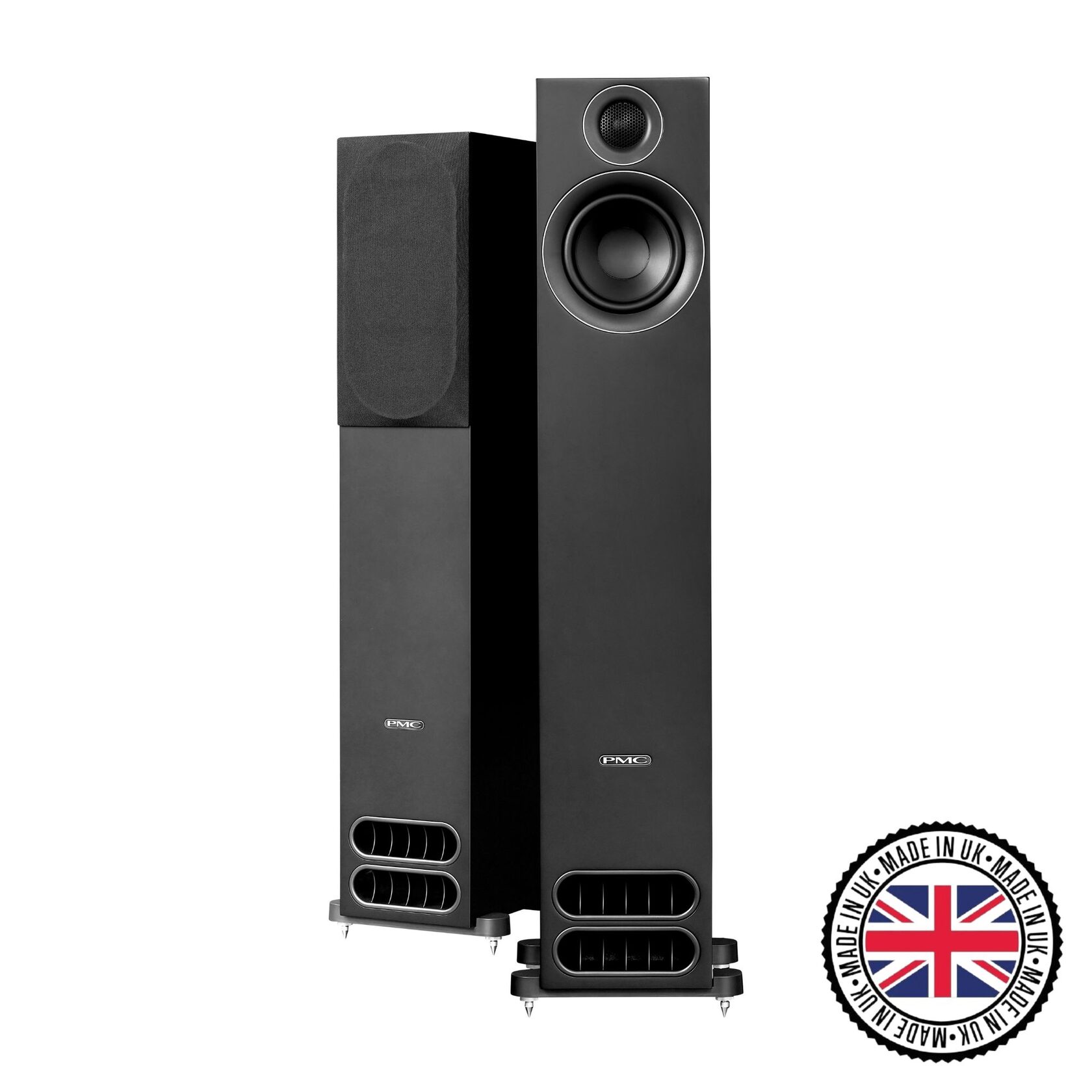

A loudspeaker converts an electrical audio signal into sound by moving one or more drivers — cone or dome diaphragms driven by a voice coil in a magnetic field. Multi-way designs split the signal by frequency across separate drivers using a crossover; coaxial (point-source) designs mount those drivers concentrically to minimise timing and phase differences between them. Within a system, loudspeakers are typically grouped by form factor and role: floorstanding and standmount speakers for stereo or front channels, a centre speaker for dialogue, a subwoofer for bass extension, and custom install speakers for in-wall or in-ceiling mounting.

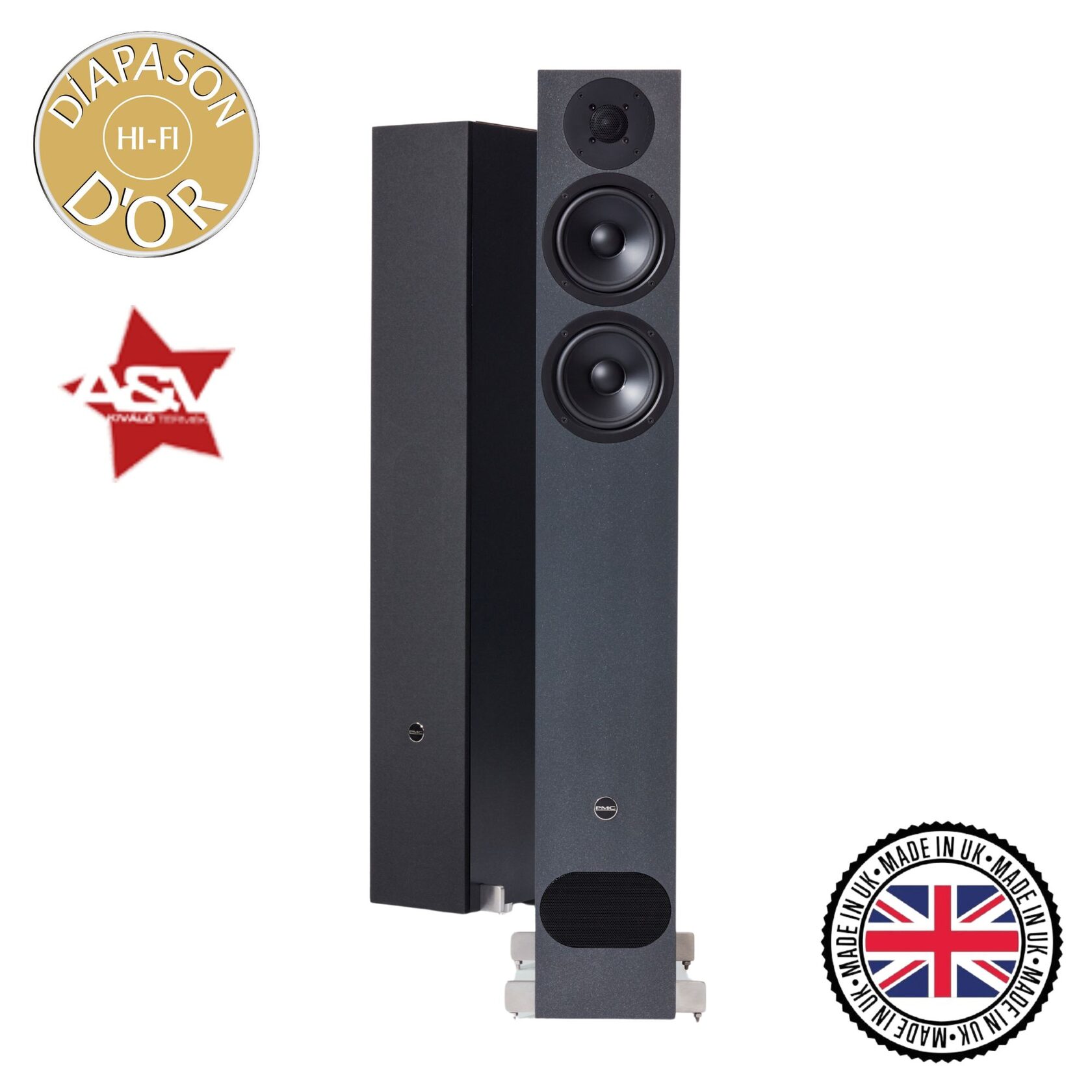
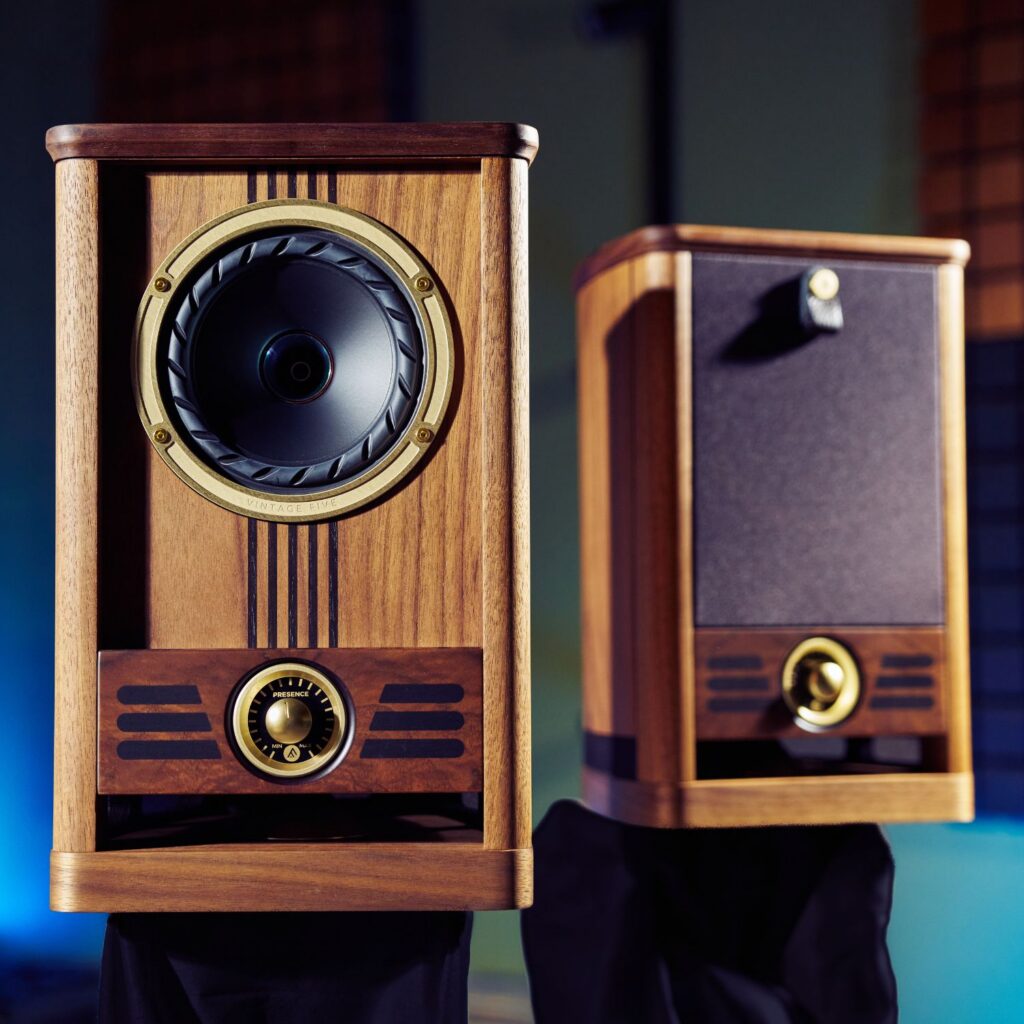
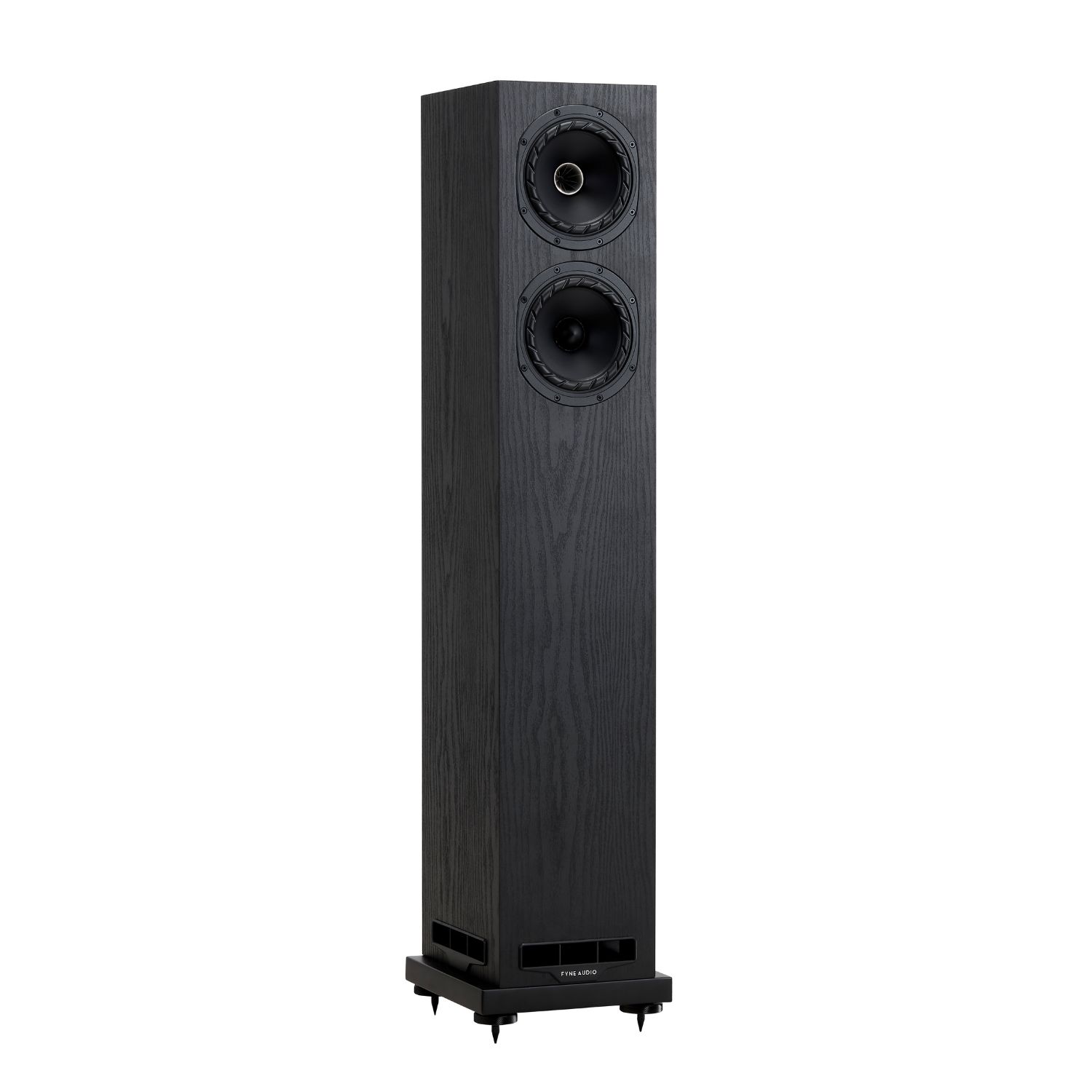
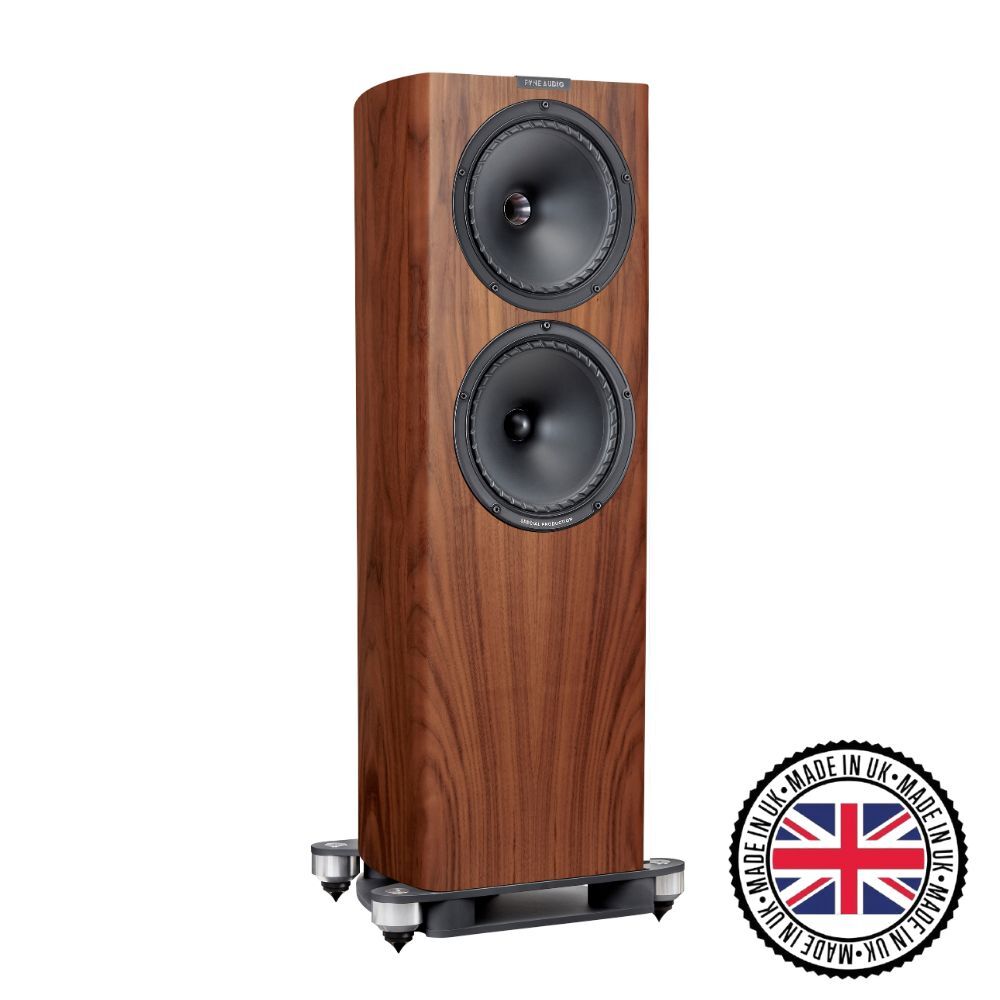
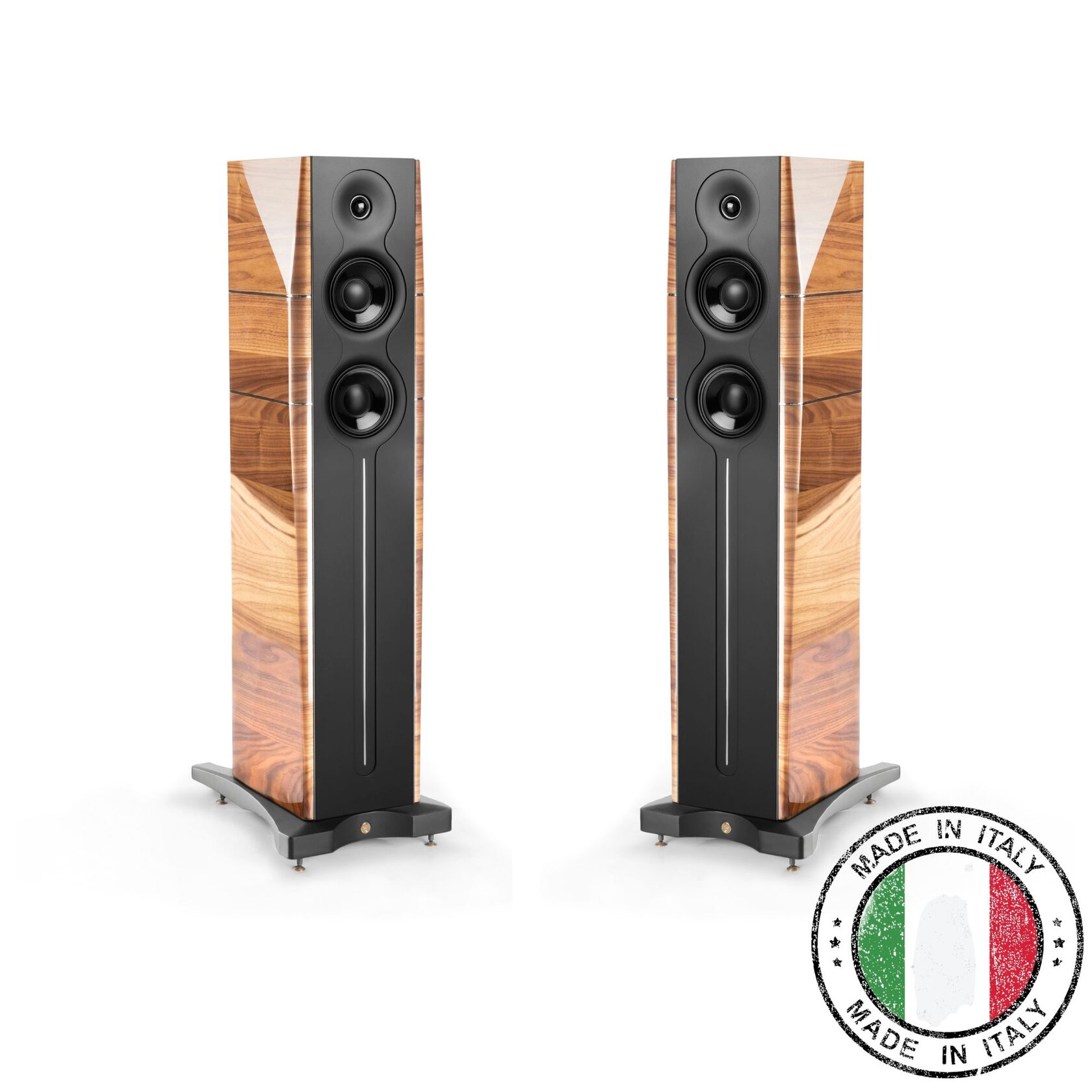
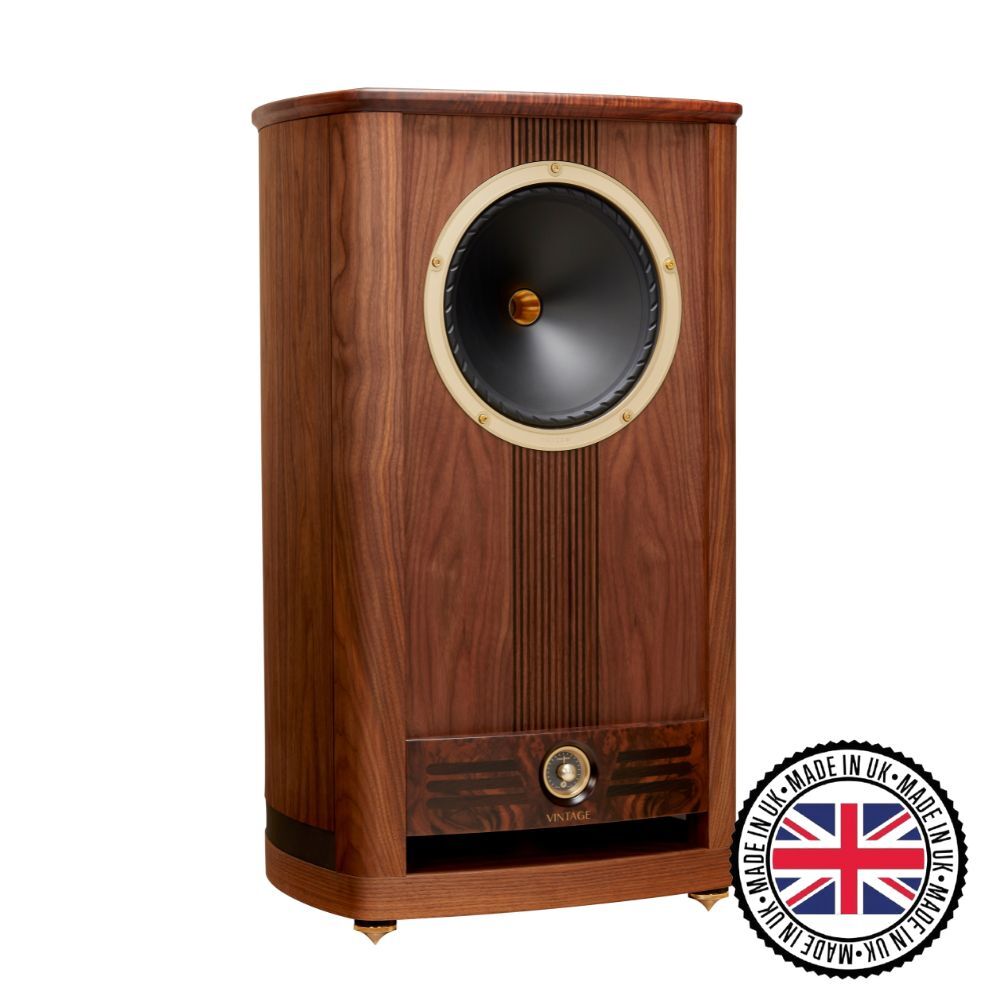
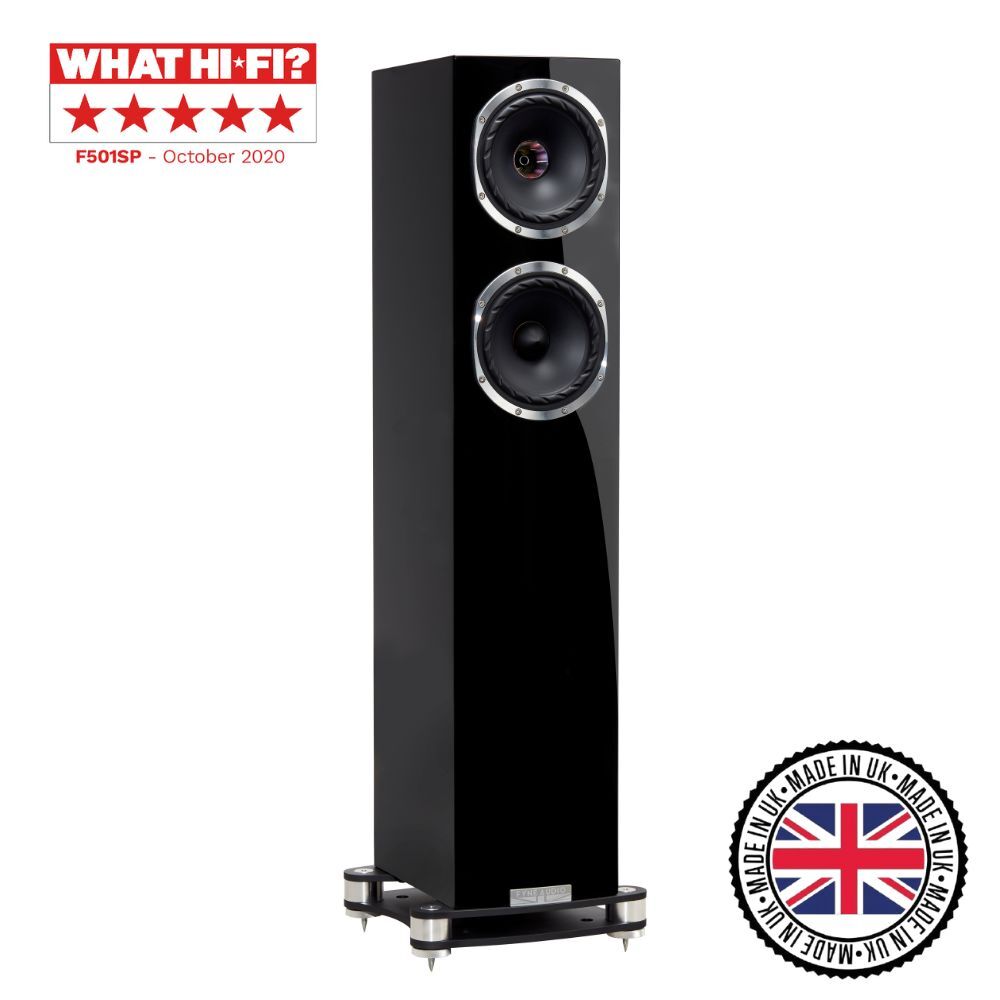
Full-range towers that need no stand and typically carry their own low-frequency extension. PMC’s three-way flagship twenty5.26i and fact.12 sit at the top of that range, alongside the two-way twenty5.24i; Fyne Audio covers the same territory with its coaxial F1-8S, F1-10S and F1-12S, the F700 series, and the retro-styled Vintage range.

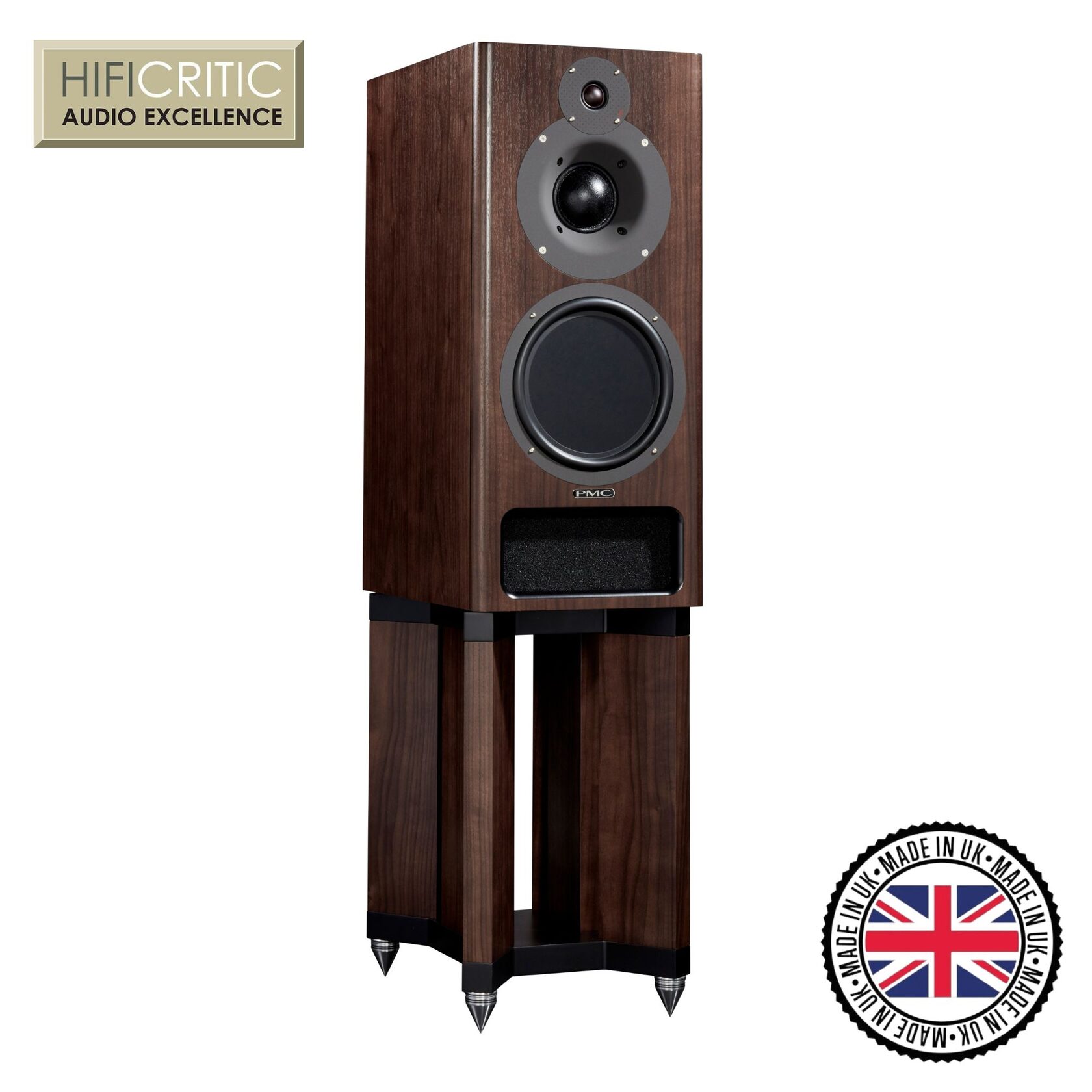
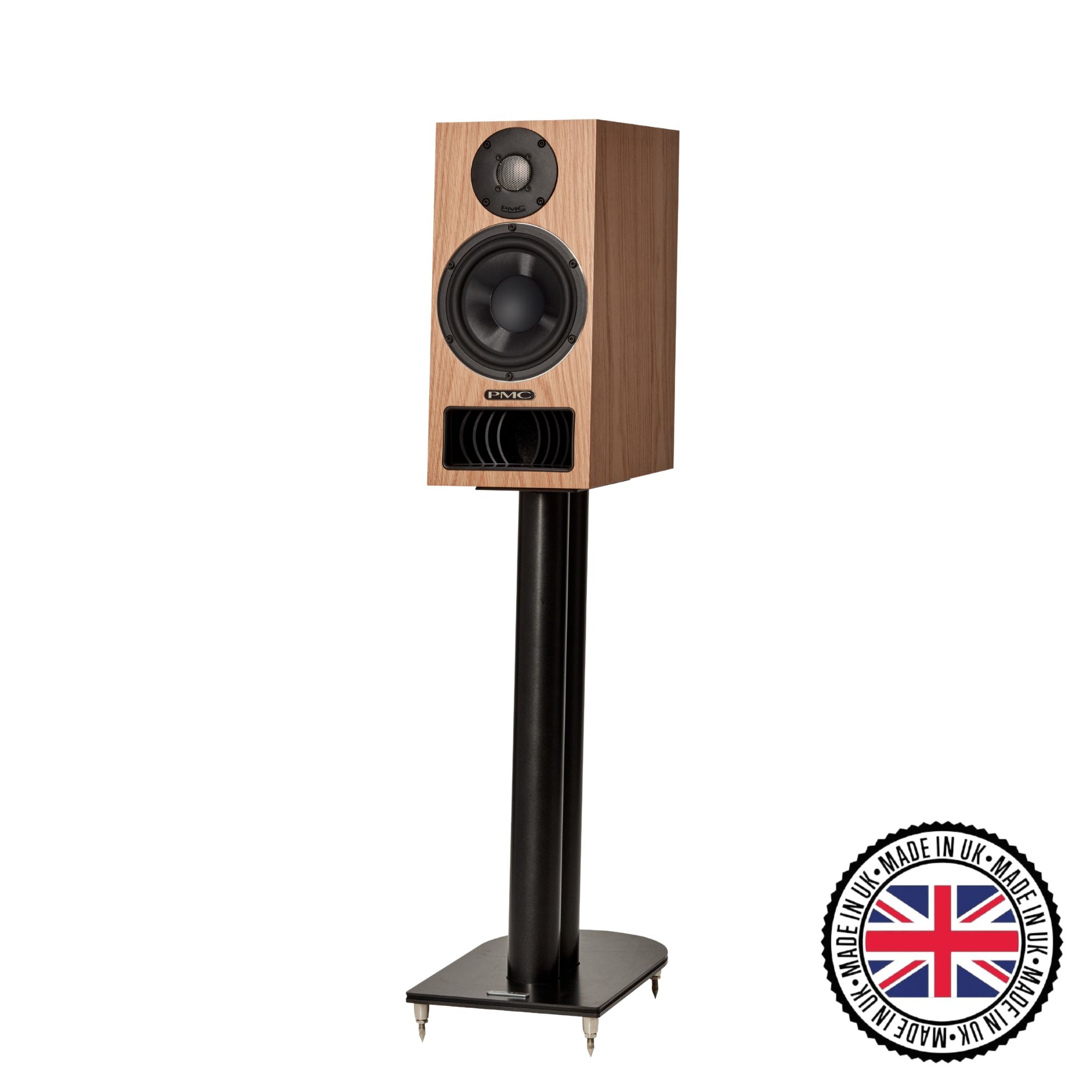
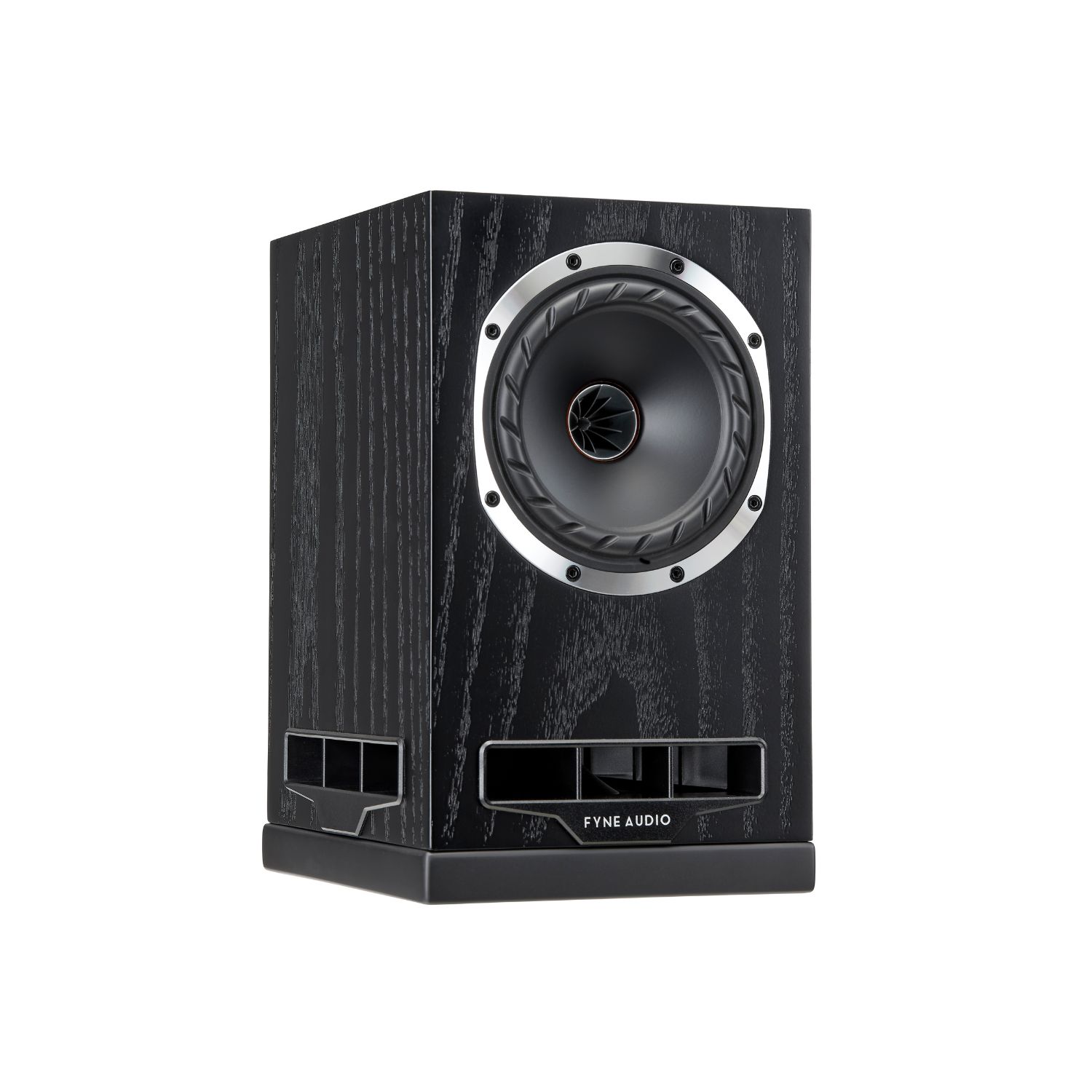
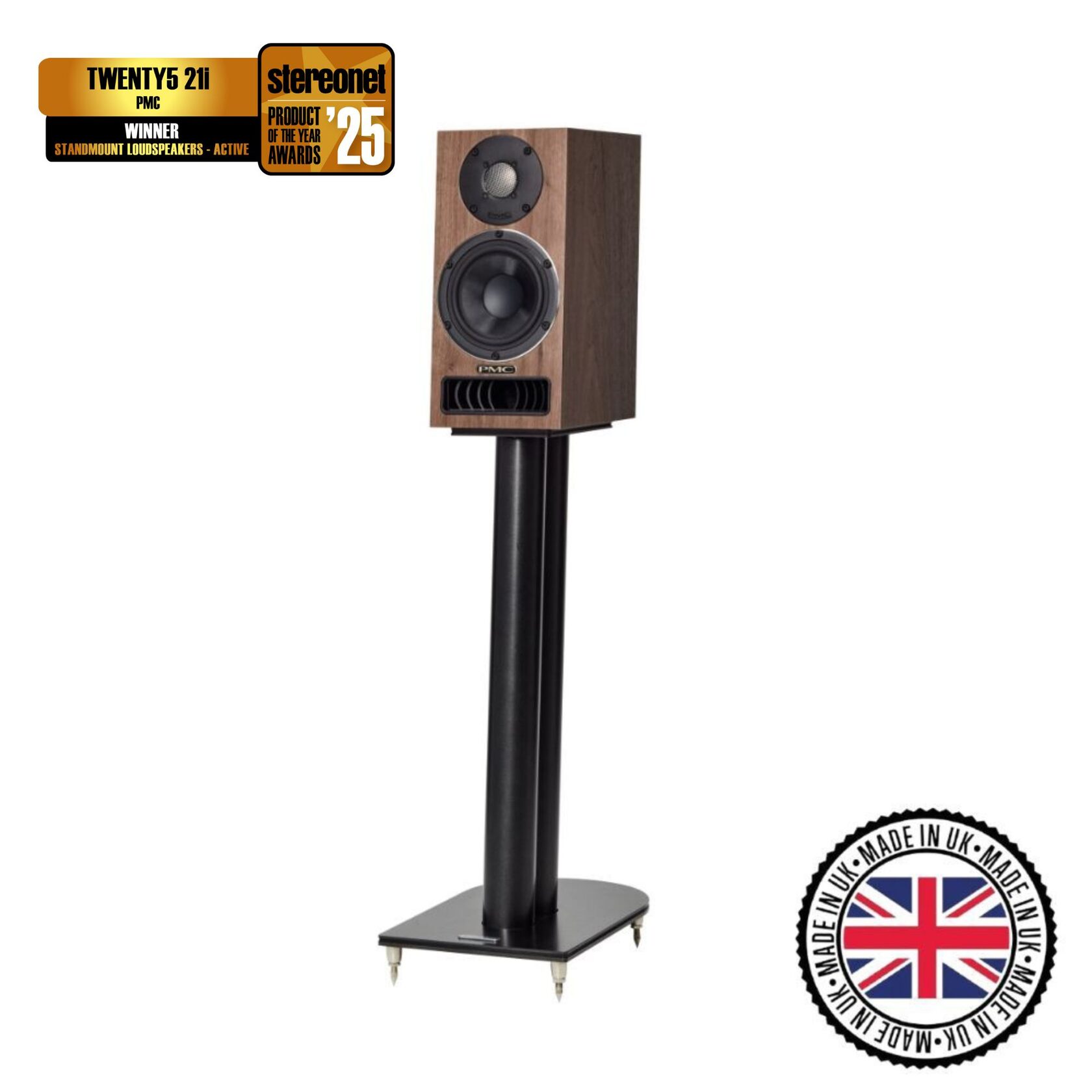
Compact two-way cabinets designed to sit on dedicated stands, easier to place in small and mid-sized rooms. PMC’s prodigy1 and prophecy1 are standmounts; Fyne Audio’s F500E and F500S-series equivalents follow the same brief at different price points.

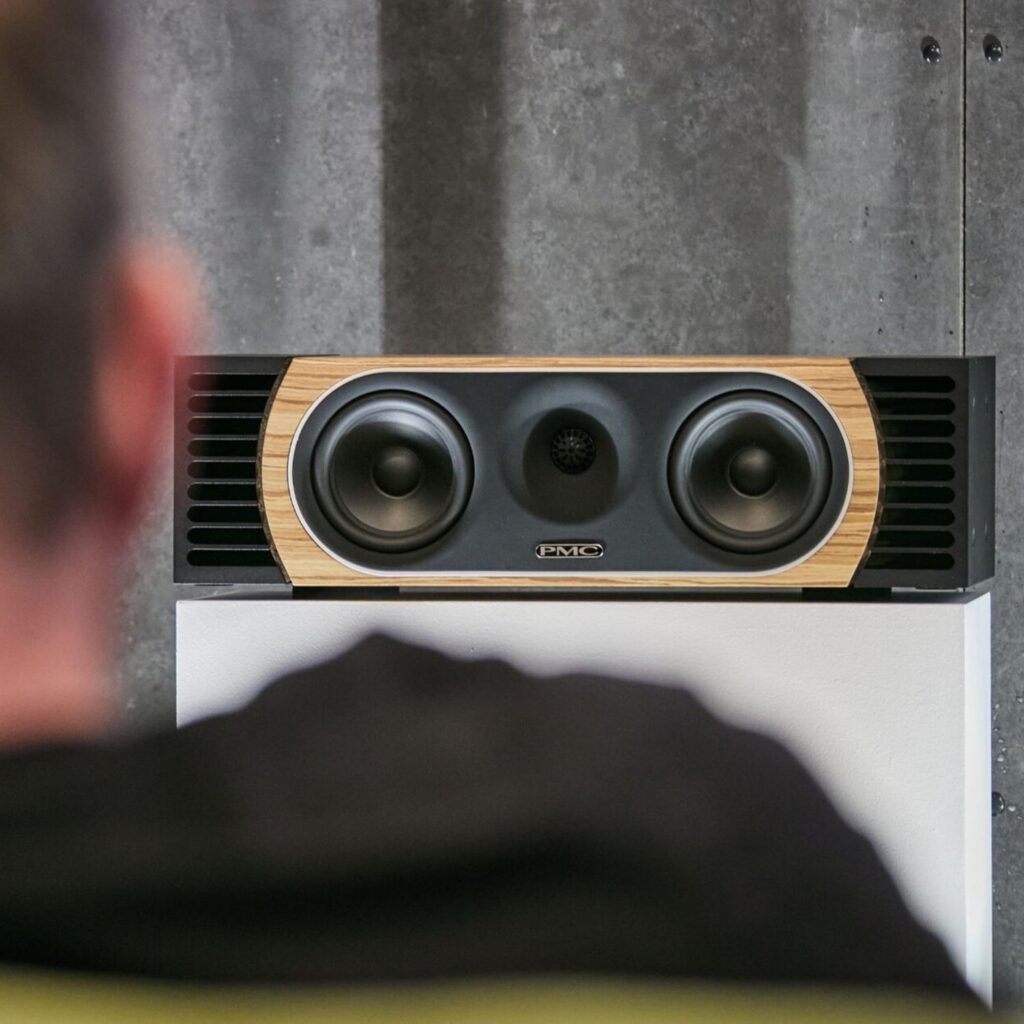
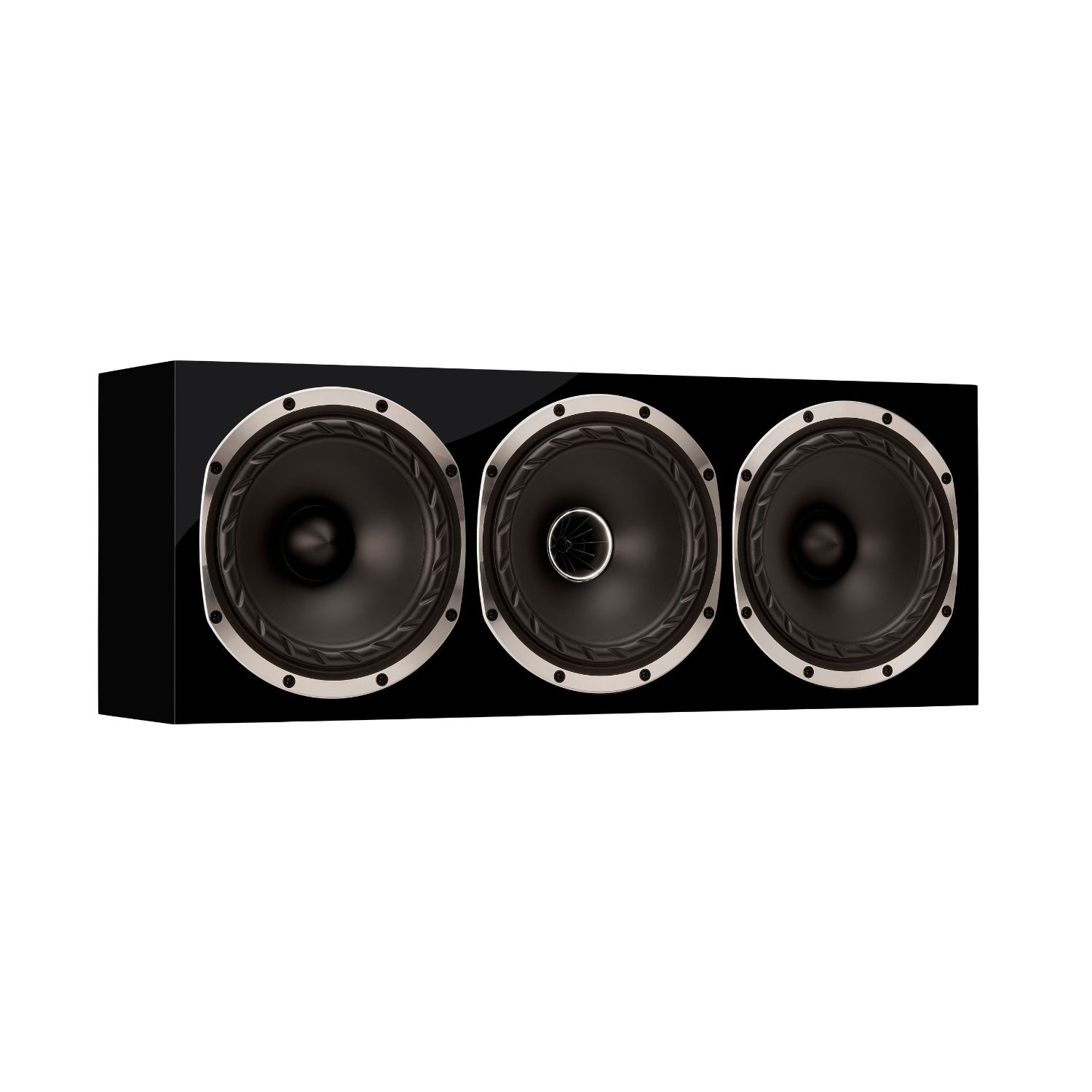
The home cinema channel that carries most of a film’s dialogue, voiced to match the front left/right pair rather than chosen in isolation. PMC builds one dedicated model, the twenty5.Ci; Fyne Audio offers several across its ranges, including the F300i LCR, F500S LCR and F502E LCR.

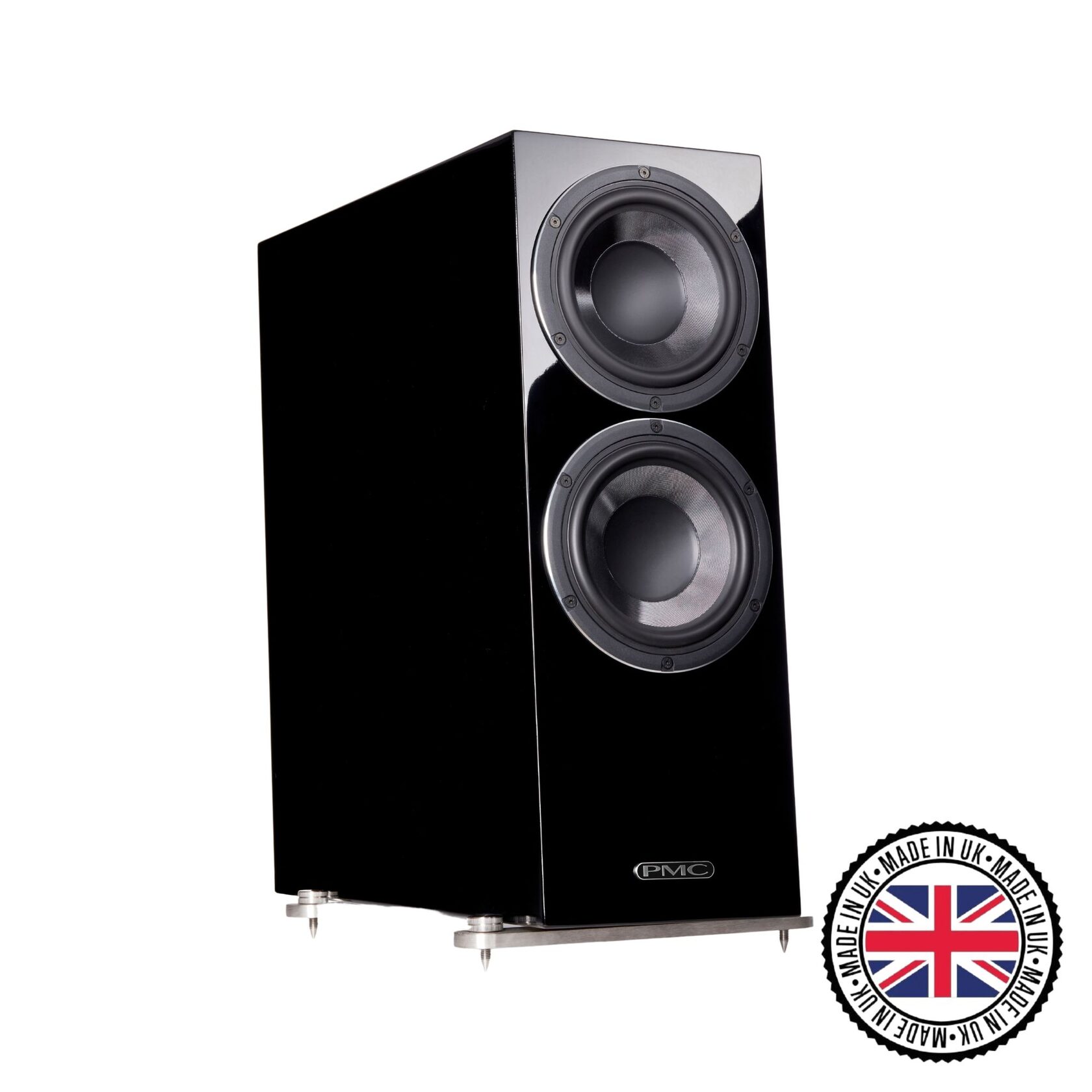
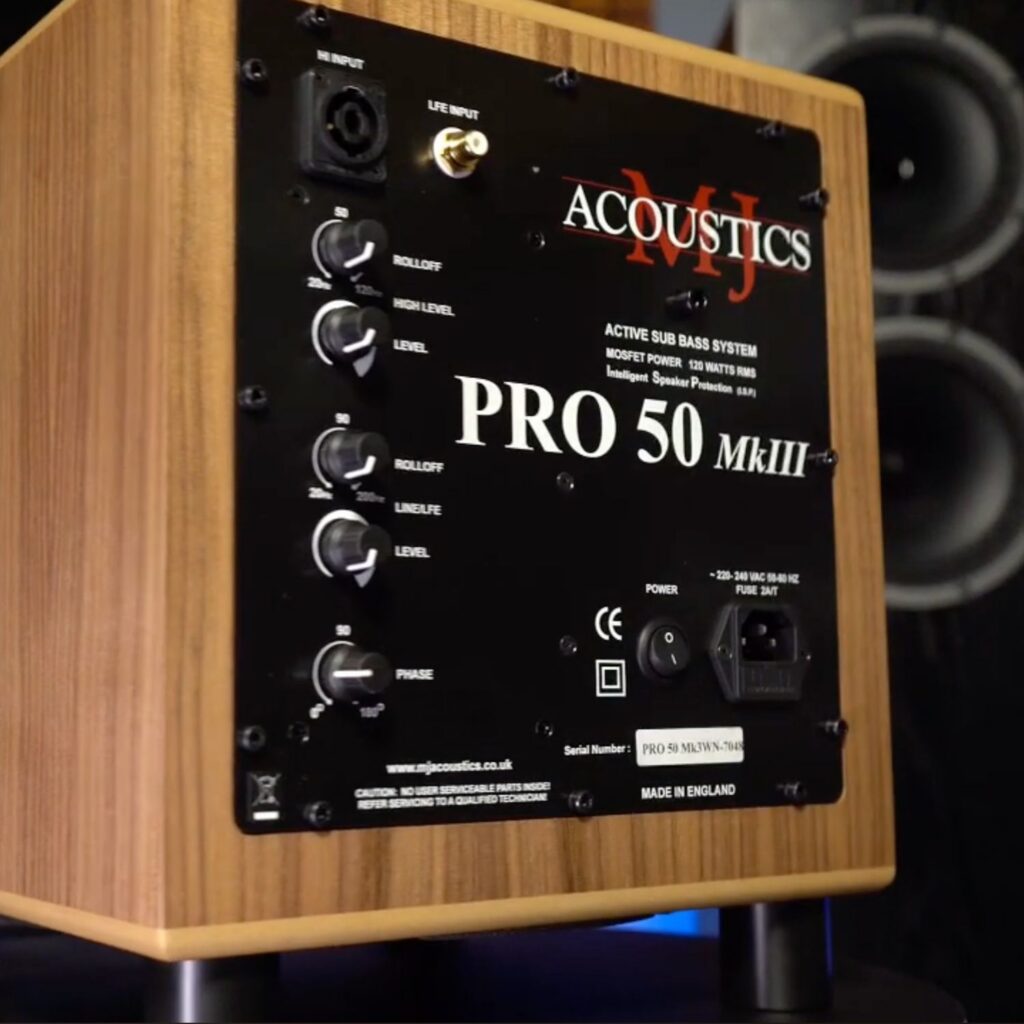
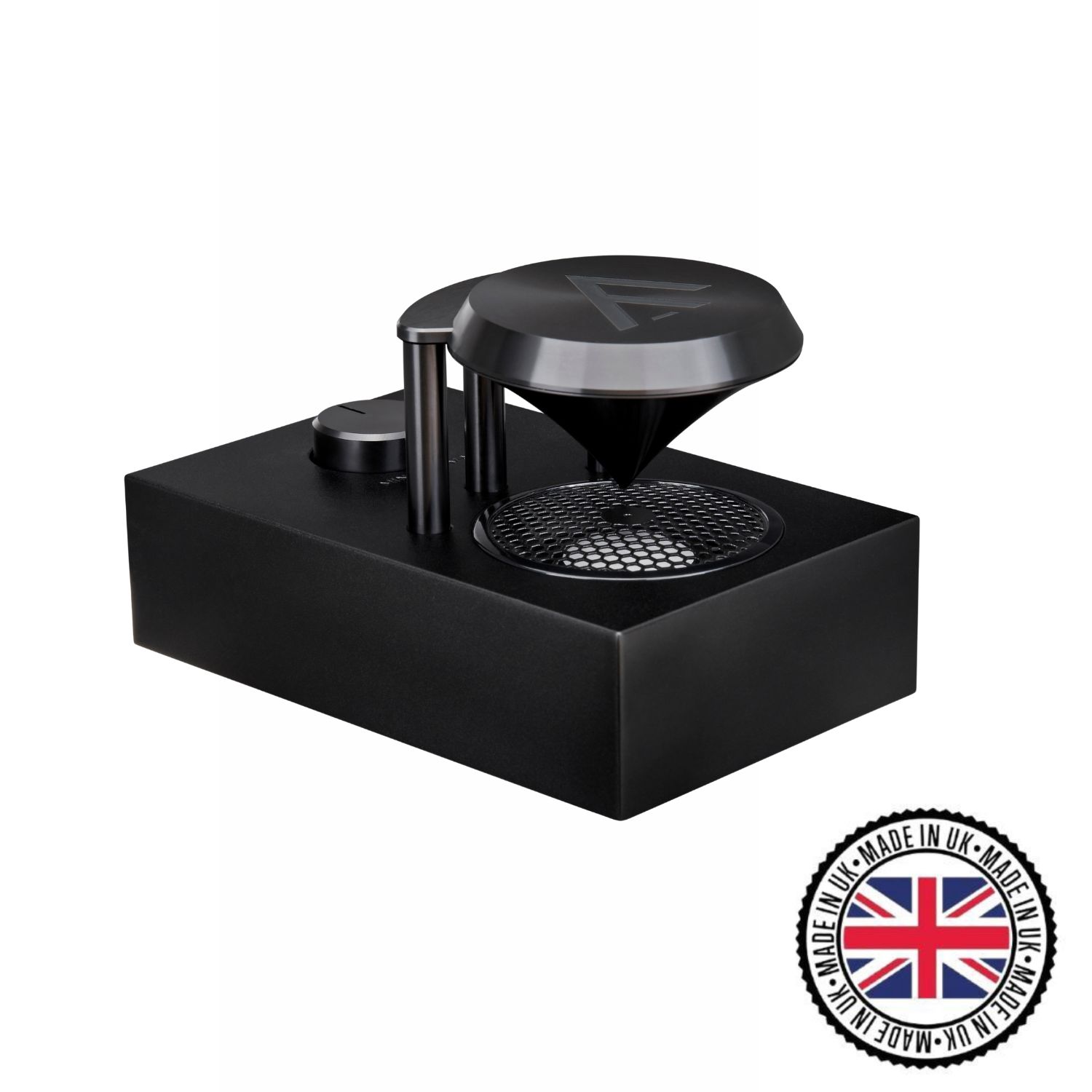
A dedicated low-frequency driver that extends bass below what a main speaker can reach, for music and film alike. PMC’s twenty5.sub uses the same ATL loading as its full-range speakers; Fyne Audio’s F3-10 pairs a 475W amplifier with its own driver for home cinema use.

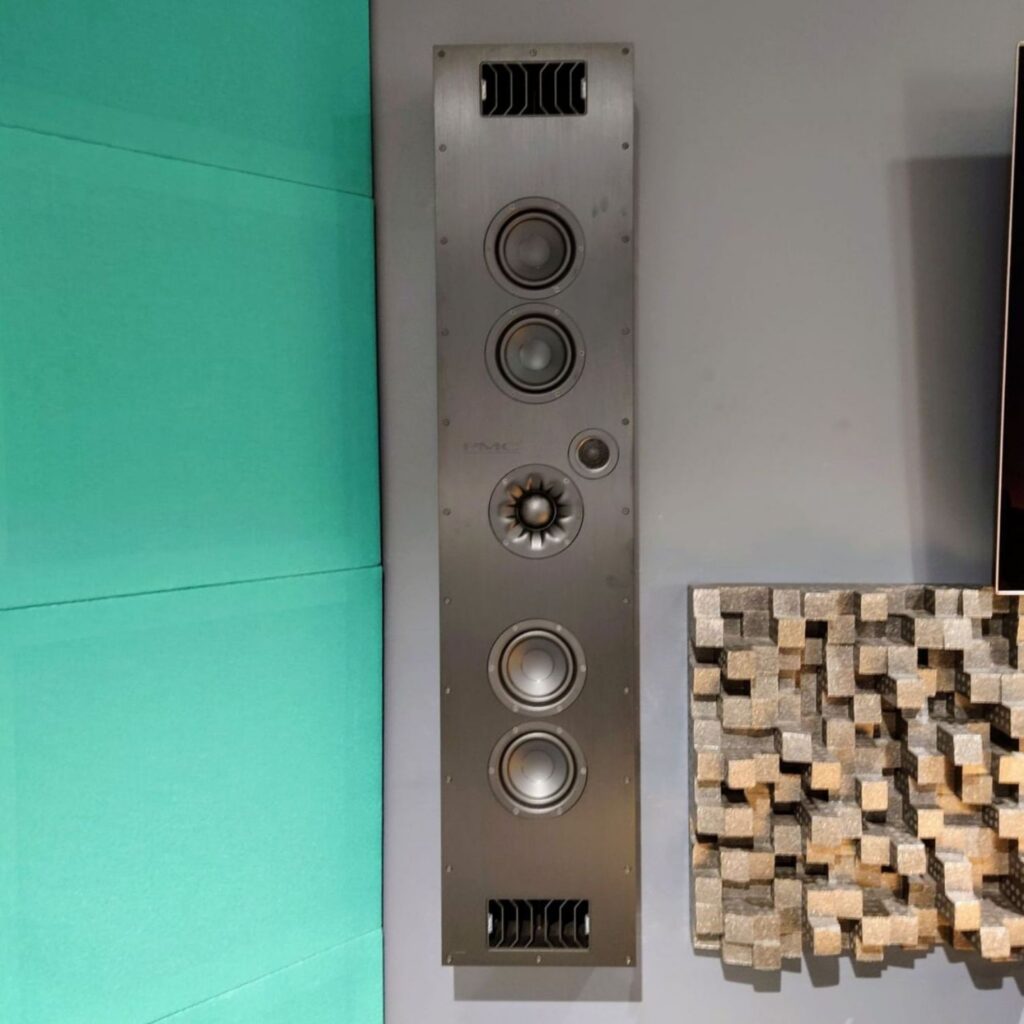
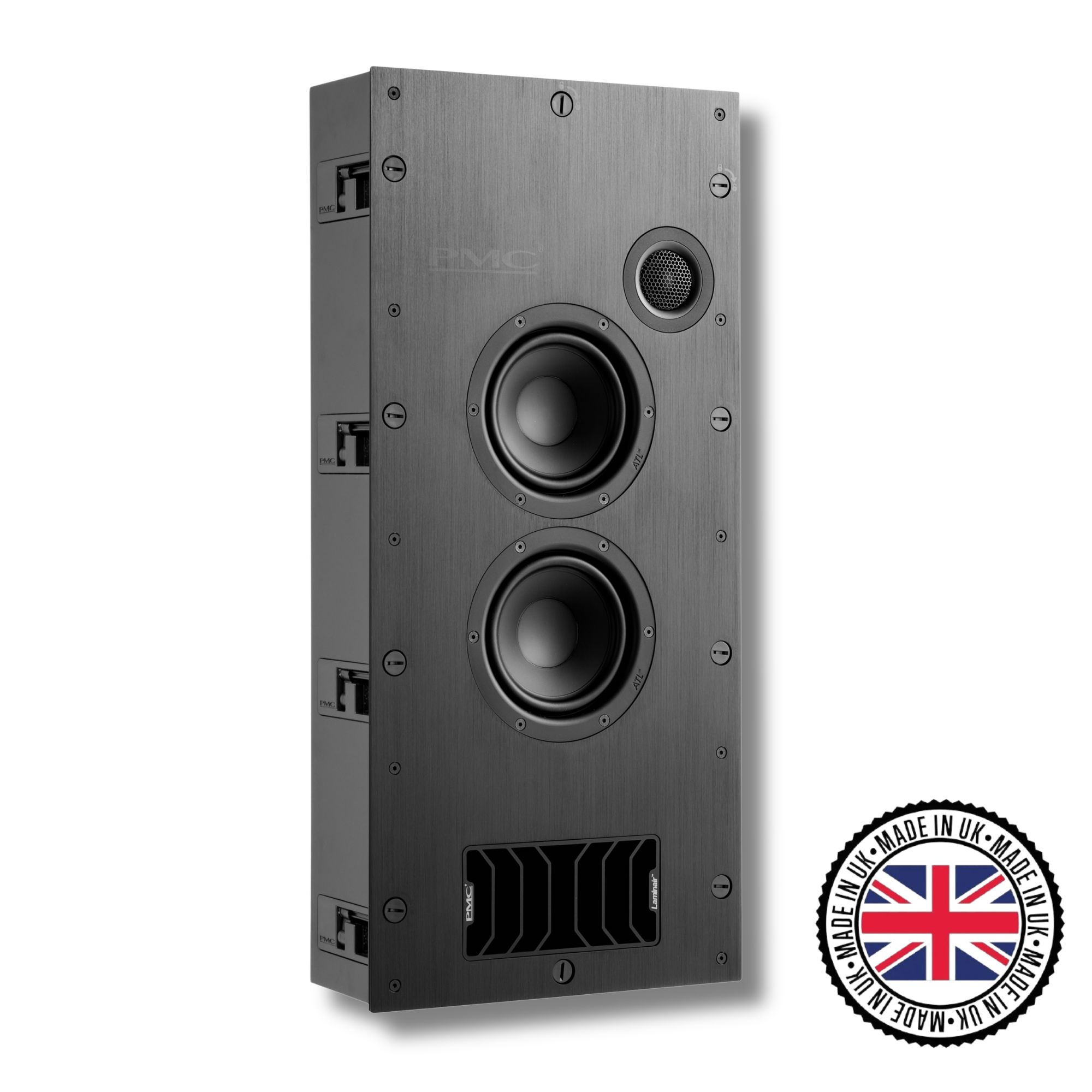
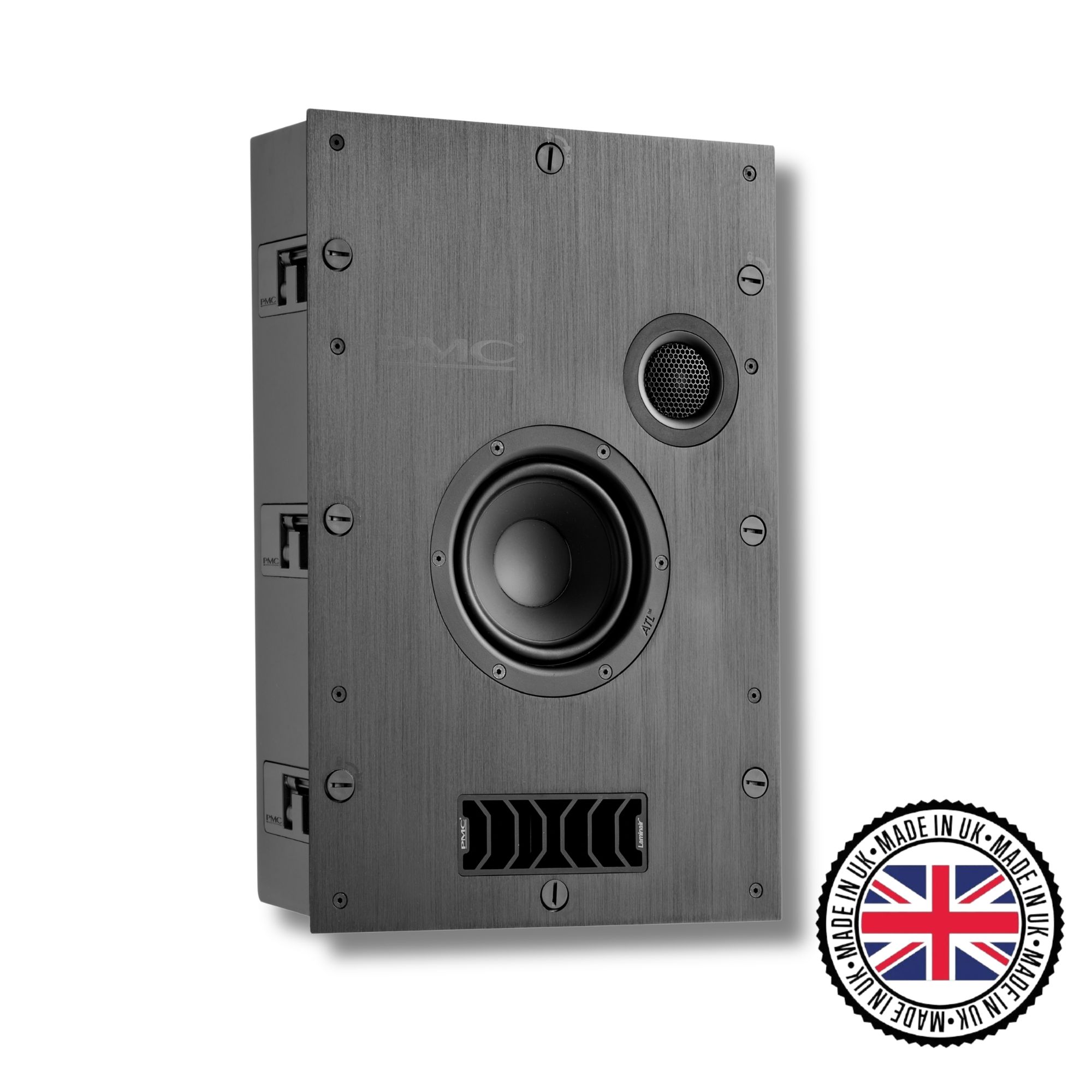
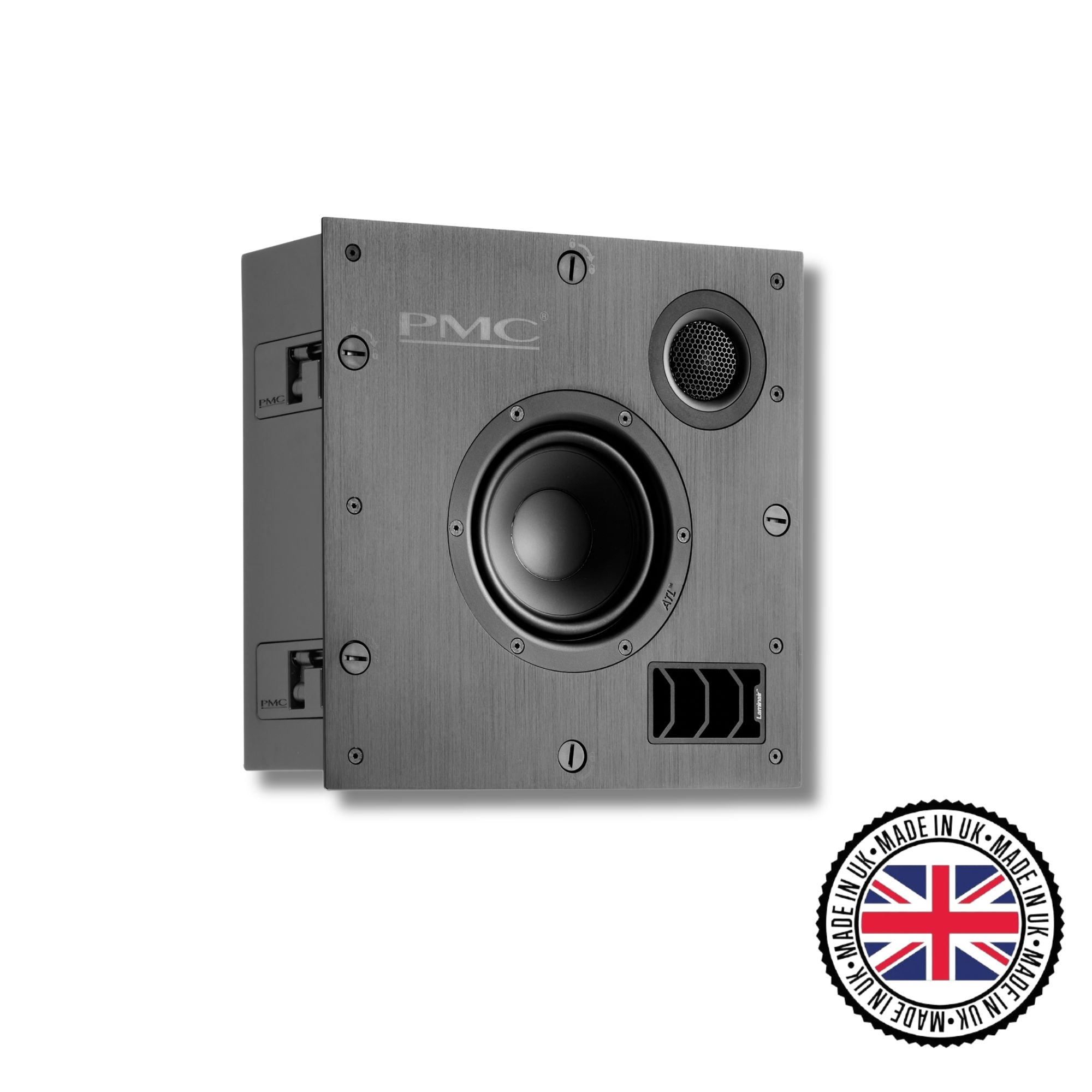
In-wall, in-ceiling and on-wall models built for installations where a visible cabinet isn’t wanted. PMC’s ci series runs from the compact ci30 through the on-wall ci140, with a matching ci subwoofer, covering everything from a single surround channel to a full multi-room build.

Factory upgrade paths for owners who already have a PMC speaker, rather than a new purchase: an Active upgrade pack that adds onboard amplification to existing twenty5 and twenty5i models, and dedicated crossover upgrades for the fact.8 and fact.12.
On the outside, the F700 series showcases a curved, twin-cavity tuned enclosure meticulously constructed from the finest birch plywood. Massive all-metal plinths with integrated tractrix profile diffusers add both stability and style to the speakers. The lavish piano lacquer finishes provide an understated touch of luxury to complete the package.
A transmission line, used in PMC’s cabinets, is a folded internal duct that reinforces bass output from a separate woofer. A coaxial or point-source driver, used in Fyne Audio’s IsoFlare design, mounts the tweeter and woofer concentrically so they behave acoustically as a single source.
Floorstanding speakers suit larger rooms and need no stand, since their taller cabinet already provides bass extension. Standmount speakers are more compact and easier to place precisely, but need a pair of stands and generally reach lower in volume than a floorstander before a subwoofer is added.
A stereo pair is enough for two-channel music on its own. A centre speaker and subwoofer become relevant once a system also carries film dialogue and surround effects, or when a music system wants bass extension a stereo pair can’t provide alone.
Most models in this category are passive and need a separate power or integrated amplifier. PMC’s active twenty5i range and Fyne Audio’s Cubitt 5 are exceptions, with amplification already built in.
© 2026 MGY Europe. All rights reserved.